




- The 3 Eras of Evolution: How Has the Global Financial Institution's View on Bitcoin Changed?
- Decoding the Coinbase x Morpho Case: When CeFi Meets DeFi
- A Look at Trends in "Thailand": Where Are Institutions and Regulators Moving?
- 1. The Thai SEC: Paving the Way for Institutional-Grade Products
- 2. The Mutual Fund Sector: Institutional Capital Begins to Flow In
- 3. The Bank of Thailand: Policy Roadmap for Baht-Backed Stablecoins
- Current Limitations vs. Future Scenarios for Bitcoin Lending in Thailand
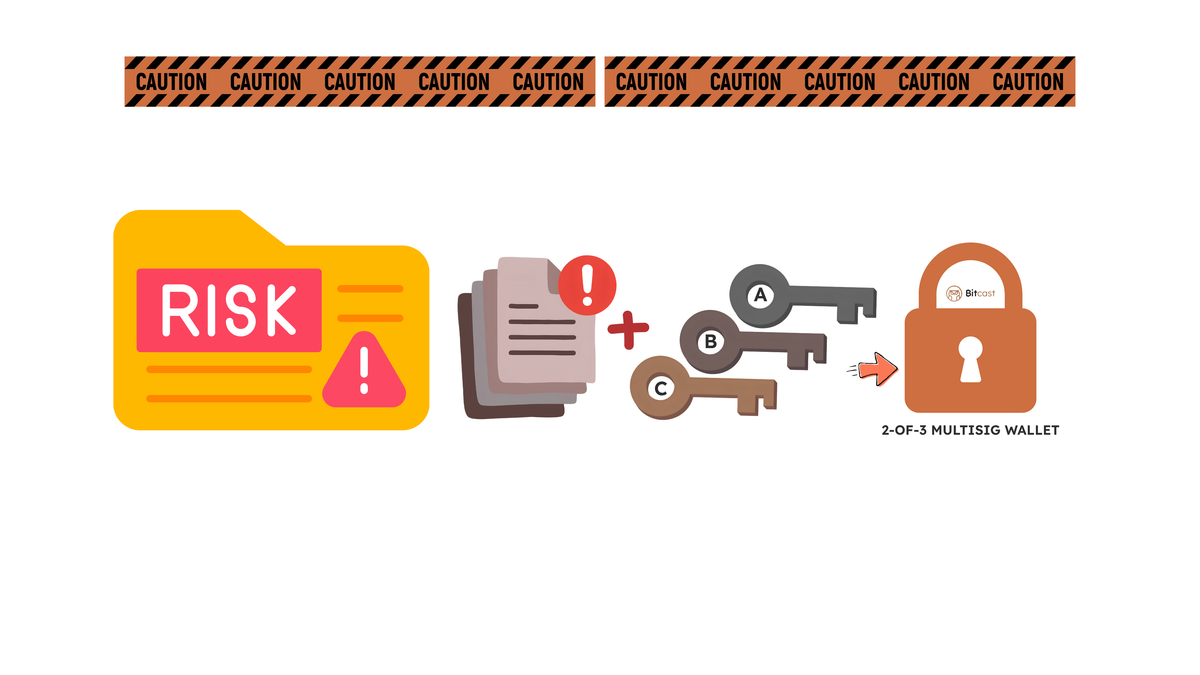
- Weighing the Pros and Risks: Self-Custody vs. Using Crypto as Collateral
- Conclusion
- Frequently Asked Questions (FAQ)
- 1. How does using Bitcoin as collateral to borrow USDC differ from a standard bank loan?
- 2. Why do financial institutions prioritize fixed-rate interest over floating rates?
- 3. Is it currently legal in Thailand to use Bitcoin as collateral for loans?
- 4. What happens if the price of Bitcoin drops significantly while under a loan agreement?
- 5. Does converting Bitcoin to cbBTC for collateral carry different risks compared to self-custody?
One of the lingering questions for HODLers over the years has been: If we believe that the price of Bitcoin will grow exponentially in the long term, do we really have to reluctantly sell off these limited assets whenever we genuinely need cash?
Selling Bitcoin not only means losing a rare asset but also comes with tax burdens and massive opportunity costs.
However, in the past week, major news shook the global financial world: Coinbase launched a fixed-rate USDC lending service using Bitcoin as collateral.
This event is not just another feature added to a typical trading app; behind the scenes, it reflects a historic paradigm shift where global financial institutions no longer view Bitcoin as a speculative toy, but as a premier financial collateral they can leverage.
Today, we will dive deep into the perspectives of global institutions, decode the mechanisms behind this case, and connect the dots to see how financial institutions and regulators, both domestically and internationally, are moving in this direction.
The 3 Eras of Evolution: How Has the Global Financial Institution's View on Bitcoin Changed?
Looking back over the past decade, the attitude of Wall Street toward Bitcoin has clearly evolved through three major phases.
The first was the era of skepticism, where traditional financial executives viewed Bitcoin merely as a baseless speculative tool or an asset for the black market waiting to collapse.
This lasted until the second era, when giants like BlackRock and Fidelity stepped in to push for Spot Bitcoin ETFs in the U.S. Wall Street's focus began to shift, accepting Bitcoin as digital gold for diversifying portfolios by 1 to 3 percent to hedge against inflation and central bank money printing.
Today, we are entering the third era, where institutions are elevating Bitcoin as a strategic reserve asset and premier collateral that cannot be interfered with, what financiers call "Pristine Collateral."
There are four structural reasons why global financial institutions value Bitcoin at this level:
- Mathematically provable absolute scarcity: Bitcoin has a fixed supply cap of 21 million, while fiat currencies globally are being diluted by ever-increasing public debt.
- Zero counterparty risk at the foundation: Bitcoin has no CEO, no corporate debt, no bankruptcy risk, and no one can print more coins to bail anyone out like in traditional finance.
- 24/7/365 global liquidity: The Bitcoin blockchain never closes for public holidays, allowing institutions to value assets and settle cross-border transactions in real-time.
- Corporate treasury management strategies: Wealthy individuals and public companies hold to the financial philosophy that borrowing cash against high-quality assets is the most powerful way to generate liquidity, as it avoids both the loss of rare assets and the tax implications of realizing gains through selling.
Evidence for this era is clear as BlackRock's iShares Bitcoin Trust (IBIT) has grown to over $63 billion in assets under management, while public companies like MicroStrategy continue to accumulate Bitcoin, holding over 846,000 BTC to date.
Even old-school financial institutions like Cantor Fitzgerald have recently launched a $2 billion lending business to provide cash loans specifically to institutions using Bitcoin as collateral.
Decoding the Coinbase x Morpho Case: When CeFi Meets DeFi
What makes Coinbase's latest news a milestone for the digital asset industry is the seamless integration of institutional strength with blockchain technology.
Typically, institutional investors cannot directly borrow in the DeFi world due to legal constraints, KYC requirements, and fiduciary duties. Coinbase acts as a regulated gateway, creating a bridge to the Morpho Midnight protocol on the Base network.
When users or institutions deposit Bitcoin as collateral, the system locks the coins and automatically converts them to Coinbase Wrapped Bitcoin (cbBTC) at a 1:1 ratio. Then, the cbBTC is locked in a smart contract to instantly unlock a USDC loan into the account.
The shift from floating interest rates on Morpho Blue—which already has over $1.4 billion in circulating loans—to fixed rates with defined maturity dates is significant. For institutional treasury management, borrowing at a floating rate where one doesn't know the future percentage is an unmanageable risk. Locking in a fixed rate for the duration of the contract is the final piece of the puzzle that enables corporate capital to enter with confidence.
However, this agreement has strict safety conditions, with a Liquidation LTV set at 86%. If the total debt value including interest hits 86% of the collateral value, the on-chain system automatically liquidates the collateral, adding a 4.38% liquidation penalty. Crucially, for fixed-rate contracts, if the loan isn't repaid by the maturity date, the contract is liquidated immediately, even if the price of Bitcoin hasn't dropped.
A Look at Trends in "Thailand": Where Are Institutions and Regulators Moving?
Back home, Thailand is in the process of laying the foundation to support this new wave of financial institutions. Over the past year, clear signs of movement have emerged from three pillars:
1. The Thai SEC: Paving the Way for Institutional-Grade Products
The SEC has moved forward with public hearings to establish guidelines for the formal introduction of Crypto ETFs in Thailand, while simultaneously pushing for Crypto Futures to be listed on TFEX. This aims to provide institutional investors and local funds with legal risk management tools. Furthermore, the SEC has revised capital adequacy requirements for Digital Asset Custodians to encourage the emergence of independent, institutional-grade asset service providers within the country.
2. Mutual Fund Sector: Institutional capital begins to flow in
Before local Crypto ETFs are officially launched, leading Thai asset management firms have pioneered the sale of Fund of Funds that invest in overseas Spot Bitcoin ETFs to cater to institutional investors and ultra-high-net-worth individuals. These include ONE-BTCETFOF-UI by One Asset Management, KT-BTCETFFOF-UI-A by Krungthai Asset Management, and ASP-CRYPTO-UI by Asset Plus Fund Management.
3. Bank of Thailand: Policy direction on Thai Baht Stablecoins
On the central bank side, it was recently revealed that they are preparing to open public hearings on the regulatory policy for Thai Baht Stablecoins. The focus is for commercial banks to act as issuers of 1:1 Baht-backed tokens to integrate with the country's payment system. Previously, Siam Commercial Bank (SCB) successfully tested cross-border transfers using stablecoins within the BOT's Regulatory Sandbox.
Current limitations vs. the future landscape of Bitcoin lending in Thailand
Many may wonder: since overseas markets have started allowing Bitcoin to be used as collateral for cash loans, can crypto exchanges in Thailand offer this service as well? The answer is currently no, as SEC Notification No. KorThor. 6/2566 strictly prohibits all digital asset business operators in Thailand from providing or facilitating "Deposit Taking & Lending" services for digital assets.
This regulation was issued to protect investors following past lessons where platforms lent out customer tokens, leading to liquidity crises. Therefore, if Bitcoin-backed cash loan services were to emerge in Thailand in the future, the business model would not be able to exist on crypto exchanges. Instead, it would need to be realized through partnerships between financial institutions licensed for lending under the BOT and DA Custodians licensed under the SEC.
"Even though local exchanges cannot yet offer lending services, market players like Liberix have pioneered Baht lending using crypto as collateral. This is a clear signal that the demand among Thais for cash liquidity without having to sell their Bitcoin is already forming, even before major financial institutions or commercial banks formally enter this market."
Imagine a scenario in a few years when financial institutions or capital groups join forces. Private banking clients or business owners holding low-cost Bitcoin could lock their coins with a secure Custodian and borrow Thai Baht or Thai Baht Stablecoins to use for business operations, without worrying about their coins being rehypothecated.
Weighing the Pros and Cons: Self-custody vs. Collateralized Borrowing
To help you clearly see the differences, I have summarized a comparison between the two options in the table below:
| Consideration Dimension | Pure Self-Custody | Collateralized Borrowing |
|---|---|---|
| Private Key Ownership | 100% control via Hardware Wallet | Control transferred to Custodian or Smart Contract |
| Counterparty Risk | Zero; assets cannot be seized by others | Risk of technical/liquidity issues with custodian/system |
| Liquidation Risk | None; amount of Bitcoin remains the same | High risk if price drops to LTV threshold |
| Cash Liquidity | None until you decide to sell your coins | Receive cash (USDC/Baht) to use immediately |
| Tax Event | No tax liability as long as you don't sell | Not considered a sale; does not trigger Capital Gains tax |
| Technology Risk | Highest security on native chain | Requires conversion to Wrapped Tokens (smart contract risk) |
For those interested in learning more about the risks of cross-chain transfers, you can refer to the article "Explaining Why Bitcoin Transfers Can Occur Across Multiple Chains" on Bitcast.
Conclusion
The move by Coinbase alongside Morpho and Wall Street’s awakening is clear proof that traditional finance is not consuming Bitcoin; rather, the financial system is having to surrender and adapt to Bitcoin's most robust properties.
When a truly scarce asset like Bitcoin becomes the foundation of the modern credit system, the future financial world will be gradually shaped by transparency and financial discipline that cannot be artificially conjured. However, for us as individual holders, the most important thing is to clearly balance our risk management.
Your primary Bitcoin holdings should be strictly maintained yourself on a highly secure, standardized Hardware Wallet, because true financial sovereignty must remain in our own hands. Liquidity creation should be limited to the auxiliary portion, always ensuring a safety buffer.
What are your thoughts on this direction? If commercial banks in Thailand were to allow us to use Bitcoin as collateral for home loans in the future, would you be willing to put your coins up for collateral? Come share your perspective in the comments!
And for those wanting to start storing private keys safely, feel free to consult with us via our LINE Official Account @bitcast (Click for immediate consultation), follow more articles in our Bitcast article archive, or view more products here.
Frequently Asked Questions (FAQ)
1. How is using Bitcoin as collateral to borrow USDC different from a typical bank loan?
Borrowing crypto via systems like Morpho on Coinbase involves loan approval instantly through smart contracts based on the value of the Bitcoin used as collateral (over-collateralized). This eliminates the need for credit bureau checks or income statements and removes the tedious paperwork involved with conventional banks.
2. Why do financial institutions prioritize fixed-rate interest over floating-rate interest?
Financial institutions need to plan cash flows accurately in advance. Floating interest rates in the crypto world are highly volatile and can spike suddenly, potentially disrupting investment plans. Having fixed-rate loans helps alleviate concerns and paves the way for more institutional capital to enter the market.
3. Can we currently use Bitcoin as collateral to legally borrow money in Thailand?
If you are referring to a Digital Asset Exchange licensed in Thailand, they currently cannot provide this service directly. This is due to SEC regulations that prohibit digital asset exchange operators from offering deposit-taking and lending services to prevent systemic risks to trading platforms.
However, on the specialized lending service side, platforms like Liberix have begun operating in Thailand. They are a Crypto-Backed THB Loan provider that allows individual and private clients to pledge Bitcoin or leading cryptocurrencies as collateral to borrow Thai Baht for liquidity without needing to sell their coins. The collateral storage structure is separated through a global-standard custodian.
Borrowers must still calculate a safe LTV ratio and accept platform risks, as well as the risk of liquidation if Bitcoin prices experience severe volatility, just as with global-scale platforms.
4. What happens if the Bitcoin price drops severely while under a loan contract?
If the Bitcoin price falls until the LTV reaches 86%, the system will automatically perform a forced liquidation of the collateral on the blockchain, along with additional penalty fees to repay the debt. Therefore, borrowers must consistently add more coins to maintain a safe level.
5. How does converting Bitcoin to cbBTC for collateral differ in risk from holding the coins yourself?
Self-custody in a hardware wallet carries zero counterparty risk, but converting to cbBTC means accepting the risk of depositing coins with Coinbase, as well as risks associated with smart contracts or bridge technology. If the intermediary system faces issues, the locked coins could be affected.


แชร์:
What is a hardware wallet? An easy-to-understand guide for beginners.
Why Bitcoin-Only? A comparison of hardware wallets from a perspective you won't find in typical articles.