


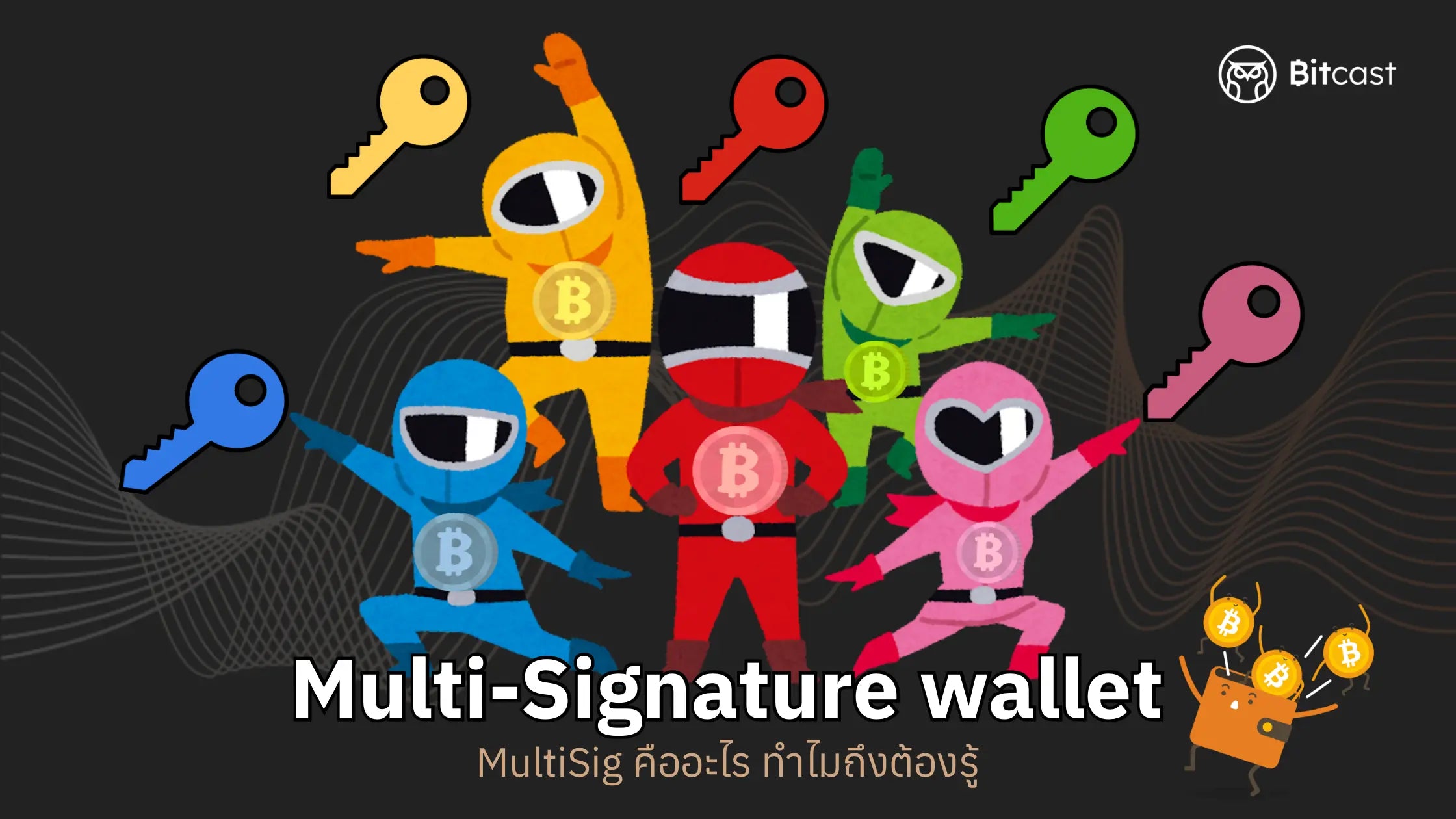
What is a Multisig Wallet? Why Are Serious Bitcoin Users Becoming More Interested?
If you're starting to explore self-custody for your Bitcoin, you might have come across the term "Multisig Wallet." However, you might still be unsure what it is, how to use it, and if it's right for you.
This article will introduce you to Multisig Wallets, from their basic concept to their advantages and precautions, helping you decide if they suit your needs.
What is a Standard Bitcoin Wallet (Single Signature)?
Before understanding Multisig, let's review.
Common wallets we are familiar with, such as hardware wallets, mobile wallets, or general software wallets, use a system of signing transactions with a single private key. This means:
Whoever possesses the private key = owns the funds = can move the funds immediately.
While convenient and easy to use, the risks include:
- If the Key is compromised = funds are lost.
-
If the Key is hacked = funds are lost.
- If the Key is lost and there's no backup = funds are also lost.
What is a Multi-signature Wallet?
Multisig is short for Multi-Signature, which literally means "multiple signatures." It refers to a wallet that requires "more than" one key to approve a transaction.
For example:
📌 A 2-of-3 Multisig = requires 2 out of 3 keys to approve a transaction.
📌 A 3-of-5 Multisig = requires 3 out of 5 keys to approve a transaction.
📌 A 5-of-5 Multisig = requires 5 out of 5 keys to approve a transaction.
Therefore, even if one key is lost or stolen, the funds cannot be stolen from the wallet.
Multisig Usage Examples
For "diversified risk" storage:
Create a 2-of-3 Multisig and store the 3 keys in different locations:
- Key 1: On a Hardware Wallet at home.
- Key 2: On a Tapsigner you carry with you.
- Key 3: Stored in a bank safe.
If an unexpected event occurs, such as a device breaking, a fire, or theft, you still have 2 out of 3 keys available for use.
For "business" storage:
For example, if there are 5 partners and they choose to use a 3-of-5 Multisig:
When funds need to be spent, it can only be done if at least 3 out of the 5 partners jointly sign the transaction.
Advantages of Multisig
- More secure than single-key storage.
- Prevents a single point of failure.
- Compatible with various devices like Keystone, Tapsigner, Coldcard.
- Suitable for long-term storage, inheritance planning, or businesses.
Precautions
- Requires learning and familiarity to use.
- Setup and usage are more complex than standard wallets.
- Requires more keys and recovery information to be stored.
- Requires supporting devices or applications for Multisig, such as Nunchuk, Sparrow Wallet, Electrum, etc.
New to Multisig Wallets? What Should You Do Next?
- Try setting it up through a Software Wallet like Sparrow Wallet or Nunchuk.io (basic setup methods will be covered in upcoming articles).
- Learn important terms like xpub, descriptor wallet, etc.
- Try setting up a 2-of-3 Multisig yourself using the tools you have, such as a Hardware Wallet + Tapsigner + Backup Seed.
- Don't forget to test sending small transactions first for peace of mind.
Summary
A Multisig Wallet is a wallet that requires "more than" one key to confirm a transaction, increasing security and elevating the level of safety when self-custodying Bitcoin. It is suitable for those holding long-term, large sums of money, or wishing to further diversify storage risks.
🧭 Need Personal Advice?
If you need advice on:
- Choosing the right equipment for Multisig.
- Designing a wallet structure for long-term storage or business use.
- Setting up a functional and secure Multisig Wallet.
💬 Contact us via Facebook inbox: Bitcast or visit our website at thaibitcast.com
![[NEWS] สรุปประเด็นกฎหมายคริปโตล่าสุด](http://thaibitcast.com/cdn/shop/articles/Cover11-1791345226262.png?v=1791345941&width=3840)

แชร์:
5 Tips for Storing Seed Phrases for Beginners and Intermediates
As public debt soars past $37 trillion, Bitcoin quietly grows, one block at a time.