


- Why is Self-Custody still necessary?
- 2. Lessons from the Coldcard incident: The problem is not the "principle" but the "method"
- Lessons learned from this event to enhance understanding of Self-Custody
- 1: Knowledge and Psychological Preparedness (Foundation & Preparedness)
- 2: For those who want to upgrade to advanced security (Advanced Practices)
- Summary: Freedom with Responsibility
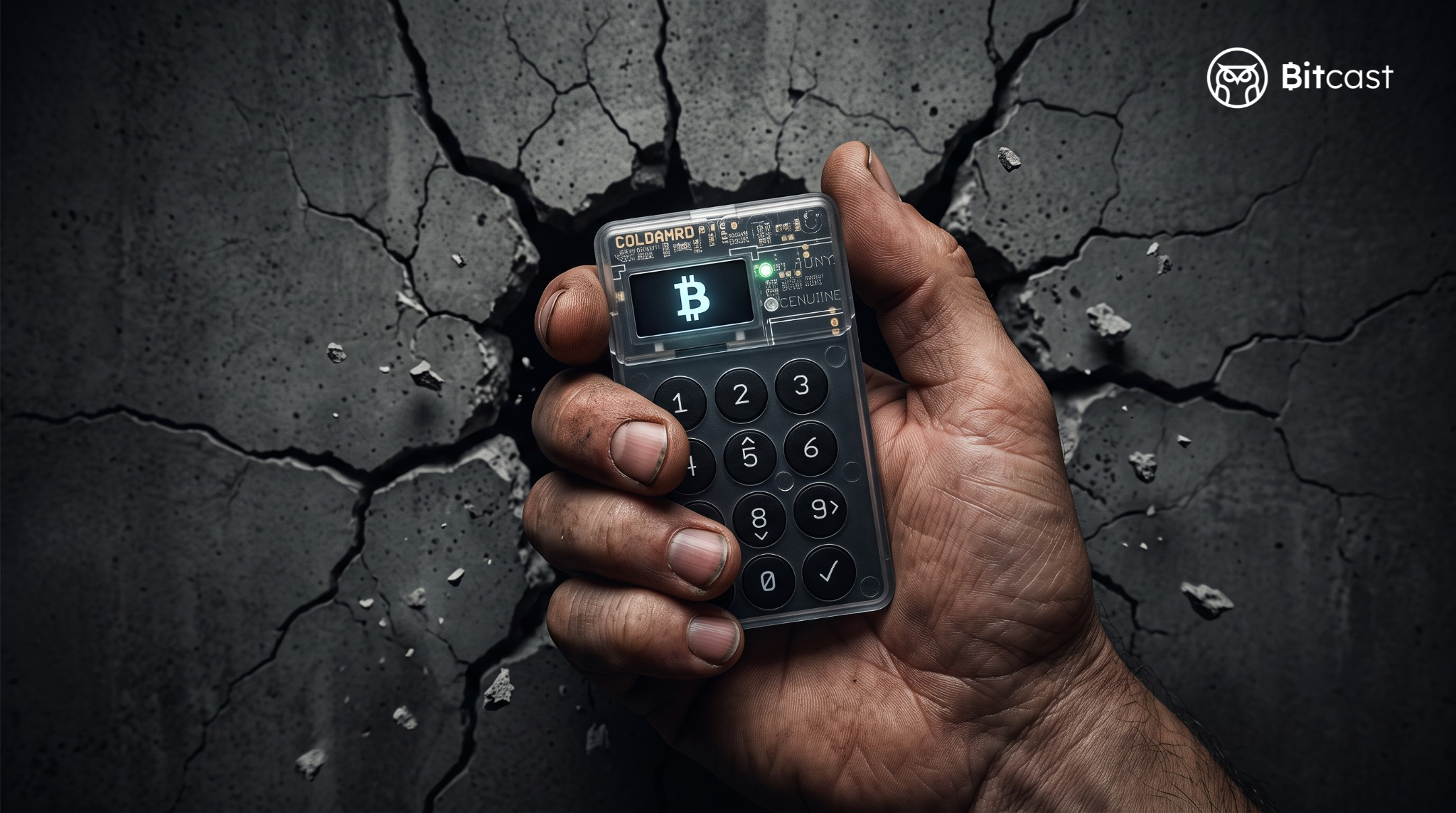
News of a software vulnerability in the entropy generation of the well-known Hardware Wallet, COLDCARD, leading to the movement of tens of millions of dollars worth of Bitcoin from wallets in a matter of days, has become a hot topic that has shaken long-term investors (HODLERs) worldwide.
Many people are starting to ask, "If devices designed to securely store Bitcoin can be hacked, is the concept of self-custody still viable?"
If we remain calm and take the time to understand the situation without panicking, this incident is not a warning to abandon self-custody. Instead, it is a "wake-up call" for us to re-evaluate and deepen our understanding of self-custody.
Why is Self-Custody still necessary?
In the traditional financial world or when depositing assets on an exchange, we must first understand that we are entrusting our money to a "third party." If the exchange collapses, undergoes maintenance, or freezes accounts, we completely lose control over our assets, as repeated lessons from the past have shown.
The fundamental principle at the heart of Bitcoin remains unchanged: "Not your keys, not your coins."
Self-custody is the only process that grants "Financial Sovereignty" to individuals, making us "owners of our own money" that no one can seize, freeze, or block our transactions.
And if you ask whether depositing with an intermediary is forbidden, or if self-custody must be done 100%, in my personal view, I believe that choosing to store digital assets, whether on an Exchange, a Spot ETF fund, or using Self-Custody, does not mean that one method is always unsafe or wrong. Rather, it means we must "understand" the nature, specific risks, and know how to mitigate the risks of each form to suit our goals.
- Depositing on Exchanges, ETFs, or Institutional Funds
- Pros: High liquidity, fast buying and selling, legal and regulatory frameworks, convenient, no need to bear the risk of managing private keys oneself.
- Cons: Counterparty risk (e.g., platform bankruptcy, hacking, withdrawal suspension), and exposure to risks related to government policies or legal seizures.
- Self-Custody:
- Pros: Grants complete financial rights and sovereignty; no one can seize or freeze assets. Ideal for long-term wealth accumulation.
- Cons: 100% user operational risk. If a seed phrase is lost, a passphrase is forgotten, or incorrect knowledge is applied, assets will be lost irrevocably.
Conclusion: The choice of storage method is not about extremism, but about managing risk according to objectives (e.g., allocating a portion for speculation on an Exchange/ETF and another portion for long-term wealth via Self-Custody) to truly control risk at an acceptable level.
Lessons from the Coldcard incident: The problem is not the "principle" but the "method"
The COLDCARD incident, which made headlines, resulted from an error in the seed phrase entropy generation at the firmware level. This highlights important points:
- Hardware Wallets are merely key management devices: The coins themselves are not stored inside the hardware device but are distributed on the blockchain. The device's function is solely to keep the Private Key in an offline state.
- Moving beyond "Lazy Self-Custody": Buying a Hardware Wallet does not automatically complete our Self-Custody setup. We should still strive to gain knowledge and update our security practices. If we rely solely on convenience and trust the manufacturer's software 100% without educating ourselves, we remain vulnerable.
This incident therefore does not prove that Self-Custody has failed, but rather that Self-Custody relying on a single point of failure can be risky.
Lessons learned from this event to enhance understanding of Self-Custody
The incident with COLDCARD is a major lesson for the community, but the most important thing is to turn this problem into an opportunity to enhance our own security. I will divide the approach into two main parts: the foundational understanding and the practical techniques:
1: Knowledge and Psychological Preparedness (Foundation & Preparedness)
- 🧪 1. Practicing Wallet Recovery (Recovery Check / Dry Run): The main concern for most self-custody users often stems from "uncertainty" and a deep-seated fear that if something goes wrong, their money will be lost. The best approach is to perform a Dry Run, or actual wallet recovery test, right from the initial device setup (transfer a small amount of test money, then wipe the device to practice recovering it with the Seed Phrase). This process helps build familiarity and assures us that we understand the system and can genuinely recover our assets in an unexpected event.
- 📖 2. Study and understand the basics of Seed Phrase generation and security mechanisms: Before enabling advanced features, it is recommended to study the fundamental knowledge of how a Seed Phrase is generated (Master Seed mechanism, Entropy, and BIP-39 standard), as well as understanding how each tool, such as Passphrase, Multisig, or dice rolls, mitigates risks. This ensures that we use these features correctly and precisely, rather than simply following instructions without understanding the underlying mechanism.
2: For those who want to upgrade to advanced security (Advanced Practices)
- 1. Manual Entropy Generation: Instead of relying solely on random number generation algorithms from software or internal chips, we can generate entropy ourselves using physical methods, such as dice rolls or coin tosses, during wallet setup. This method draws randomness from the real world to incorporate into the wallet, reducing reliance on the manufacturer's software random number generators (PRNG/RNG) and decisively eliminating vulnerabilities like insecure firmware random number generation.
- 2. The Power of Passphrase (25th Word): Setting a BIP-39 Passphrase is like creating an additional layer of "hidden vault." Even if someone obtains our 12 or 24-word Seed Phrase, without the Passphrase, they cannot view or access the actual assets.📌 Recent News Observation: It has been reported that COLDCARD wallets using Passphrases are also being affected. However, this is not due to the inherent fragility of the Passphrase mechanism, but because the initial Seed Phrase generation had very low entropy (insufficient randomness), allowing attackers to brute-force and find Passphrases that were not long enough. Therefore, Passphrase remains a powerful security feature, but it must be built upon a secure Seed Phrase from day one.
- 3. Don't put all your eggs in one basket (Multisig Architecture): For those with large investment portfolios, risk diversification can be done at two levels:
- Multisig (Multi-Signature): This involves moving from a single key for approval (Single Signature), which is a single point of failure, to requiring multiple keys for approval (e.g., a 2-of-3 system). This prevents issues if one key is lost or stolen by a hacker.
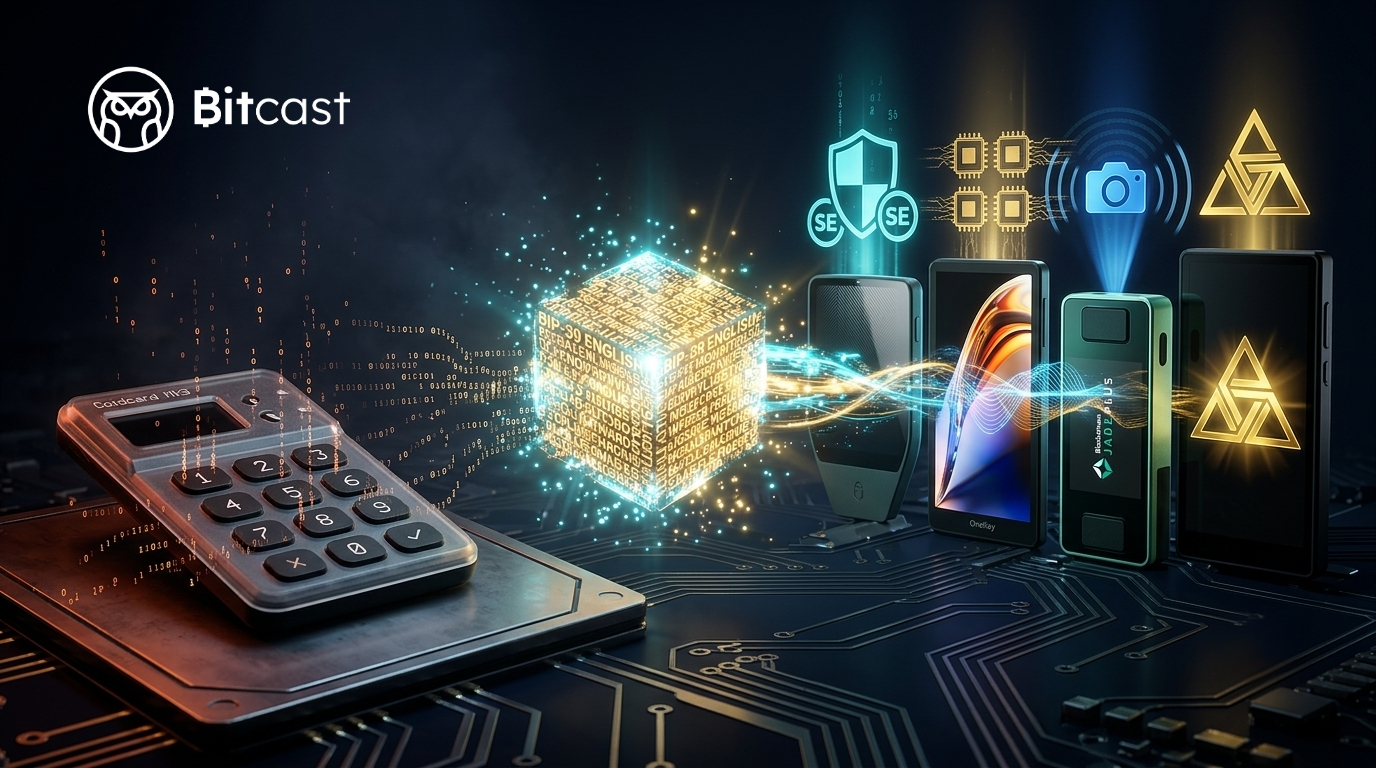
- Multi-Vendor Multisig (Diversifying Hardware Wallet Brands): This elevates Multisig to the next level by using different brands of Hardware Wallets for each key. For example, Key 1 uses Trezor, Key 2 uses Blockstream Jade, and Key 3 uses OneKey. This strategy mitigates the risk if one brand has a specific bug or vulnerability in its firmware. Even if one brand's device is hacked, the hacker would only obtain one key, which is insufficient to withdraw funds from our Multisig system.
Warning: The methods recommended above require a high level of knowledge, understanding, and skill to use. If used without understanding, they can be more detrimental than beneficial.
Summary: Freedom with Responsibility
Choosing the path of Self-Custody means choosing to fully bear the responsibility for one's own assets. Although there is a learning curve and technical challenges, compared to the risks of relying on intermediaries, Self-Custody remains the only option that provides true long-term sovereignty and security.
News and technological vulnerabilities will continue to emerge, but they will serve as lessons for the community to develop stronger solutions and for users like us to realize that "knowledge, understanding, and mindfulness" are the most important things in protecting our wealth.
แชร์:
Reasons why purchasing a hardware wallet through an Authorized Reseller might not be as scary as you think?
Understanding Entropy: Lessons from Coldcard and Secure Hardware Wallet Selection