

- Who created the world's first Hardware Wallet?
- What is SatoshiLabs and what problem was it founded to solve?
- Who are the founders of SatoshiLabs?
- Don't just trust because someone says it's secure; verify it yourself.
- The name “SatoshiLabs” and the ideology it intends to convey
- The birth of Trezor: A turning point for the crypto world
- SatoshiLabs' core philosophy: Transparency before secrecy
- 1. Everything must be verifiable
- 2. Users must understand, not just click and use
- Why SatoshiLabs is important to the crypto world
- Summary
Who created the world's first Hardware Wallet?
When talking about Hardware Wallets, the first name that many of you might think of is often Trezor. But behind this small device, it has been hailed as the "security standard" of the crypto world.
This Central European tech company plays a more significant role than just selling devices. That company is SatoshiLabs.
This article will take you on a comprehensive journey to learn about SatoshiLabs, from its origins, concepts, and security philosophy, to why this company has permanently changed how people worldwide store crypto.
What is SatoshiLabs and what problem was it founded to solve?
SatoshiLabs was founded in 2013 in Prague, Czech Republic, by a group of early Bitcoin developers and users. The company's goal didn't start with "selling products," but rather with a simple yet very important question:
“How can we store our own Bitcoin without trusting anyone, and without being a technical expert?”
Between 2011 and 2013, the crypto world was still in its early stages. Most users were developers, cryptographers, or high-risk takers. At that time, the term Hardware Wallet didn't exist, so most users had to choose between:
- Storing private keys on a computer
- Using web wallets or web exchanges
- Or manually storing files/paper, which was cumbersome and error-prone
All methods shared a common trait: "high risk" from malware, keyloggers, phishing, and remote hacking. SatoshiLabs therefore posed the fundamental question: "How much can users truly own their Bitcoin?" When private keys are constantly exposed to internet-connected devices or entrusted to third parties, ownership becomes merely an illusion. The company started with the assumption that if the problem of key storage could not be solved, widespread adoption of Bitcoin would never be sustainable.
Who are the founders of SatoshiLabs?
SatoshiLabs was founded by key figures in Bitcoin's history, namely:
- Marek Palatinus (known as Slush)
- Pavol Rusnak (known as Stick)
Both are developers and early Bitcoin users who have been involved in the Open-Source community for a long time. Importantly, they are not outsiders who joined because of a trend, but people who "actually used Bitcoin" and "actually lost money" due to the insecurity of the old system. This led SatoshiLabs to grow with one important mindset:
“Don’t trust, verify”
Don't just trust because someone says it's secure; verify it yourself.
The name “SatoshiLabs” and the ideology it intends to convey
The company's name was not chosen by accident.
“Satoshi” refers to Satoshi Nakamoto, the creator of Bitcoin, and
“Labs” reflects the concept of experimentation, research, and questioning existing systems.
The name SatoshiLabs therefore serves as a declaration of intent from the outset that this company aims not merely to be a device vendor, but to inherit and experiment with extending the ideals of Bitcoin into the real world, particularly the concepts of reducing reliance on centralized trust and enabling users to truly own their assets.
The birth of Trezor: A turning point for the crypto world
The concept that became the foundation of Hardware Wallets is the clear separation of device roles. Computers should only connect to the network and display information, while private keys and transaction signing should be separated into dedicated, offline devices with predictable behavior. This concept may seem simple now, but at the time, it completely revolutionized the way digital assets were stored.
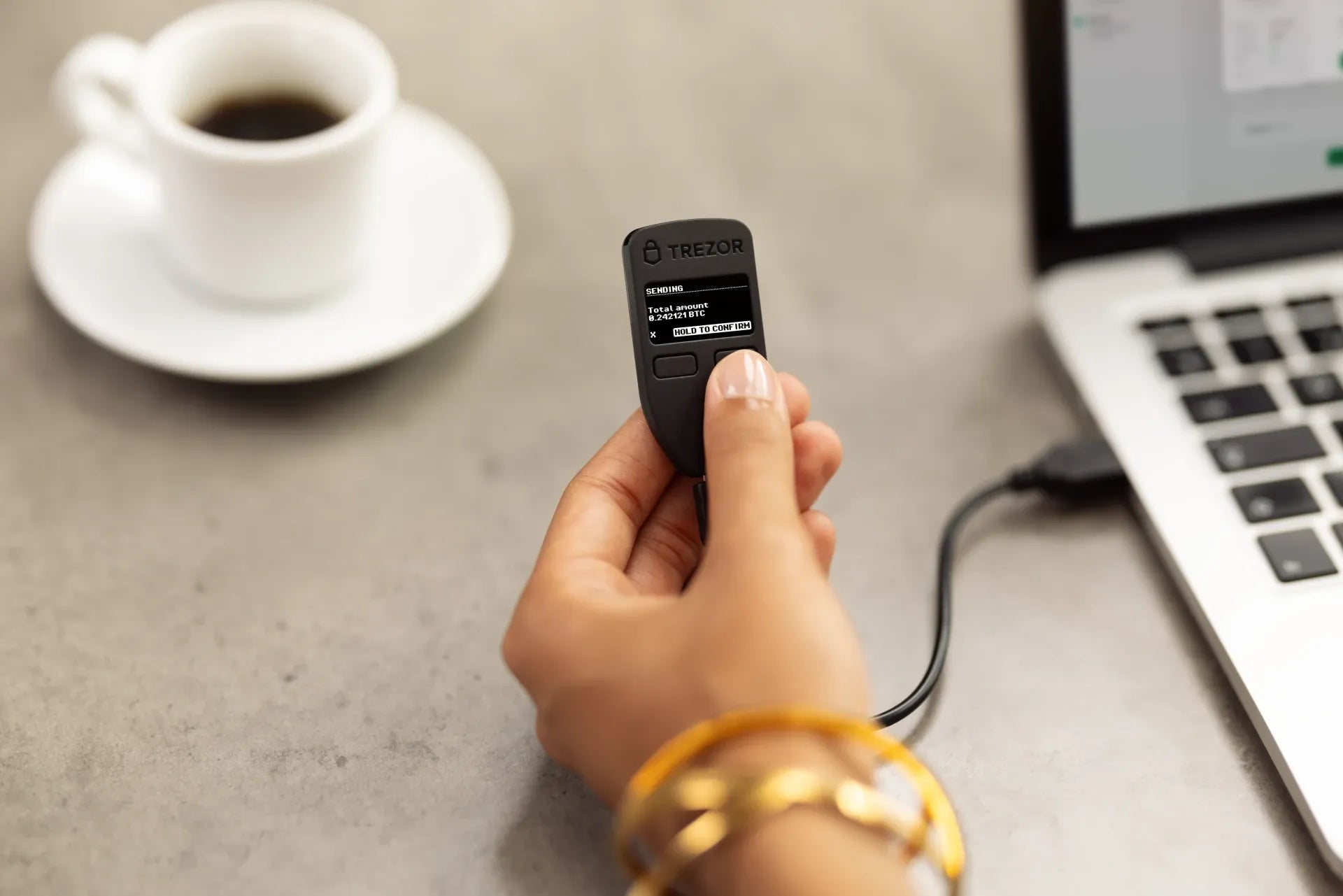
In 2014, SatoshiLabs launched Trezor One, which is recognized as the world's first Hardware Wallet. The concept of Trezor at that time was simple, yet powerful.
- 🔐 Private keys never leave the device
- 🖥️ Computers only "send commands"
- ✍️ Transaction signing occurs only within the hardware
- 👀 Users must physically confirm on the device every time
This was the first time the concept of "Not your keys, not your coins" was made practically usable for the general public. Trezor enabled ordinary users to self-custody their private keys through a specially designed device, without needing to understand a complex system. This was a crucial turning point that allowed users to self-custody their assets.
SatoshiLabs' core philosophy: Transparency before secrecy
One thing that sets SatoshiLabs apart from many companies in the same industry is its adherence to Open-source principles, which is the same core principle as Bitcoin, allowing anyone to audit it.
1. Everything must be verifiable
Trezor's software and firmware are open-source, meaning:
- Anyone can view the code
- External developers can audit it
- Reduces the risk of backdoors or hidden functions
SatoshiLabs believes that a security system relying on "secrecy" will inevitably be fragile in the long run.
2. Users must understand, not just click and use
SatoshiLabs places great importance on UX, as it believes that:
"Security that users don't understand is another form of risk."
Therefore, the device is designed to have:
- Easy-to-read screen
- Clear setup process
- Uncomplicated transaction confirmation
Why SatoshiLabs is important to the crypto world
Without SatoshiLabs and Trezor, the crypto world might still rely on:
- Web wallets
- Exchanges
- And more intermediaries than it does today
What SatoshiLabs has achieved is not just creating a device, but changing users' mindsets:
From "who can best store our coins for us?"
To "how can we store our own coins most securely?"
Summary
SatoshiLabs is not just a company that sells Hardware Wallets, but one of the pioneers who laid the foundation for the concept of Self-Custody in the crypto world, making it practically usable for ordinary people. This company does not strive to create perfect security, but rather to build a system that users can understand, verify, and take responsibility for themselves. This is why SatoshiLabs or Trezor are still among the first names that come to mind when discussing storing Bitcoin by oneself.


แชร์:
What is SeedQR? Why should we know about it?
Why should one understand BIP when using a hardware wallet?