

- 1. What is Tangem? And how does it work?
- Basic operating principles
- 2. A deep dive into security
- EAL6+ Certified Chip
- IP68 water and dust resistance standard
- Audited source code
- 3. Key storage formats: Seedless vs. Seed Phrase
- 1) Seedless Mode
- 2) Seed Phrase Mode
- 4. Real-world user experience
- 5. Summary of pros & observations
- Pros
- Cons
- 6. Admin's personal perspective & initial advice
- Who is Tangem for?
- Who might not be a good fit for Tangem?
- Advice on purchasing and usage
- Overview
When people think of Hardware Wallets or self-custody digital asset wallets, they usually picture a device with a small screen, buttons, and the need for a charging cable. However, the Tangem Wallet has shifted this paradigm by offering a crypto wallet in the form of a "credit card" that uses NFC technology to connect with your smartphone.
This article will take you through a deep dive into Tangem in every dimension—from its security architecture, real-world usage, and pros/cons, to my personal view as an actual user.

1. What is Tangem? And how does it work?
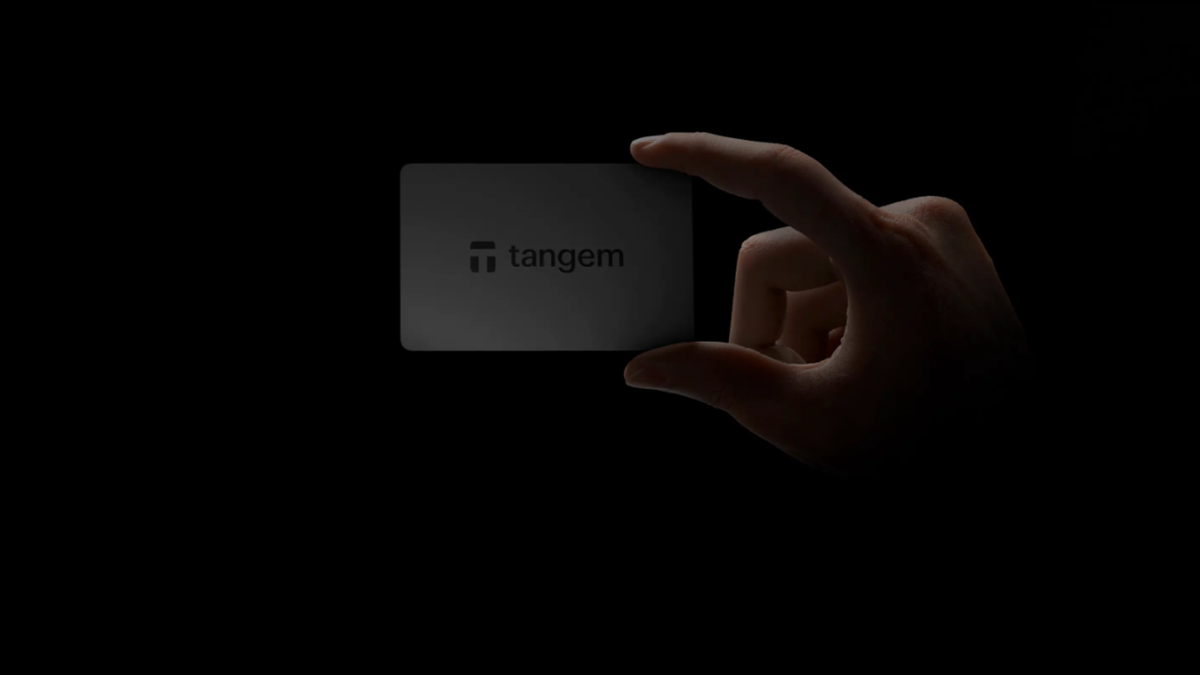
Tangem is a hardware wallet designed in the form of a 1mm-thick plastic card, the same size as a credit card. Inside, it contains a high-security processor chip (Secure Element) and NFC—with no screen, no buttons, and no battery.
Basic operating principles
- Wireless & Battery-free: The Tangem card is powered via NFC from your smartphone when you tap it against the device, eliminating concerns about battery degradation over time.
- On-Chip Key Generation: The private key is generated within the chip on the card during the setup process and never leaves the chip. Even the Tangem app on your phone cannot access the private key.
- Approve transactions by "tapping": When you need to transfer funds or sign a smart contract, the mobile app sends transaction data to the card's chip. The chip signs the transaction internally and sends only the signature back to your phone.
2. A deep dive into security
Security is the heart of a hardware wallet, and Tangem is built with a robust design.
EAL6+ Certified Chip
The chip Tangem developed with Samsung holds EAL6+ security certification—the same level used in biometric passports and high-end credit cards—protecting against physical and side-channel attacks.
IP68 water and dust resistance standard
The card is a solid, cast plastic piece, waterproof and dustproof, resistant to X-rays, and capable of withstanding temperatures from -25°C to +50°C. It can even bend slightly without damaging the chip.
Audited source code
- Firmware: Analysed for security by independent institutes like Kudelski Security and Silence Laboratories, confirming there are no backdoors or hidden functions to send out the private key.
- Open-Source App: The Tangem application source code is available on GitHub for the developer community to inspect.
3. Key storage formats: Seedless vs. Seed Phrase
Tangem has a unique backup model that distinguishes it from other brands, offering two systems in the Tangem 2.0 series.
[Tangem Setup Options]
├── 1. Seedless Mode (Default) ──> Private Key generated and distributed across 2-3 cards via NFC.
└── 2. Seed Phrase Mode ──> Randomized creation / Import 12-24 word Seed Phrase (BIP-39 standard).
1) Seedless Mode
- Concept: Eliminates the vulnerability of a "Seed Phrase paper" that could be lost or photographed.
- Function: When setting up, the first card generates a private key and then communicates via peer-to-peer encryption with the 2nd and 3rd cards (Backup Cards) to copy the private key to their chips via NFC.
- Pros: No need to write down 12-24 words; reduces human error.
- Requirement: If the primary card is lost, the backup (2nd or 3rd) card can be used in conjunction with your Access Code to restore access to your assets immediately.
2) Seed Phrase Mode
- For those who prefer the peace of mind offered by the BIP-39 standard, the Tangem 2.0 series allows you to enable a function where the app displays a 12 or 24-word Seed Phrase to write down, or allows you to import an existing Seed Phrase onto the card.
4. Real-world user experience
| Usage Dimension | Details and Functions |
|---|---|
| Portability | Can be kept in your wallet along with your ID/credit cards; it doesn't look like a hardware wallet. |
| Asset Support | Supports over 80+ major blockchains (Bitcoin, Ethereum, Solana, BNB, Cardano, XRP, etc.) and thousands of tokens. Check more details at: https://tangem.com/en/blog/post/cryptocurrencies-in-tangem/ |
| dApps / Web3 Connection | Supports WalletConnect, making it easy to connect to Decentralized Exchanges (DEX), DeFi, or NFT marketplaces on your mobile phone. |
5. Summary of Pros & Considerations
Pros
- Very easy to use: The tap-to-pay experience is similar to standard contactless payments, making it more accessible than traditional formats.
- High durability: No battery to swell, no ports to break, and no screen to crack; resistant to extreme environmental conditions.
- Risk diversification with card packs (2-3 Cards Pack): If one card is lost, you still have other backup cards to recover assets immediately without waiting to order a new device.
- Accessible pricing: Compared to getting 2-3 high-security devices at once, the price per set is very worthwhile.
Cons (Considerations)
- Blind Signing risk: Since the Tangem card does not have its own built-in display, transaction details (such as destination address, amount, and smart contract) must be viewed on the mobile screen. If the phone is compromised by malware that manipulates the screen information, users might not see the actual transaction before signing.
- Smartphone NFC dependency: Cannot be used directly with desktop computers (unless using an emulator or having an external NFC reader) and requires an NFC-enabled mobile phone.
- Seedless Mode limitations: If you choose the seedless option and accidentally lose all your cards at once, or forget the Access Code without any remaining backup cards, the assets will be completely unrecoverable.
6. Admin's Personal Perspective & Preliminary Advice
Tangem is a UX revolution for self-custody, but you must understand your own threat model.
From the perspective of a hardware wallet user, Tangem has positioned itself excellently by solving the biggest pain point in the crypto industry: "Hardware wallets are hard to use, and most people don't know how to keep their seed phrases."
Who is Tangem suitable for?
- Beginners or those wanting to start self-custody: People who want to move coins from an exchange to keep themselves secure but don't want the hassle of writing down and storing seed phrase paper.
- On-the-go users / HODLers: Suitable as a main cold asset wallet, where you transfer and hold, then tap to access, or stash backup cards in various safe locations.
- Those who demand high durability: People who dislike the risk of battery degradation or devices breaking over time.
Who might not be a fit for Tangem?
- Advanced DeFi / NFT Power Users: If you interact with complex smart contracts multiple times a day, the lack of an independent processing screen on the device (to prevent blind signing) may reduce software-level security compared to dedicated hardware wallets like Trezor, OneKey, or Keystone, which have separate transaction displays.
- Bitcoin Purists: Those who require a 100% air-gapped system, fully open-source hardware, or the ability to run their own node via direct connection.
Tips for Purchasing and Usage
- Buy a Pack of 3: The price difference between a 2-card and a 3-card set is minimal, but having two backup cards (one at home, one at an off-site/safe deposit location) provides much greater peace of mind.
- Set a robust Access Code: Do not use easily guessable codes, and remember this code well; if one card is lost and you forget the Access Code, the remaining cards cannot be used to reset the password.
- Purchase from Official channels or authorized distributors only: To prevent device tampering before it reaches you (Bitcast is an official distributor of Tangem).
Overview
Tangem acts as the perfect "bridge" between the convenience of everyday use and hardware cold storage security. While it might not be the most secure hardware wallet in theory for extreme Bitcoiners (who require maximum security!), it is one of the "safest and easiest to use in real-world scenarios" for the average person in the market today.
Frequently Asked Questions (FAQ)
Q1: If Tangem goes out of business or the app is removed from the App Store / Google Play, will the money in my card be lost?
Answer: No, it won't. Your digital assets are not held by Tangem; they are recorded on the blockchain, with the Private Key embedded in the chip on your card.
Furthermore, the Tangem app source code is open-source and available on GitHub, meaning that even if the company shuts down, the developer community could launch a new app to continue usage, or users could download the app file (APK) to install it themselves on their smartphones to tap the card and perform transactions as normal.
Q2: If I lose one Tangem card, can the person who finds it steal my money?
Answer: No, they cannot. Without the Access Code or your biometrics (face/fingerprint scan) on your phone, the card's chip will block all access to the data. If they try to guess the code, the system will increase the delay for each subsequent incorrect attempt, making brute force impossible in practice.
What to do if a card is lost: Use the remaining backup card along with your Access Code to transfer all assets to a new wallet, or reset the system and set up the remaining card as a new wallet.
Q3: How many years does a Tangem card last? Does the chip break easily?
Answer: The card has no battery or moving parts, giving it a very long lifespan. Tangem guarantees the quality of the processing chip for up to 25 years. It is also resistant to water, dust, X-rays, and electromagnetic waves. Therefore, if stored at normal temperatures and not severely bent or snapped, the card will last a very long time.

แชร์:
"Bitcoin Native": A Checklist to Measure Your True Bitcoiner Status!
Summary of the $351 million Bitget hack: Are user funds actually safe, and the lessons to be learned