


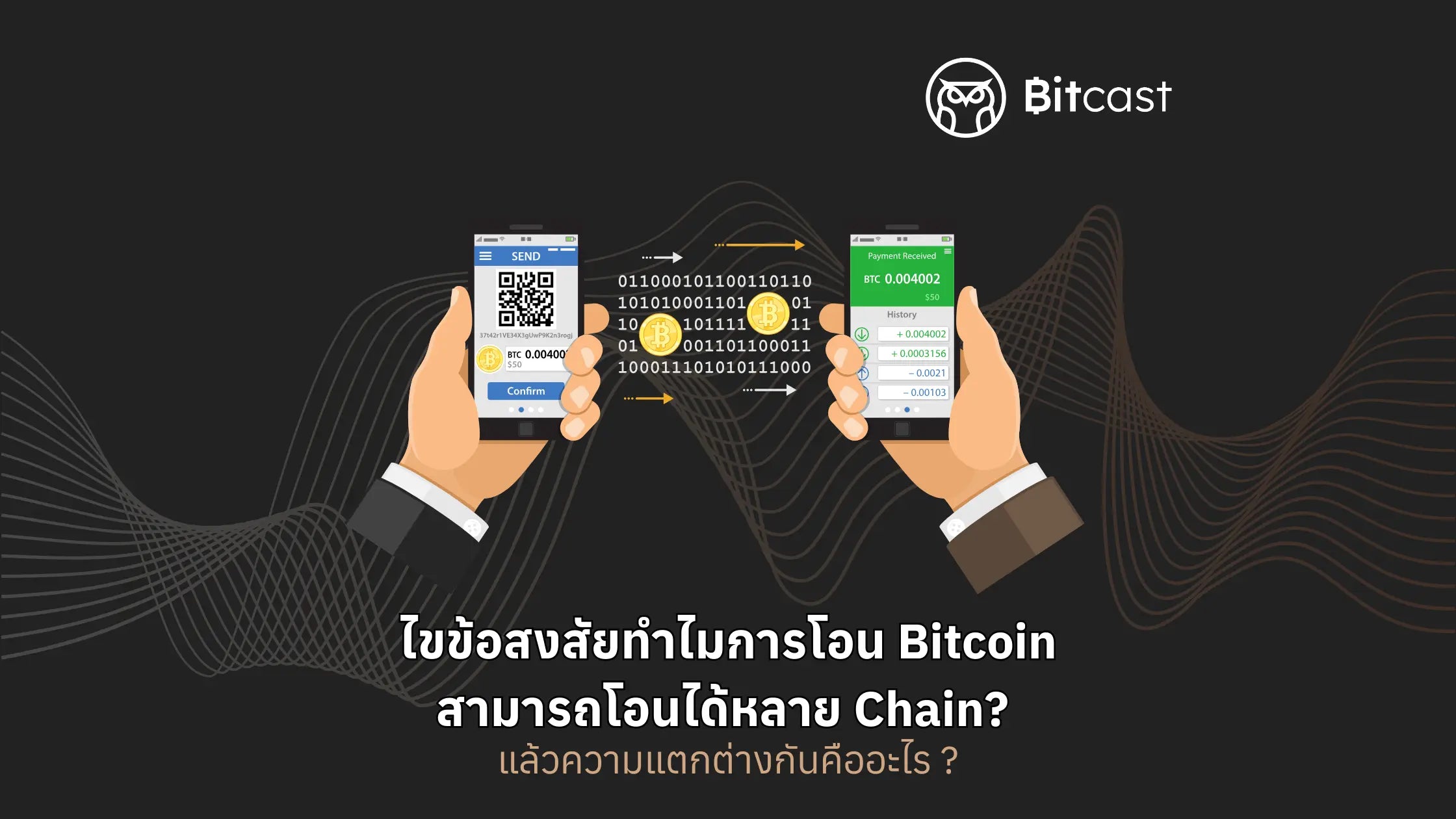
Have you ever wondered why there are so many network options when transferring Bitcoin (BTC) on an exchange, such as BTC, ERC-20, BEP-20, or TRC-20? And each network has different fees and transfer times. Some might think that Bitcoin should only exist on its own network, while others might think that transferring through any network is the same. But the truth is, there's more to it than that.
This article will help you understand the background of this issue, so you can choose a network with confidence and security.
The first thing you need to know is:
The Difference Between a Coin and a Token: We need to understand this fundamental part first.
Coin: This is a digital currency that has "its own blockchain network" and uses that coin as a fee for transactions on the network, such as:
- BTC: Is the Coin of the Bitcoin network.
- ETH: Is the Coin of the Ethereum network.
- BNB: Is the Coin of the BNB Smart Chain network.
Token: This is a digital coin that "is built on another blockchain" and uses the standards of that network, such as:
- WBTC: Is a Token built on the Ethereum network (using the ERC-20 standard) and backed by Bitcoin.
- BTCB: Is a Token built on the BNB Smart Chain network (using the BEP-20 standard) and backed by Bitcoin.
To make it easier to visualize, a Coin is like a "gold bar" with intrinsic value, while a Token is like a "gold exchange ticket" that can be redeemed for a gold bar.
How is Bitcoin on the Bitcoin Chain Different from Bitcoin on Other Chains?
- Bitcoin (BTC) on the Bitcoin Mainnet: This is "real Bitcoin" which is its own "Coin" and has all the properties we understand.
- Bitcoin (BTC) on other Chains: This is a "Token representing Bitcoin" created on another network using a mechanism called "Tokenization" or "Bridge" to enable Bitcoin to be used on other networks.
Why Create Tokens Representing Bitcoin?
Because transferring Bitcoin on its own network has some limitations, such as potentially taking a long time and incurring high fees. This might prevent certain objectives from being achieved, such as short-term speculation. Therefore, creating tokens representing Bitcoin on other networks was developed to address various limitations, such as:
- Speed: Faster transfers.
- Fees: Lower transaction fees.
- Usability: Can be used in DeFi (Decentralized Finance) or other applications on those networks.
But the important thing to remember is that these Bitcoins are only "tickets to exchange for Bitcoin" and not the actual Bitcoin on the main network. We still need to trust the intermediary or service provider we are using.
Things to Know and Be Cautious About When Transferring BTC
- Always choose the correct network first: Transferring coins requires matching addresses and networks. If you transfer BTC on the Bitcoin network to an address on another unsupported network, your coins could be lost forever.
- Speed and fees: A network with low fees doesn't always mean it's the best. You need to consider the reliability and security of that network as well.
- Intermediary risk: Converting BTC into tokens on another network requires an "intermediary." For example, WBTC will have an intermediary that holds actual Bitcoin as reserves and issues tokens to you. Therefore, you must trust that the intermediary will not cheat or be hacked.
Summary: Key Takeaway – Choose based on your objective.
The most important thing is to know "what do you want to transfer the coin for?"
- If you want to trade on an exchange, engage in short-term speculation, or use it for other purposes like DeFi, you might choose a network with fast transfers and low fees, or hold it as a Token.
- But if you want to hold Bitcoin for long-term investment (HODL), storing it on the Bitcoin Mainnet is the safest option.
Understanding these differences will help you manage your digital assets more correctly and securely. And for friends looking for a good and secure place to store Bitcoin, you can check out Bitcast here: 👉🏻 thaibitcast.com
// Admin Tee🟠

แชร์:
Hardware Wallet with vs. without battery: Which should a beginner choose?
PIN, Passphrase, Seed Phrase / Understanding the 3 Pillars of Protection in Hardware Wallets