


- What is a Hardware Wallet? (Concise Explanation)
- 10 Checklists: Signs You Should Self-Custody Your Crypto
- 1. Your portfolio value is so high that you'd "regret losing it"
- 2. You've fully transitioned to being a long-term investor
- 3. Your goal is to accumulate Bitcoin as a primary asset
- 4. You understand "Not Your Keys, Not Your Coins"
- 5. You are disciplined in DCA (Dollar-Cost Averaging)
- 6. You no longer care about daily liquidity
- 7. You're starting to worry about the platform's "Terms of Service"
- 8. You don't want anyone to know all your portfolio movements
- 9. You're ready to take responsibility for your own security
- 10. You want "peace of mind" in the long run
- Pros and Cons of Using a Hardware Wallet
- Conclusion and the First Secure Step
Many readers, perhaps just starting their careers or just beginning to allocate funds to invest in the crypto world, are often familiar with buying, selling, and leaving assets on exchanges because it's convenient, fast, and requires little thought, right?
But as your portfolio grows, or your investment philosophy changes, leaving all your funds on someone else's platform might not be the safest option.
Before we check the warning signs, let's establish a common understanding of what a Hardware Wallet actually is.
What is a Hardware Wallet? (Concise Explanation)
Simply put, a Hardware Wallet is not a flash drive that stores coins (your coins always reside on the internet network called the Blockchain).
Instead, a Hardware Wallet acts like a "digital keychain" that creates and securely stores your "Private Key" (the key that confirms your right to transfer coins) in an offline, closed system.
When you want to transfer coins, you need to plug in or connect this device to press and approve the transaction. The Private Key never touches the internet, preventing hackers or computer viruses from stealing your key.
10 Checklists: Signs You Should Self-Custody Your Crypto
Check these 10 signs. If you tick more than 3-4 boxes, it might mean a personal Hardware Wallet is calling your name.
1. Your portfolio value is so high that you'd "regret losing it"
The simplest first rule is: if losing this amount of money would keep you awake at night or impact your financial plans, that's when you need to take back control of your funds (coins). You don't have to wait until your portfolio hits millions. For some, a portfolio of tens or hundreds of thousands is their first savings, and its sentimental value and importance to their goals are high enough to warrant protection.
You can read more about how to choose the first hardware wallet for newbies.
2. You've fully transitioned to being a long-term investor
If you've started to look past daily fluctuations (Low Time Preference) and focus on the fundamental value of assets in the next 5-10 years, leaving your coins on an Exchange might be an inappropriate risk. The enemy of long-term holders isn't a falling coin price, but rather the platform shutting down or being hacked along the way.
3. Your goal is to accumulate Bitcoin as a primary asset
For those who have studied financial systems and understand Bitcoin's scarcity and properties, they often know that this coin was created for us to be our "own bank." Entrusting Bitcoin to an intermediary therefore contradicts Bitcoin's fundamental philosophy and true value.
4. You understand "Not Your Keys, Not Your Coins"
If you're starting to realize that the crypto numbers displayed on your exchange application are merely "IOUs" that the exchange owes you, rather than assets you truly own (because the exchange holds the Private Key), this is a sign that your self-custody knowledge is ready.
5. You are disciplined in DCA (Dollar-Cost Averaging)
If you are consistently buying and accumulating coins every week or month, your portfolio will grow steadily over time. Periodically transferring a accumulated lump sum to a Hardware Wallet is a strategy to reduce intermediary risk.
6. You no longer care about daily liquidity
Storing coins in a Hardware Wallet comes with a trade-off: reduced "convenience." You can't just hit a button to sell within 3 seconds like on an exchange. However, if you're not a day trader who monitors charts every hour, this limitation can actually be an advantage, preventing you from panic selling when the market crashes.
7. You're starting to worry about the platform's "Terms of Service"
Centralized exchanges have absolute power to freeze accounts, block withdrawals, or change terms of service at any time. If you feel uncomfortable tying your wealth to the decisions of a single company, holding your own Private Key is the only solution.
8. You don't want anyone to know all your portfolio movements
On centralized platforms, your trading data and balances are always recorded in the company's database. If you desire financial privacy regarding how much assets you hold, separating your coins into a personal wallet will better address this need.
9. You're ready to take responsibility for your own security
Using a Hardware Wallet is not magic that makes you 100% safe. It comes with a great responsibility: you must keep your 12-24 word seed phrase safe, never lose it, and never let anyone see it. If you understand and are ready to take on this responsibility, you are ready for the next step.
You can learn more about Seed Phrase at What is Seed Phrase and why is it important.
10. You want "peace of mind" in the long run
Ultimately, what a Hardware Wallet provides isn't just sophisticated encryption; it's "peace of mind" knowing that even if a global exchange collapses or your computer gets infected with a virus, the assets you've carefully accumulated will remain safe and waiting for you on the blockchain.
Pros and Cons of Using a Hardware Wallet
To make your final decision, here's what you trade when you switch to self-custody your assets.
Pros
- Maximum Security: Your keys are safe from malware, hackers, and online threats.
- 100% Control: No one can freeze your account, seize assets, or restrict withdrawals.
- No Reliance on Intermediaries: If the Hardware Wallet manufacturer goes out of business, you can still recover your assets using your Seed Phrase with another brand that supports the same standard.
- Eliminates Exchange Downtime Issues: Safe from crises of confidence in exchanges.
Cons & Limitations
- 100% Responsibility: If you lose your Seed Phrase and the device breaks, there's no "forgot password" button or call center to help you. Your coins will be lost forever.
- Cost: You have to buy the device (starting from approximately 2,000 - 3,000 THB and up).
- Inconvenient for Frequent Trading: Every time you transfer, you need to connect the Hardware Wallet and enter a PIN, which is not ideal for day traders.
- Cannot Prevent Your Own Mistakes: If you accidentally approve a connection to a phishing website, the device cannot prevent you from transferring funds out.
Conclusion and the First Secure Step
Switching to a Hardware Wallet is a significant development in investing. If you weigh the pros and cons and find that "security and control" outweigh convenience, now is the perfect time to start.
The important thing is that the device you use to protect your assets should be free from tampering (Supply Chain Attack). Buying through unauthorized sellers or second-hand poses an unnecessary risk.
Bitcast is an Authorized Reseller of leading brands, ensuring that all devices are shipped directly from the manufacturer, 100% safe, with a team ready to guide beginners step-by-step. If you're ready, you can browse models suitable for you at https://thaibitcast.com/collections/hardware-wallet.
Frequently Asked Questions (FAQ)
Q1: What crypto portfolio value makes it worthwhile to buy a Hardware Wallet for self-custody?
A common guideline is the "5% – 10% rule" of your portfolio value. If your investment portfolio is worth approximately 25,000 – 35,000 THB or more, investing in a standard Hardware Wallet (priced around 2,500 – 3,500 THB) will constitute only 5–10% of the cost for security to protect the remaining 90% of your assets. However, if your goal is long-term Bitcoin accumulation (DCA & HODL), even with a small initial portfolio, having a Hardware Wallet from the start helps mitigate the risks of holding coins on an exchange for extended periods.
Q2: Is it expensive to transfer crypto from an Exchange?
Withdrawal fees depend on each exchange's policy and the current blockchain network congestion (Network Fee). For Bitcoin, on-chain withdrawals may have fees based on the Sat/vB rate. It is advisable to accumulate a suitable amount of coins on the exchange (e.g., 10,000 – 30,000 THB or more) and then make a single withdrawal transaction, to prevent the withdrawal fees from consuming too large a proportion of the principal.
Q3: Do I have to pay tax if I move crypto from an Exchange to a Hardware Wallet?
No, you don't. Moving coins from your own exchange to your personal wallet (Self-Custody) is merely a change in storage location for your own assets. It is not considered a sale, exchange, or transaction that generates capital gains from price differences. Therefore, there are no income tax liabilities.
Q4: Are exchanges in Thailand, regulated by the SEC, safe enough? Why do I still need to self-custody?
Exchanges licensed by the SEC adhere to high security and reserve standards, offering convenience for trading with Thai Baht. However, technically, storing coins on an exchange means the intermediary holds the Private Key (Custodial Wallet). Users therefore still bear the risk of sudden system maintenance during volatile market periods or account freezes for inspection. Moving to a Hardware Wallet gives you 100% technical ownership, adhering to the principle of "Not your keys, not your coins."
Q5: Which Hardware Wallet model should a beginner who is moving coins from an Exchange for the first time choose?
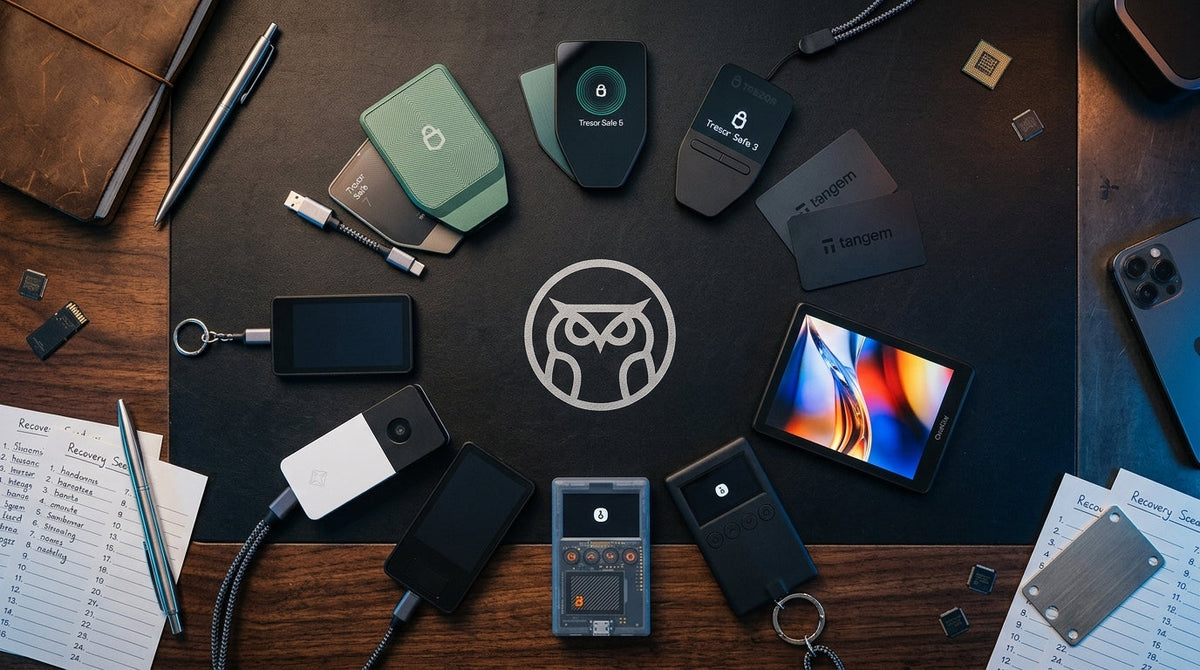
We recommend models with clear screens and transaction confirmation buttons, used in conjunction with applications that support Thai or are easy to use, such as Trezor Safe 3 or OneKey Classic 1S. If you specifically want to store Bitcoin, Blockstream Jade Core is an interesting option. However, you should purchase through an official dealer to prevent risks from modified devices. If you need further advice, you can consult our team via LINE Official Account @bitcast.


แชร์:
Hot Wallet vs Cold Wallet: What's the Difference? Your Complete Guide
Where do the coins go after transferring crypto to a hardware wallet?