


- What is the Travel Rule? Why is Thailand Starting to Enforce It?
- Key Details: What Does SEC Announcement No. Sor Thor 9/2569 Enforce, and When?
- Transfer Thresholds: How Much Do You Need to Transfer, and What Information Must Be Submitted?
- 1. Transactions Valued “Not More Than 30,000 Baht”
- 2. Transactions Valued “Over 30,000 Baht”
- How Does the Travel Rule Differ from KYC?
- What Happens When Transferring Coins In and Out of a Hardware Wallet?
- Comparison Table of Coin Transfers “Before” vs. “After” the Travel Rule Comes Into Effect
- Stricter Rules and the True Value of Self-Custody
- Frequently Asked Questions (FAQ)
- Q1: Do I Need to Verify My Identity Every Time I Transfer Bitcoin to My Own Wallet?
- Q2: Can I Transfer Coins to an International Exchange?
- Q3: Will My Personal Information Be Safe? Who Can See It?
- Official Reference Sources
If you are one of the people who invests in crypto or accumulates Bitcoin in Thailand, you are probably familiar with regularly transferring coins in and out of exchanges. Simply enter the recipient address, confirm the OTP, and in just a few minutes, the coins are freely transferred to their destination.
But from now on, the world of digital asset transfers in Thailand is entering a new, stricter regulatory environment.
The SEC has officially announced the “Travel Rule for Digital Assets” guidelines to enhance anti-money laundering and cybersecurity measures.
The immediate questions are: Will coin transfers become more difficult? How much do you need to transfer, and what information must be submitted? And how will people who keep their coins in their own wallets (Self-Custody/Hardware Wallets) be affected?
Today, I have summarized the official regulations and their impact on all of us in an easy-to-understand format, all in one place.
What is the Travel Rule? Why is Thailand Starting to Enforce It?
To put it simply, the Travel Rule is like the international law for wire transfers in the traditional banking system.
In the old financial system, when you transferred money internationally via SWIFT, essential information such as the sender’s name, account number, and recipient’s name always accompanied the funds. This allowed the recipient and regulatory agencies to trace who the money belonged to and where it came from.
However, in the world of blockchain, everything is built on a decentralized concept. Transactions on the network only specify the public addresses of the originating and receiving wallets, without any names, surnames, or national ID cards attached.
This lack of identifiable transparency has allowed bad actors to exploit it as a channel for money laundering or transferring assets from mule accounts. The Financial Action Task Force (FATF), an international anti-money laundering organization, therefore issued Recommendation 16, requiring digital asset service providers (VASPs) worldwide to exchange identity information with one another.
In Thailand, the SEC has continuously worked in collaboration with the Anti-Money Laundering Office (AMLO) and the Financial Data Linkage Subcommittee to establish and officially announce the guidelines, preparing the country for the international standards assessment in 2028.
Key Details: What Does SEC Announcement No. Sor Thor 9/2569 Enforce, and When?
Based on SEC News No. 179/2569: SEC Issues Travel Rule Guidelines for Digital Assets, issued under SEC Announcement No. Sor Thor 9/2569 (dated August 25, 2026), Thai digital asset operators must comply with four main areas:
- Establish a risk management system: All exchanges must have robust policies and procedures for transferring and receiving digital assets.
- Collect and verify transaction counterparty information: They must collect information on the sender and recipient, verify the credentials of the counterparty exchange (Counterparty VASP), and intermediaries along the transaction path.
- Provide transaction information (Information Sharing): The ordering operator must send a set of identity information to the receiving exchange (Beneficiary Operator).
- Retain transaction data for at least 5 years: All transactions must be systematically recorded, especially during the first two years, when they must be stored in a format that allows regulatory agencies to access and inspect them immediately.
Effective Date: These guidelines will officially come into effect on February 27, 2027, giving Thai operators approximately six months to develop data connection systems (Travel Rule Messaging Protocol).
Transfer Thresholds: How Much Do You Need to Transfer, and What Information Must Be Submitted?
One of the most common questions is: “When we transfer coins, what information do we need to enter or what documents do we need to submit?”
Based on the official Q&A for the SEC’s “Travel Rule Guidelines for Digital Assets”, the SEC has established guidelines based on FATF international standards. The FATF designates an equivalent value of USD 1,000 or EUR 1,000 as the risk level requiring additional data collection. The SEC has converted this into a Thai baht threshold of 30,000 baht, dividing the required information into two levels:
1. Transactions Valued “Not More Than 30,000 Baht”
- Operators will only ask for basic information: “Who are you transferring coins to?”
- Required information: The recipient’s first and last name, along with their wallet address.
2. Transactions Valued “Over 30,000 Baht”
- This is considered a higher-risk transaction level under international standards, so more detailed identity information must be provided, including:
- The recipient’s first and last name
- Location information: The province/city and country where the recipient resides
- For legal entities: If transferring to a company or organization, the corporate registration number must also be provided.
(Official Reference: Q&A document attached to SEC News No. 179/2569, Items 3 and 4, regarding the 30,000-baht transaction threshold, and the FATF Updated Guidance for a Risk-Based Approach to Virtual Assets and Virtual Asset Service Providers)
How Does the Travel Rule Differ from KYC?
Many of you may think, “We have already completed KYC with the exchange, so why do we still need to provide this information?”
The answer is that KYC (Know Your Customer) is the process by which an exchange gets to know us (identifying who opened the account), while the Travel Rule requires information about the “transaction counterparty” (identifying who coins transferred out went to, or who coins transferred in came from) to enable full-cycle financial tracing.
What this guideline “does not affect”: Trading coins on an exchange and depositing or withdrawing baht into a bank account will not be affected by the Travel Rule guidelines, as they apply only to digital asset transfers.
What Happens When Transferring Coins In and Out of a Hardware Wallet?
This is the issue that the community and self-custody coin holders are most interested in.
The SEC announcement clearly states that exchanges are required to “verify ownership or control of a self-hosted wallet” when a customer wants to transfer assets in or out.
Especially if the transfer value exceeds 30,000 baht, the exchange will require you to undergo an Ownership Verification process to prove that you actually own or control the address. By international standards, the following procedures are commonly used:
- Whitelisting an Address: Pre-registering a wallet and confirming that you are the owner by providing your first and last name.
- Visual Proof / Address Confirmation: Providing a screenshot showing the address in the wallet or completing an ownership confirmation form.
- Cryptographic Signature (Sign Message): Using the private key from a hardware wallet to sign a short message, mathematically proving that you hold the wallet’s keys without revealing the seed phrase.
- Satoshi Test (Small Test Transfer): Transferring a very small amount of coins as specified to confirm that the recipient wallet can actually control the transaction.
(International Practice Reference: These procedures were developed from FINMA Guidance 02/2019 by the Swiss financial market regulator, which pioneered the use of the Satoshi Test and Cryptographic Signature to establish Proof of Ownership. They also include the guidelines of the South Korean Financial Services Commission (FSC) and KoFIU, which use whitelisting and visual proof on leading exchanges, as well as the connection standards of international Travel Rule Solution Providers such as Notabene, Sumsub, and 21 Analytics AOPP, under the framework of the FATF Updated Guidance on Virtual Assets and VASPs)
Although these processes may add one or two extra steps, the main goal of the guidelines is to break the cycle of “crypto mule accounts,” which are often used to transfer coins to anonymous wallets for money laundering.
⚠️ Important Note for Bitcoin Holders
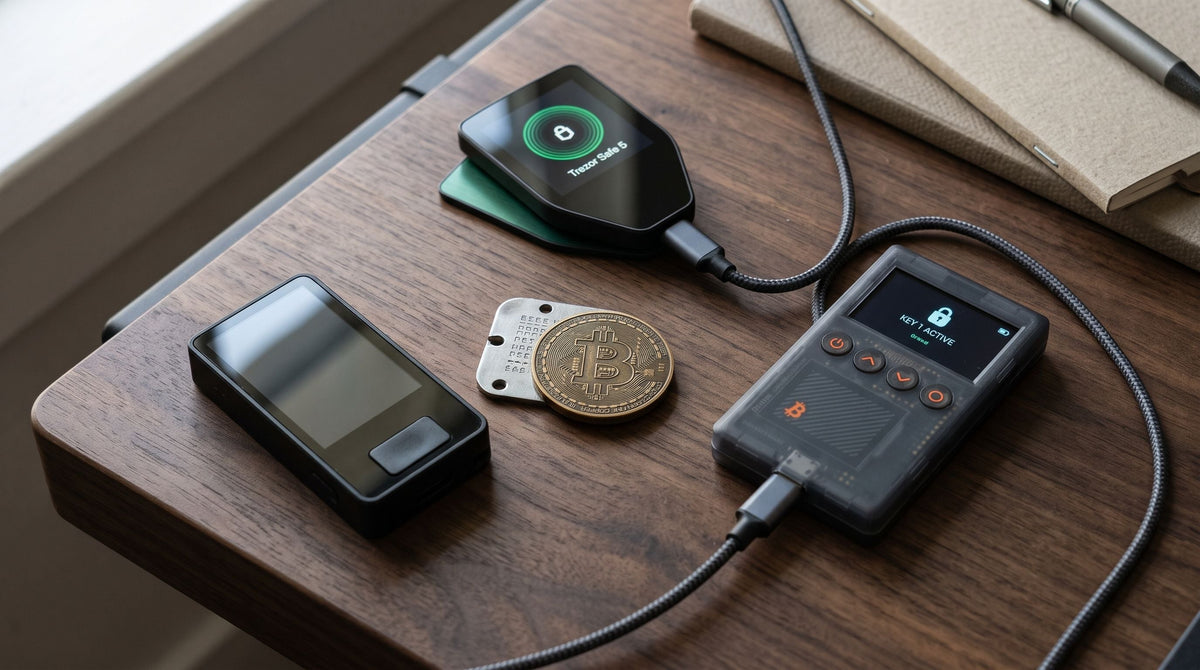
Bitcoin hardware wallets such as Trezor, OneKey, Jade, and others use HD Wallet architecture, which generates a new address every time you receive coins to maintain privacy.
If Thai exchanges require you to verify ownership every time you change to a new address, you may have to click Verify again. This is a user experience (UX) issue to watch as each exchange develops systems to support this in early 2027.
Comparison Table of Coin Transfers “Before” vs. “After” the Travel Rule Comes Into Effect
| Comparison Category | Before the Travel Rule (Current) | After the Travel Rule Comes Into Effect (February 27, 2027) |
|---|---|---|
| Transfers Not More Than 30,000 Baht | Enter only the recipient wallet address | Must provide the recipient’s first and last name |
| Transfers Over 30,000 Baht | Enter only the recipient wallet address | Must provide the recipient’s first and last name, province/city, and destination country |
| Transferring Coins to a Hardware Wallet (Over 30,000 Baht) | Enter the address and confirm the OTP to transfer out immediately | Must undergo an Ownership Verification process |
| Processing Time | Depends on blockchain speed (almost immediate) | May take slightly longer to verify information between systems |
| Privacy | Identity information is linked only to the originating exchange | Identity information will accompany the transfer order and be retained for at least 5 years |
| Trading / Baht Deposits and Withdrawals | Operating as usual | Operating as usual (unaffected) |
Tighter Regulations and the True Value of Self-Custody
In my view, regulators pushing the Travel Rule is a natural development as crypto moves toward mainstream adoption (Institutional Adoption). When institutional and public funds are involved, governments naturally want measures to prevent criminals and call center gangs.
But on another level, this rule clearly highlights an important fact: as long as our coins are deposited with a centralized service provider (Centralized Exchange), those assets are not 100% fully ours.
Because an exchange is an intermediary regulated by the government, if the system detects an anomaly, encounters a technical issue transmitting Travel Rule data, or if the receiving system does not support it, your transactions may be suspended, delayed, or rejected.
This is why the concept of “Not your keys, not your coins” remains powerful and is the most important core principle of Bitcoin.
For those who have never transferred coins to store themselves, I recommend learning about Why Everyone Needs a Hardware Wallet for Storing Coins. Holding your private key yourself using standard devices such as Trezor, Jade, OneKey and others not only protects your coins from being controlled by others but also confirms your true financial sovereignty.
Frequently Asked Questions (FAQ)
Q1: Do I need to verify my identity every time I transfer Bitcoin to my own wallet?
Generally, once you have completed wallet whitelisting for the first time, subsequent transactions to the same address usually do not require repeated verification, depending on the system design and user experience of each Thai exchange.
Q2: Can I transfer coins to an international exchange?
Answer: Yes, if that international exchange is a Counterparty VASP that has passed risk assessment and can connect to standardized Travel Rule data transmission systems. However, if it is a platform that does not cooperate or does not meet the standards, Thai exchanges may need to reject the transfer order in accordance with the requirements.
Q3: Will our personal information be safe? Who can see it?
Answer: The information is not published on the public blockchain. Instead, it is encrypted and transmitted through dedicated channels between the operators' systems (such as via the Sygna, VerifyVASP, or Notabene networks) and stored in accordance with the Personal Data Protection Act (PDPA) and AMLO laws.
If you need advice on safely transferring coins out of an exchange or choosing a hardware wallet that suits your needs, you can always contact the Bitcast team via LINE Official Account: @bitcast.
Official Reference Sources
- SEC News No. 179/2569: SEC Issues Travel Rule Guidelines for Digital Assets in Line with International Standards
- Q&A Attachment for “Travel Rule Guidelines for Digital Assets” by the Office of the SEC (September 2, 2569)
- Office of the Securities and Exchange Commission Notification No. ST 9/2569
- FATF Recommendations: Recommendation 16 (Wire Transfers and Virtual Assets) and Updated Guidance for Virtual Assets and VASPs
- Swiss Financial Market Supervisory Authority (FINMA) Guidance 02/2019: Payments on the blockchain
- Financial Services Commission (FSC) & Korea Financial Intelligence Unit (KoFIU) Regulatory Guidelines
- Travel Rule Protocol Providers: Notabene Unhosted Wallet Architecture, Sumsub Unhosted Wallet Verification, and 21 Analytics Address Ownership Proof Protocol (AOPP)


แชร์:
Is it really dangerous to leave coins on an exchange? A deep dive into the pros and safe storage methods.
Travel Rule is in effect. Is it still necessary to self-custody Bitcoin? A deep dive into rights and facts.