

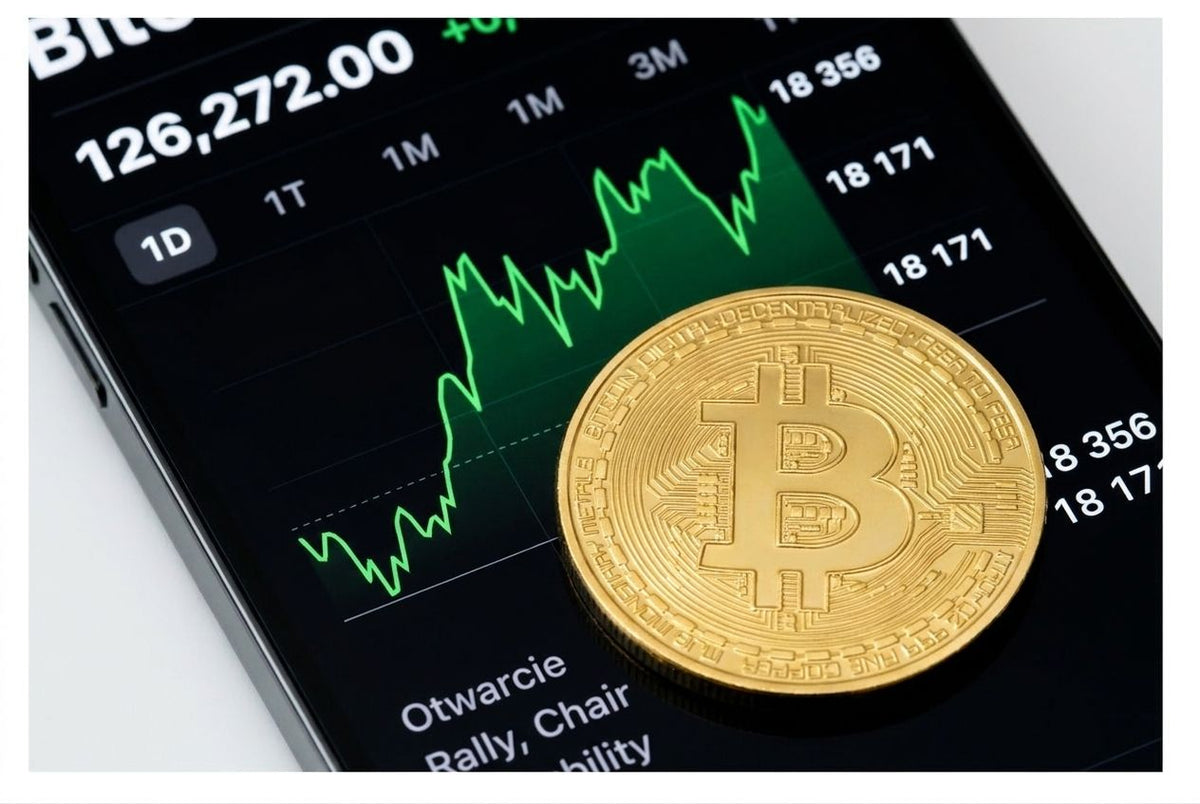
- What happens when we buy and deposit coins on an Exchange?
- 1. The numbers on the screen are "IOUs," not actual coins in our hands.
- 2. "Not your keys, not your coins."
- Advantages and Benefits of Depositing Coins on an Exchange
- 1. High Liquidity & Convenience
- 2. Account Recovery & Customer Support
- 3. Comprehensive Investment Tools and Functions
- Current Exchange Security Standards and Regulations
- 1. Regulatory Compliance
- 2. High Proportion of Coins Stored in Cold Storage
- 3. Institutional-Grade Security Systems (Multi-Signature & MPC)
- 4. Transparency Verification via Proof of Reserves (PoR)
- 5. International Standards and Security Assurance
- Understanding the Key Risks on a Centralized Exchange (CEX)
- 1. Counterparty Risk & Insolvency
- 2. Becoming a Target for Global Hackers (Honeypot for Cyberattacks)
- 3. System Downtime during Market Volatility and Account Freezes
- 4. Personal Account Hijacking
- Comparison Table: Depositing on Exchange VS Self-Custody with Hardware Wallet
- Portfolio Allocation Strategies and Decision Criteria
- 1. Portfolio for Trading and Accumulating for Transfer
- 2. Long-Term Savings Portfolio
- Golden Rules for Maximizing Security when Depositing Coins on an Exchange
- Starting Self-Custody Correctly with a Hardware Wallet
- 1. Choose an Internationally Standardized Hardware Wallet
- 2. Purchase Only Through Officially Appointed Authorized Resellers
- 3. Strictly Adhere to Seed Phrase Golden Rules
- Conclusion
One of the most frequently asked questions I hear from newcomers to the crypto world is:
"Is it really dangerous to buy Bitcoin or crypto coins and leave them in the Exchange app?"
We often hear the phrase "Not your keys, not your coins," which might lead many beginners to worry whether depositing coins on an Exchange is forbidden and overly dangerous.
However, in reality, the world of digital assets isn't just black and white. Today's digital asset exchanges have made significant advancements in security and regulation, offering both convenience and liquidity. At the same time, the nature of having an intermediary still carries certain inherent risks that users need to understand.
Today, I will take you on a comprehensive, objective deep dive into the pros, security standards, four key risks, a clear comparison table, and even a hybrid portfolio approach and advanced self-custody with a Hardware Wallet. This will help you choose the safest and most suitable asset storage method for yourself!
What happens when we buy and deposit coins on an Exchange?
To answer whether depositing coins on an Exchange is safe or dangerous, we must first understand the underlying mechanism of "what happens when we hold coins on a trading platform."
1. The numbers on the screen are "IOUs," not actual coins in our hands.
When you transfer Thai Baht to buy Bitcoin or crypto coins on a trading platform, the coin balance displayed in the application is not the actual coins transferred into your personal wallet on the blockchain. Instead, it is merely an "internal database entry" or IOU (I Owe You).
To illustrate, it's similar to depositing cash or gold in a bank. The bank issues a number in your passbook to indicate how much you can withdraw, but the actual assets are consolidated in the bank's vault, managed and secured by the bank.
2. "Not your keys, not your coins."
The most crucial aspect is the Private Key, which acts like a safe key for authorizing asset transfers.
- On an Exchange (Custodial Wallet): The trading platform provider holds and controls all Private Keys, while users only hold login credentials (Username & Password) to access the system.
- Important realization: As long as we do not hold the Private Keys ourselves, the technical ownership lies with the intermediary. In the event of unforeseen circumstances with the company, users may face limitations in accessing their assets.
Advantages and Benefits of Depositing Coins on an Exchange
For beginners and even experienced investors, storing coins on an Exchange offers several advantages and daily benefits, as follows:
1. High Liquidity & Convenience
Exchanges are designed to make transactions as easy and fast as possible. You can buy, sell, exchange coins, or convert them to Thai Baht and transfer them to a bank account instantly, 24 hours a day. This is ideal for those who want to trade, make short-term profits, or adjust their investment portfolio flexibly according to market conditions.
2. Account Recovery & Customer Support
One of the biggest concerns for beginners when self-custodying coins is the fear of losing or having their Seed Phrase (a set of 12-24 recovery words) stolen. If you self-custody and lose your keys, no one in the world can help you recover your coins.
However, when using an Exchange, if you forget your password, lose your phone, or your device is damaged, you can still verify your identity (KYC) through official documents to request a password reset and regain access to your assets. Additionally, there is a support team available to provide assistance and advice around the clock.
3. Comprehensive Investment Tools and Functions
Exchanges often provide tools to enhance investment efficiency, such as advanced order types (Limit Order, Stop-Limit), price alerts, and even earning rewards from Staking or Earn (on some Exchanges). This makes asset management convenient and all-inclusive within a single app.
Current Exchange Security Standards and Regulations
Leading digital asset exchanges, especially those officially licensed in Thailand, have elevated their security infrastructure with stringent measures to protect user assets.
1. Regulatory Compliance
For Exchanges licensed by the SEC (Securities and Exchange Commission), there are important regulations to protect investors, such as:
- Client Asset Segregation: The law requires Exchanges to strictly segregate client assets from company assets by 100%. Client assets must not be used for circulation or other profit-making activities.
- Net Capital Rules: Requirements for reserve capital to cover operational risks.
2. High Proportion of Coins Stored in Cold Storage
Standard exchanges store the majority of customer digital assets (often more than 80–90%) in Cold Wallets (offline systems not connected to the internet) and utilize institutional-grade custodians with robust security. Only a small proportion is kept in Hot Wallets (connected to the internet) to facilitate daily withdrawals.
3. Institutional-Grade Security Systems (Multi-Signature & MPC)
Approving coin transfers from the Exchange's main wallet requires multi-signature authorization or the use of Multi-Party Computation (MPC) technology. This means that even if one system or one individual is compromised, they cannot unilaterally transfer coins.
4. Transparency Verification via Proof of Reserves (PoR)
Modern exchanges prioritize transparency by regularly producing and publishing Proof of Reserves reports. This utilizes cryptographic technology (Merkle Tree) to allow users to independently verify that the Exchange always holds a 1:1 full reserve of coins.
5. International Standards and Security Assurance
Leading exchanges often undergo international certification such as ISO/IEC 27001 (Information Security Management System) and SOC 2 Type II. Some also have user protection funds (Protection Fund / Insurance Fund) in case of unforeseen technical incidents.
Understanding the Key Risks on a Centralized Exchange (CEX)
While today's trading platforms have significantly enhanced security systems, the inherent nature of centralized systems still carries latent risks that investors should be aware of.
1. Counterparty Risk & Insolvency
The history of the crypto industry over the past decade is filled with costly lessons from trading platforms and custody service providers.
- Mt. Gox (2014): The former largest exchange in the world, which held over 70% of Bitcoin trading volume, was hacked and forced to shut down. Users had to wait over 10 years for asset recovery processes.
- FTX (2022): A global exchange that once seemed highly reputable, but was secretly using customer assets for speculative trading, leading to a liquidity crisis and collapse in just a few days.
- CeFi Lending platforms like Celsius, BlockFi, or other Exchanges where we know who froze withdrawals, causing many users to lose their principal.
When a trading platform enters bankruptcy proceedings, users typically hold the status of "unsecured creditors," who must wait until the end of the liquidation process.
2. Becoming a Target for Global Hackers (Honeypot for Cyberattacks)
Exchanges are like a "massive honeypot" that attracts global hackers to attempt to breach their systems 24/7. Even though exchanges store most coins in cold storage, the hot wallets connected to the internet to support daily liquidity remain vulnerable to cyberattacks.
3. System Downtime during Market Volatility and Account Freezes
- System crashes during market volatility: During periods of extreme price surges or sharp drops, exchanges often experience heavy traffic that slows down or crashes their systems. This prevents users from accessing their accounts to trade or withdraw coins in a timely manner.
- Account freezes for review (KYC / AML Review): Your account may be temporarily suspended due to risk detection algorithms or changes in regulatory requirements, making it impossible to move assets until identity verification documents are submitted.
4. Personal Account Hijacking
Most of the damages experienced by users are often not due to direct hacking of the Exchange's system, but rather originate from the users' side, such as:
- SIM Swapping: Scammers trick providers into issuing a new phone SIM card to intercept SMS OTPs for password resets.
- Malware (Infostealer & Clipboard Hijacker): Malware embedded in downloaded files that intercepts passwords or alters wallet addresses during copying.
- Phishing websites and emails: Fake exchange websites that look authentic, tricking users into entering passwords and 2FA codes.
Comparison Table: Depositing on Exchange VS Self-Custody with Hardware Wallet
To help you clearly see the differences across various dimensions, I have summarized them in a comparison table:
| Factor for Consideration | Deposit coins in an Exchange (CEX) | Self-Custody with a Hardware Wallet |
|---|---|---|
| Key Holder (Private Key) | Intermediary / Exchange takes care of it (Custodial) | User holds 100% of the keys themselves in an offline chip (Non-Custodial) |
| Asset Ownership | Claim rights under contract (IOU) | 100% true ownership on the blockchain |
| Risk of intermediary bankruptcy | At risk (assets may be stuck in the system) | 100% safe, unaffected by any company issues |
| Security from malware/viruses | Account-level risk (phishing/email hacks) | Highest security, private keys never touch the internet |
| Ease of trading | Very convenient, buy/sell/exchange instantly with one click | Moderate (must transfer coins to Exchange before trading) |
| Recovery if password is forgotten | Submit KYC documents to request account recovery | If Seed Phrase is lost, recovery is not possible |
| Regulation and protection | Under the supervision of the SEC (for service providers in Thailand) | Users must control and be responsible for their own security |
| Suitability for use | Circulating funds, traders, small initial portfolios | Long-term savings, large sums of money, long-term holding (HODL) |
Portfolio Allocation Strategy and Decision Criteria
Proper management of digital assets doesn't require choosing one extreme over another. The approach I recommend most is "Portfolio Allocation by Objective."
1. Portfolio for Trading and Accumulation (Pending Transfer)
- Storage method: Deposit in a licensed Exchange with high security standards.
- Objective: For liquidity in trading, short-term profit, or conversion to Thai Baht for daily expenses.
- Suitable for: Small initial portfolios (hundreds to a few thousand baht), where transfer fees (Network Fee) may not be worth the cost of moving them out.
2. Long-term Savings Portfolio
- Storage method: Gradually transfer to and store in a Hardware Wallet.
- Objective: To accumulate long-term wealth (DCA / HODL) for 3–10 years, mitigate intermediary risks, and hold true ownership.
- Consideration criteria (Read more at When to buy a Hardware Wallet)
- 5-10% of portfolio value rule: When your portfolio grows beyond 25,000–50,000 baht, investing in a Hardware Wallet costing approximately 2,000–5,000 baht, which is only 5–10% of the portfolio, is the most cost-effective risk insurance.
- The Sleep Test (peace of mind at night): If you start feeling anxious every time you hear news of exchange problems, it's a clear sign that the money is too important to entrust to others.
Golden Rules for Maximum Security when Storing Coins on an Exchange
If you still need to keep some coins on an Exchange for liquidity, I strongly recommend following these 3 rules:
- Always enable 2FA via an application: Use an application like Google Authenticator or a hardware security key (FIDO2 / YubiKey) and avoid receiving OTP via SMS to prevent SIM swapping.
- Set Whitelist Address: Enable the function to restrict withdrawal addresses to ensure that coins are transferred only to pre-specified wallets.
- Set a strong and unique password: Create a complex password and never reuse it with emails or other online services.
Starting Self-Custody Correctly with a Hardware Wallet
As your investment portfolio grows and you're ready to take on self-custody, here are 3 important recommendations to start safely:
1. Choose an international standard Hardware Wallet.
Choose devices from leading brands with a long history of security and a Secure Element chip, such as:
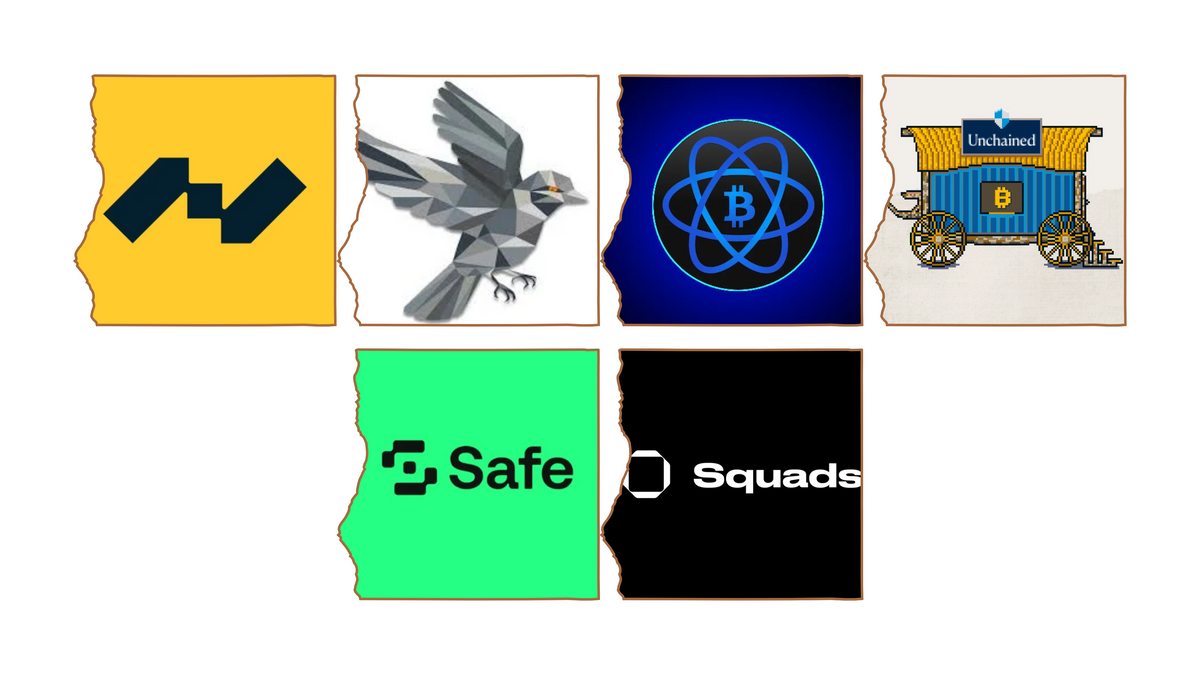
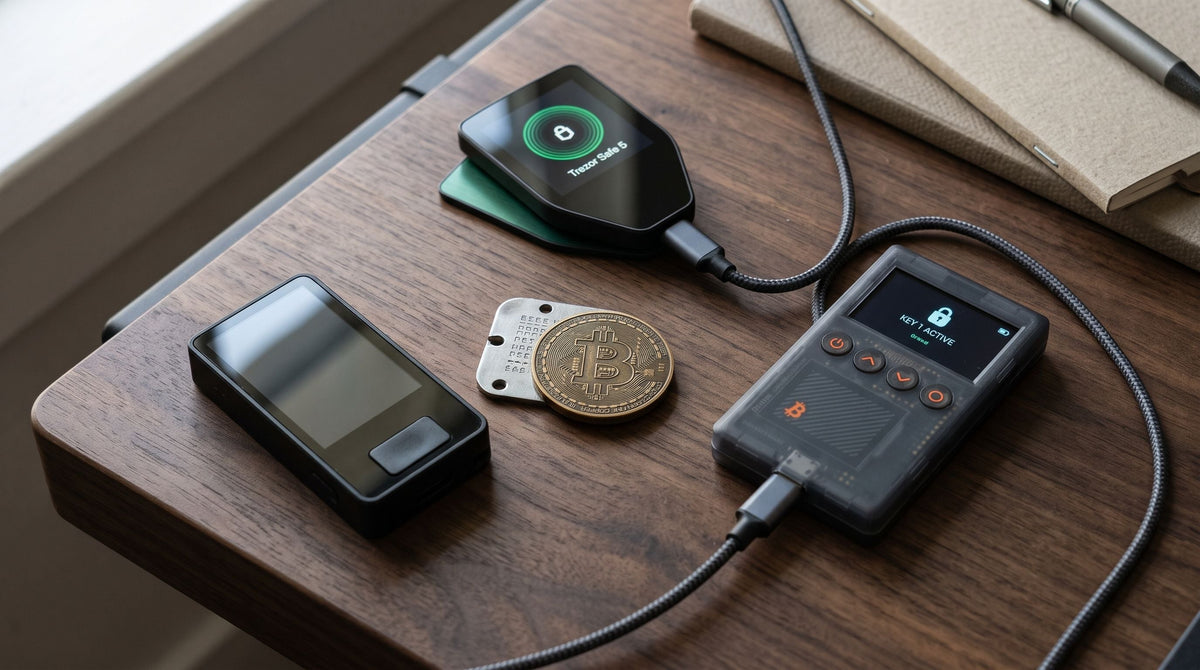
- Trezor Safe Series: Whether it's Trezor Safe 3, Trezor Safe 5, or Trezor Safe 7, which support both Bitcoin and various other coins, easy to use via Trezor Suite.
- OneKey: Such as OneKey Classic 1S or OneKey Pro, which support connecting to smartphones and Web3 applications conveniently.
- Blockstream Jade: For Bitcoin enthusiasts who prioritize high-level air-gapped security via QR code scanning from Blockstream
2. Only buy through an officially authorized reseller.
To mitigate the risk of device tampering before it reaches you (Supply Chain Attack), you should purchase a Hardware Wallet through an Authorized Reseller in Thailand. These resellers provide a 100% genuine product warranty, direct from the manufacturer, along with expert support.
3. Strictly adhere to the Seed Phrase golden rules.
- Write down your Seed Phrase (12 or 24 words) on paper or a metal backup and store it securely.
- Do not take photos, do not save it on a computer/cloud, and never tell anyone. Anyone who obtains this phrase will instantly gain access to all your coins.
Summary
The question "Is storing coins on an Exchange really dangerous?" The true answer is "Exchanges are not so dangerous that they cause alarm for general use, but there are inherent structural risks that we must be aware of, and you should not entrust all your wealth to them."
Exchanges play a crucial role as a convenient bridge to the crypto world. However, the original philosophy of Bitcoin is to provide "Financial Sovereignty," allowing us to be our own bank without relying on intermediaries.
Therefore, intelligently dividing your portfolio, using an Exchange for liquidity and a Hardware Wallet for long-term wealth protection, is the most balanced and secure approach for all investors.
How do you allocate your coin storage between Exchanges and Hardware Wallets? Or are you planning to move your coins to self-custody for the first time and still have questions? Feel free to discuss and exchange ideas.
If you need advice on choosing the right Hardware Wallet model or want to discuss security, you can contact our team via LINE Official Account: @bitcast or browse genuine devices at the Bitcast Store.
Frequently Asked Questions (FAQ)
Q1: If a Thai exchange collapses, are customer funds protected by law?
According to SEC regulations, exchanges must strictly separate customer assets from company assets. If a company closes down, customer assets will not be included in the company's assets for debt repayment. However, the process of verifying and returning assets may take time and does not cover the risk of lost coins due to cyberattacks exceeding the insurance limit.
Q2: Is there a problem if I leave coins on an Exchange for many years without moving them?
Leaving coins dormant for a long time carries risks related to platform policy changes, such as mandatory new KYC updates, changes in delisting criteria, or the risk of account suspension due to inactivity. If you intend to hold for many years, moving them to a Hardware Wallet provides the most stability and mitigates risks from external factors.
Q3: Do I have to transfer all my coins out as soon as I buy a Hardware Wallet?
It's not necessary to transfer everything. I recommend using a Hybrid Model: keep the coins you want to trade or short-term profit on the Exchange, and transfer only your long-term savings or main coins to the Hardware Wallet.
Q4: If I lose my Hardware Wallet, will the stored coins also be lost?
No, they won't be lost because the coins are not on the device itself, but on the blockchain. The Hardware Wallet merely acts as a security key. As long as you have your Seed Phrase (recovery phrase), you can use it to recover on a new device and access all your assets immediately.
แชร์:
Where do the coins go after transferring crypto to a hardware wallet?
Summary of Thailand's Crypto Travel Rule: The 30,000 Baht Transfer Threshold and Its Impact on Self-Custody Users