


- Why is Storing Coins on an Exchange Risky?
- Potential Risks of Leaving Coins on an Exchange or Hot Wallet
- 4 Checklists to Help You Decide on Buying a Hardware Wallet
- 1. Portfolio Value Ratio: The 5% – 10% Rule of Thumb
- 2. Investment Horizon / DCA & HODL
- 3. Mental Health and Sleep (The Sleep Test)
- 4. Coin Type and Usage Behavior
- Comparison Table: Portfolio Value Levels & Suitable Storage Strategies
- Comparison: Exchange vs. Hot Wallet vs. Hardware Wallet
- Recommended Popular Hardware Wallet Models for Beginners
- Summary
- Frequently Asked Questions (FAQ)
- Q1: If I have few coins, just a few thousand baht in my portfolio, will it be worth buying?
- Q2: If my Hardware Wallet breaks, gets lost, or stolen, will I lose my money?
- Q3: Are the fees for transferring coins to a Hardware Wallet expensive?
- Q4: What's the difference between buying through Shopee/Lazada or general stores versus an Authorized Reseller?
One of the most common questions I often hear from newcomers to the digital asset world is, "Will it be worth the cost of the device if I buy it now?" or "
How much coin value should I hold before I should start using a Hardware Wallet?"
This hesitation is very normal. When we're just starting to invest, spending 2,000–5,000 baht on a device that looks like a flash drive might seem like an "unnecessary expense," and it might feel better to use that money to buy more coins instead.
However, in the world of Bitcoin and digital assets, security is not about being rich or poor; it's about protecting our ownership of assets. Today, I will guide you through 4 important criteria, along with a comparison table, to help you decide if it's time for you to get a Hardware Wallet.
Why is Storing Coins on an Exchange Risky?
Before we look at how much money you should have to buy one, let's understand the current security landscape.
Many people are accustomed to buying coins and storing them on a centralized exchange (CEX) because it's convenient, easy to buy and sell. However, technically, when coins are on an Exchange, we don't truly hold the Private Key.
In the world of Bitcoin, there's a classic warning:
"Not your keys, not your coins"
Potential Risks of Leaving Coins on an Exchange or Hot Wallet
- Counterparty Risk: History has shown, from Mt.Gox and FTX, to various problems such as hacking, withdrawal suspensions, or events that can lead to an exchange's bankruptcy or asset freeze at any time.
- Individual Cyber Threats: Infostealer malware, Clipboard Hijackers, SIM Swapping, as well as fake phishing websites or apps designed to steal our information.
- Hot Wallets always connected to the internet: Software wallets on computers or mobile phones, such as MetaMask, Rabby, Phantom, etc., even though they allow us to hold our own keys, as long as the keys are on an internet-connected device, there's still a chance for Trojans or viruses to extract data.
That's why Hardware Wallets (Cold Storage) were created to act as an "offline safe," completely disconnecting Private Keys from the online world.
4 Checklists to Help You Decide on Buying a Hardware Wallet
If you're contemplating, try using these 4 criteria to assess your readiness.
1. Portfolio Value Ratio: The 5% – 10% Rule of Thumb
This is the most widely accepted and easiest-to-use standard calculation: "When the value of your crypto assets is more than 5 to 10 times the price of a Hardware Wallet."
Let's calculate simply as follows:
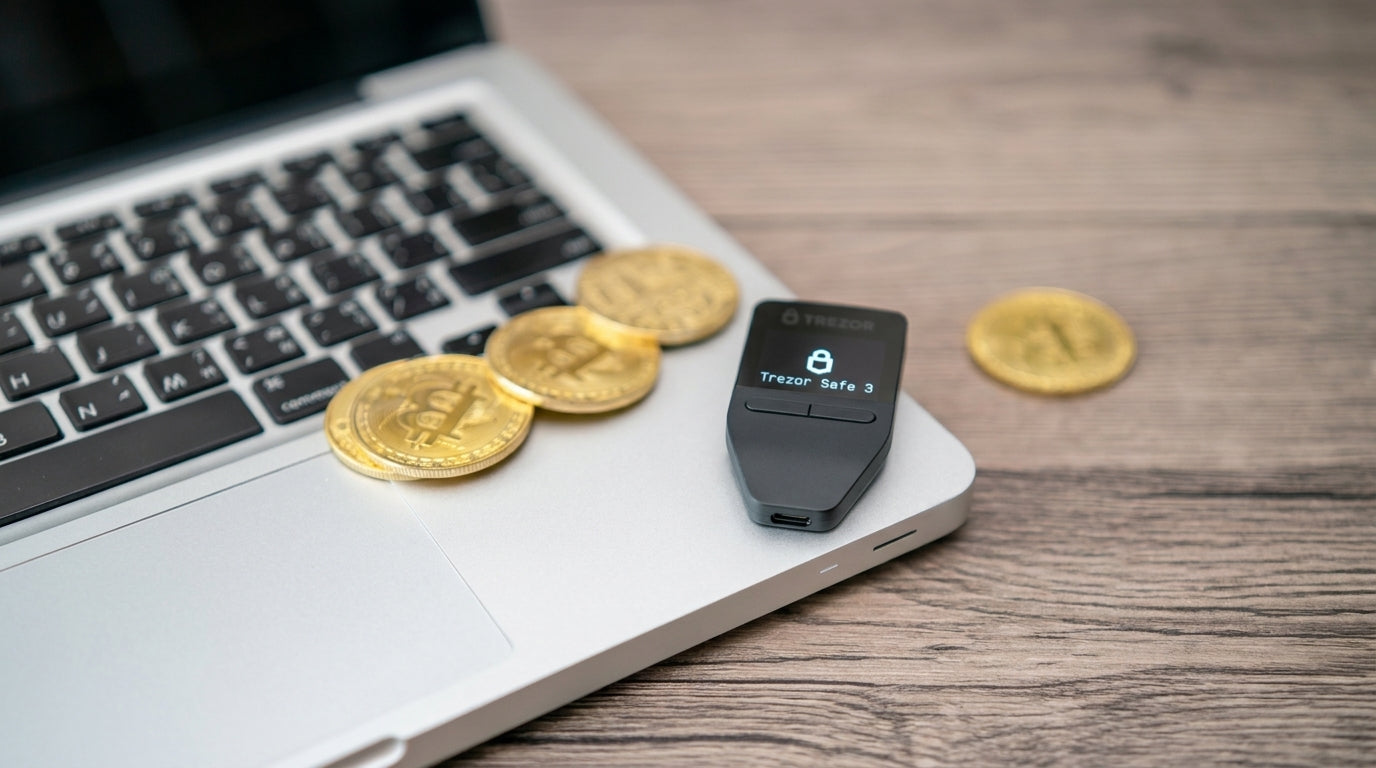
- Entry-level Hardware Wallets with excellent security standards, such as Trezor Safe 3 or Blockstream Jade, cost approximately 3,000 – 4,000 baht.
- If your crypto portfolio is valued at 30,000 – 50,000 baht, the device cost will only be 5% – 10% of the total portfolio value.
- Compare it to getting comprehensive car insurance or buying a safe to store gold. Paying only 5-10% for a device to protect the remaining 90-95% of your money is a very worthwhile investment in risk management.
2. Investment Horizon / DCA & HODL
- DCA / HODL long-term accumulators: If our goal is to gradually accumulate Bitcoin or major coins every month for a long-term hold of 3–5 years or more, even if your portfolio is just starting at 5,000 or 10,000 baht today, I recommend getting a Hardware Wallet early. This is because, in addition to learning proper security, as your portfolio slowly grows, you won't have to worry about moving large sums of coins in the future.
- Day Trader / Scalper: If you focus on quick entries and exits, buying in the morning and selling in the afternoon, most of your funds might need to remain on an Exchange for liquidity. However, accumulated profits or primary reserve funds should still be transferred to Cold Storage.
3. Mental Health and Sleep (The Sleep Test)
The simplest yet most powerful question is, "If you woke up one morning to find an exchange suddenly undergoing maintenance, or your account suspended, would you be able to eat or sleep?"
If the value of your portfolio is large enough to cause you anxiety and apprehension every time you hear news of exchange problems, that's a "clear warning sign" from your instincts that those assets are too valuable to entrust to others, and it's time to get a Hardware Wallet immediately.
4. Coin Type and Usage Behavior
- Holding major coins (Bitcoin / Ethereum / coins with high market capitalization): These assets are savings and the foundation of your portfolio. They should be stored in a highly secure Hardware Wallet.
- Wallet compartmentalization (Cold Storage vs. Burner Wallet): Use a Hardware Wallet as your "main treasury" that doesn't connect to risky websites, and keep a small amount of money in a Hot Wallet for experimenting with DeFi apps or buying trending coins.
You can learn more about how to choose at How to choose the first hardware wallet for newbies, safe from the start
Comparison Table: Portfolio Value Levels & Suitable Storage Strategies
| Crypto Portfolio Value | Risk Level | Recommended Storage Strategy | Necessity of Hardware Wallet |
|---|---|---|---|
| Less than 10,000 Baht | Low - Medium | Store on a reputable Exchange, with full 2FA enabled |
🟡 Not urgently necessary (can practice using a Software Wallet first, unless planning long-term DCA) |
| 10,000 – 30,000 Baht | Medium | Start allocating long-term savings to prepare for transfer to Cold Storage | 🟢 Start considering purchase (becomes cost-effective, especially compared to peace of mind) |
| 30,000 – 100,000 Baht | High | Transfer 70-80% of primary assets to a Hardware Wallet, keeping only trading funds on the Exchange | 🔴 Highly Recommended (according to the 5-10% ratio rule) |
| More than 100,000 Baht | Very High | Store 90%+ in a Hardware Wallet, with Seed Phrase backup on a metal plate (Metal Backup) | 🚨 Must-Have immediately (do not leave on Exchange) |
Comparison: Exchange vs. Hot Wallet vs. Hardware Wallet
| Feature | On Exchange (CEX) | Hot Wallet (Software) | Hardware Wallet (Cold Storage) |
|---|---|---|---|
| Private Key Holder | Exchange |
Ourselves |
Ourselves |
| Internet Connection | Always (Online) | Always (Online) | ❌ 100% Offline |
| Risk of Device Hacking | Unaffected, but at risk of account hacking | ⚠️ High risk from malware/viruses | 🛡️ 100% protection; Private Key never exposed |
| Risk of Exchange Bankruptcy | ⚠️ At risk |
❌ Safe from intermediaries | ❌ Safe from intermediaries |
| Ease of Trading | Most convenient | Medium |
Minimum (requires confirmation on the device) |
| Cost | Free | Free | Equipment cost (2,000 – 8,000+ Baht) |
Recommended Popular Hardware Wallets for Beginners
If you've decided it's time to get a Hardware Wallet, here are some popular, value-for-money, and internationally-standardized models.
Trezor Safe Series (Trezor Safe 3 / Trezor Safe 5 / Trezor Safe 7)
- Secure Element (EAL6+) chip protects against physical tampering
- Open-source system, transparent and auditable
- Easy to use via Trezor Suite, supports both computers and smartphones
Blockstream Jade (Jade Core / Jade Plus)
- A popular choice for Bitcoin-only users at an affordable price
- Open-source, transparent and auditable
- Full air-gapped operation via QR Code scanner (Jade Plus model)
OneKey Classic 1S / OneKey Pro:
- Modern, slim, portable design, seamlessly works with the OneKey app, supporting multiple chains
- Secure Element (EAL6+) chip and 4 Secure Element chips in the Pro model
⚠️ Most important caution: You should only purchase from an officially appointed authorized reseller in Thailand, such as Bitcast, to guarantee that the device is 100% genuine, shipped directly from the manufacturer, has not been modified or subjected to a Supply Chain Attack, and comes with a team ready to provide assistance throughout its use.
You can read about the benefits of buying through an Authorized Reseller at Buying a Hardware Wallet through an Authorized Reseller is not as scary as you think
But if you are concerned about not knowing how to use it after purchasing, Bitcast offers hands-on training from setup to full use.
Summary
Buying a Hardware Wallet is not about "showing off" or buying trendy tech gadgets. It's about a "Mindset Shift" in financial thinking, from relying on intermediaries to truly "Being Your Own Bank".
Bitcoin has provided unprecedented financial freedom in human history, but that freedom comes with "Personal Responsibility" for its safekeeping.
If that money is hard-earned savings that you don't want to lose due to carelessness or someone else's mistake, investing a few thousand baht to buy peace of mind and protect your financial future is one of the most worthwhile investments you can make.
Frequently Asked Questions (FAQ)
Q1: I have few coins, only a few thousand baht in my portfolio. Is it worth buying?
If purely looking at the monetary value, it might not be worth the device cost yet. However, if you plan to DCA consistently in the long term, or want to practice using a wallet and securing your Seed Phrase from when you have less money, the value will come in the form of "knowledge, security, and financial hygiene" that will stay with you forever.
Q2: If my Hardware Wallet breaks, gets lost, or stolen, will my money be gone?
Your coins are not lost. All assets are recorded on the blockchain, not on the device itself. As long as you have securely recorded your Recovery Phrase (12 or 24 Seed Phrase words), you can always use this set of words to restore your wallet on a new Hardware Wallet.
Q3: Are there high fees for transferring coins to a Hardware Wallet?
Fees depend on the Network Fee of that blockchain and the withdrawal fees of the Exchange, not on the Hardware Wallet itself. It's recommended to accumulate a sufficient amount of coins in the Exchange before transferring them all at once to save on fees.
Q4: How is buying through Shopee / Lazada or general stores different from buying from an Authorized Reseller?
Buying from an Authorized Reseller guarantees 100% product safety, with no risk of internal component swapping or fake Seed Phrase notes (Supply Chain Attack). You also get a Thai warranty and expert support for any issues.
แชร์:
วิธีเช็ค Trezor ของแท้ VS ของปลอม ดูจุดไหนบ้างก่อนเริ่มใช้งานจริง