


The recent surge in Bitcoin prices has revitalized the market, drawing back many who had previously stepped away. Hardware wallets, which are an important component of the cryptocurrency market, are also experiencing a resurgence. People have started asking me which one to buy.
Trezor Remains a Leader in Hardware Wallets
Trezor hardware wallets have received a lot of positive attention. This is largely because Ledger has faced issues with its reputation and the trustworthiness of its hardware wallets. These issues include a function for recovering seeds (allowing the Master Private Key to be extracted from the hardware wallet, despite previous claims of a secure element chip preventing this) and, more recently, hackers altering code on GitHub. Although Ledger quickly resolved the GitHub issue and neither Trezor's hardware wallets nor Ledger Live (the software for managing Ledger devices) were directly hacked, the brand's image has been damaged.
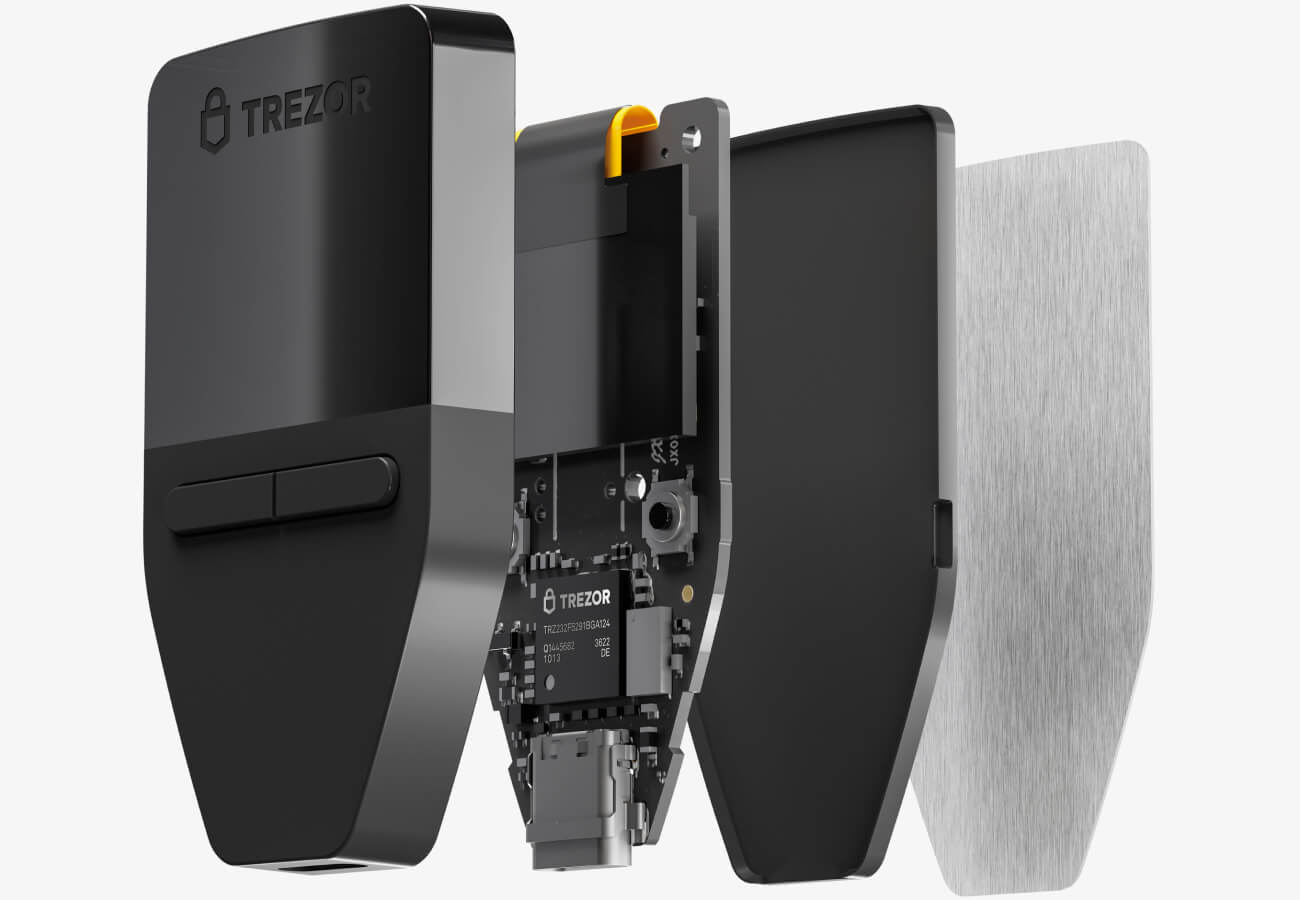
Furthermore, Trezor recently released a new hardware wallet, the Trezor Safe 3, which I believe should be the hardware wallet of 2024. Let me explain why I think this.
My Hardware Wallet Experience
I entered the crypto market in 2016. My first hardware wallet was a Ledger Nano S. I bought it because Trezor didn't support Cardano back then (lol, don't do that). My second hardware wallet was the Trezor One, which I didn't purchase myself. Instead, a follower of my channel sponsored it for me to review. The Trezor One is an excellent hardware wallet; I still use it today, and it works perfectly. Its features are sufficient for a "hodler" like me. Trezor hardware wallets are suitable for those who hold coins long-term and don't frequently interact with Bitcoin or other cryptocurrencies. Perhaps because I don't check it often, it remains in good working order.
Trezor vs. Ledger
In my gut feeling, the Trezor One is a very stable hardware wallet in terms of firmware and its application. Compared to Ledger hardware wallets, Ledger devices require installing applications onto the device and opening an app every time you use it. The advantage is that it supports many coins, but the downside is the difficulty of use. And just imagine the risks of app developers creating vulnerabilities that could be exploited, leading to significant app instability.
The simplicity of the Trezor One is what I really like. If you're going to have one hardware wallet, it's enough. However, for those who want to store a lot of coins, the Trezor One might not meet their needs. Or even for people who prefer using their mobile phones, Trezor hardware wallets might not be the best fit.
Trezor Model T: A Past Flagship
Trezor can be called the first in the hardware wallet market, and it remains a leader today. After many years since Trezor released the Trezor One, it finally launched a new flagship device, the Trezor Model T. This model features a larger, color touchscreen and a thicker device.
Beyond the screen and size, there's also an advanced backup feature called Shamir backup, which allows you to split your seed into multiple parts for storage. Even if some parts of your seed are lost, you can still recover it. For example, if you divide it into five parts, you can still recover the seed with the remaining three parts if two are lost.
Personally, I think the Trezor Model T isn't worth the price, unless you specifically need the Shamir backup function. The larger and colored screen isn't a big selling point for me. If someone asks me which to buy, I usually recommend the Trezor One over the Trezor Model T, as the latter is too expensive. However, some people choose the Trezor Model T because it supports more cryptocurrencies than the Trezor One.
Trezor's Past Weakness
A weakness of both the Trezor One and Trezor Model T models was the absence of a Secure Element Chip. This chip is used to store critical information like the Master Private Key (Seed phrase). Essentially, if the hardware wallet is stolen, the Secure Element Chip helps protect against hackers accessing your Master Private Key. Trezor addressed this temporarily by introducing a feature called Passphrase, which offers a certain level of protection, meaning that even if someone steals your hardware wallet and gets the seed, they cannot access your Master Private Key without the Passphrase. This was introduced while other hardware wallet manufacturers in the market were already incorporating Secure Element Chips.
The Open Source Philosophy that Trezor Upholds
Trezor is a hardware wallet that operates under the Open Source philosophy. This is one of the reasons why Trezor is widely accepted. So, why is Open Source good?
Open Source promotes transparency, allowing anyone to inspect the source code, compile it, and compare it with the version loaded onto the hardware wallet. It enables programmers worldwide to help verify its correctness and identify potential future risks, allowing vulnerabilities to be fixed promptly. Open Source demonstrates sincerity and allows anyone to build upon the knowledge. For example, OneKey is a hardware wallet that forked from Trezor's GitHub and also follows Trezor's Open Source philosophy.
Secure Element Chip in Trezor Safe 3
What many people have been waiting for has finally arrived. Trezor's new hardware wallet, the Trezor Safe 3, now includes a Secure Element Chip. Trezor continues to adhere to its Open Source philosophy. They have discussed with the manufacturer that while vulnerabilities related to the chip can be disclosed, the internal design of the chip cannot be revealed. I understand this is due to a non-disclosure agreement with the manufacturer, which I believe strikes a good balance between Open Source principles and the use of a Secure Element Chip in a hardware wallet.
Highlights of Trezor Safe 3
The Trezor Safe 3 is a hardware wallet that combines the upgraded Trezor One with some internal components of the Trezor Model T. Simply put, the Trezor Safe 3 is a Trezor One with a Secure Element Chip and the Shamir Backup function found in the Trezor Model T hardware wallet. It supports more cryptocurrencies than the Trezor One, on par with the Trezor Model T.
Drawbacks of Trezor Safe 3 (for some)
The Trezor Safe 3 maintains the original design principle of not having Bluetooth or a battery. I believe Trezor sees Bluetooth as a risk, preferring the greater security of a wired connection. If you want to use a mobile phone, you might consider air-gap technology instead. Therefore, none of the three Trezor models are suitable hardware wallets for those who primarily manage their assets via mobile phones.
Is Trezor Safe 3 Worth It?
I believe that with the new Trezor model, the Trezor Safe 3, users will benefit from a quality product at a reasonable price. If you are a long-term hodler and don't interact with it much, mainly using a computer or laptop, I highly recommend buying it; it's worth it. Trezor has also released a mobile application called Trezor Suite Lite, which allows you to track your portfolio using XPUB. However, it's view-only; you can't manage anything else, but this might be enough for hodlers.
Compared to Other Models on the Market
Compared to other devices on the market, I believe the Trezor Safe 3 is an excellent choice for those who primarily use computers or laptops. However, if you mainly use a mobile phone, you might need to look at other options, such as the OneKey Classic. The OneKey Classic is a hardware wallet developed based on Trezor's open-source foundation, meaning anyone can use the code to build upon it. The OneKey Classic has added Bluetooth and a battery, allowing it to connect to mobile phones. Additionally, OneKey has developed a user-friendly mobile application for beginners, enabling direct management of DApps on the mobile app. For those involved in farming or DeFi, the OneKey Classic works seamlessly. If you prefer air-gap technology with a mobile phone, I recommend another model, the Keystone Pro 3, which offers both security from air-gap technology and connectivity with MetaMask on mobile for DeFi activities.
Conclusion
In summary, for Hodlers who don't interact much with their assets and primarily use computers and laptops, the Trezor Safe 3 is the best hardware wallet for you in 2024 (written in late 2023). However, if you plan to use it with a mobile phone for DeFi/DApps or farming, you might need to consider other options like the OneKey Classic or Keystone Pro 3.
Please share your thoughts on this article.
แชร์:
What is an air-gapped wallet? Why is it the gold standard for crypto holders?
Safepal strengthens its hardware wallet lineup with the Safepal X1.