


- Fundamental Differences Between Card-based and Traditional Hardware Wallets
- Key Components of Each Type
- Pros and Cons of Card-based Hardware Wallets
- Limitations to Consider
- Pros and Cons of Traditional Hardware Wallets
- Limitations of Traditional Wallets
- Choosing the Right Type for Your Needs
- Evaluation Criteria for Beginners
- Security and Risk Prevention
- Recommended Protective Measures
- User Experience and User Interface
- New User Adaptability
- Cryptocurrency and Ecosystem Support
- Integration with Third-party Services
- Price and Value for Money
- Return on Investment for Beginners
- Future and Trends of Hardware Wallets in 2025
- Recommendations for Preparation
- Frequently Asked Questions and User Concerns
- Basic Troubleshooting
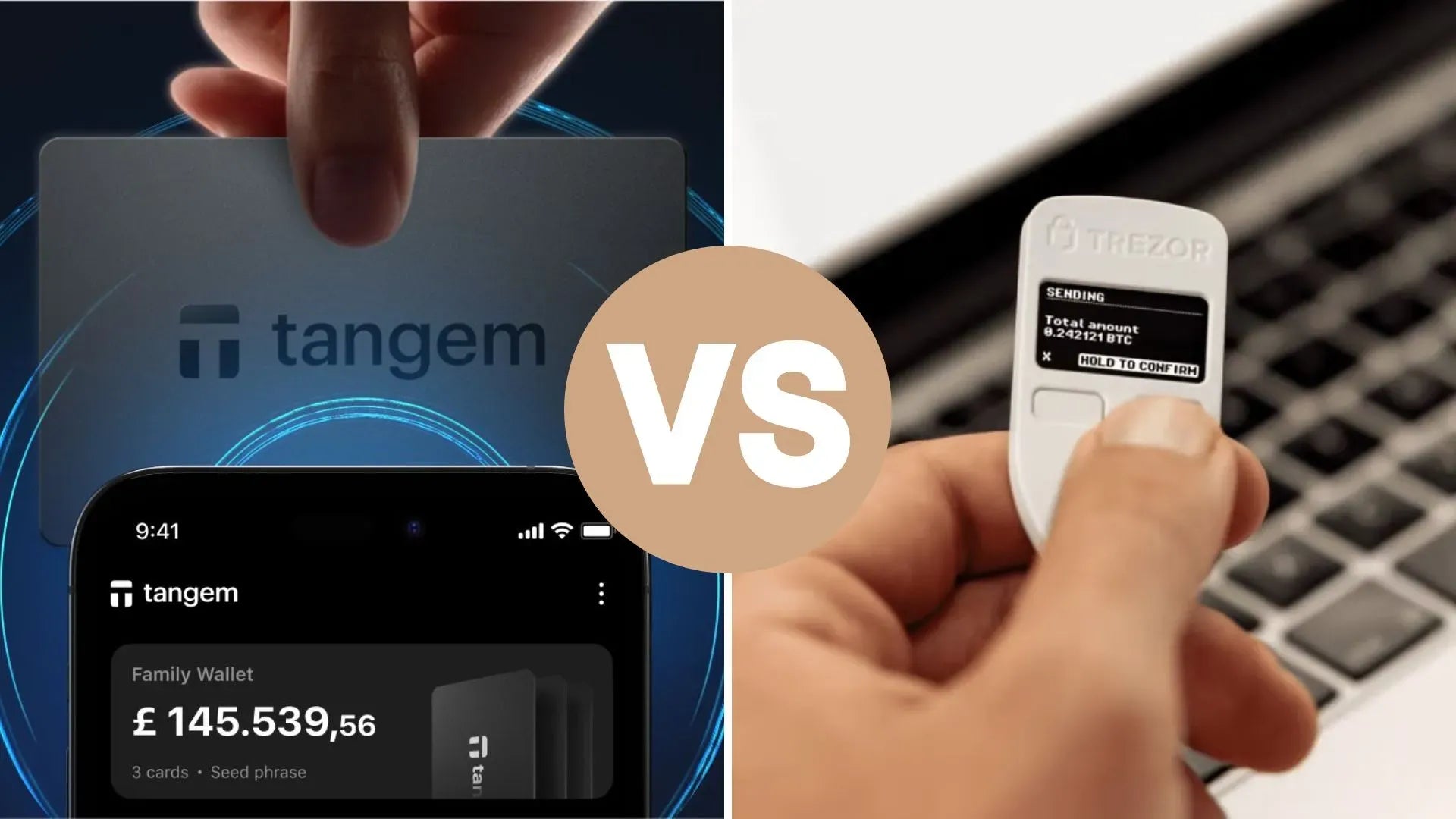
Fundamental Differences Between Card-based and Traditional Hardware Wallets
Hardware wallets have become essential tools for securing digital assets. In 2025, we will see clear distinctions between card-based and traditional hardware wallets. Comparing both formats will help new investors choose the right device for their needs.
Card-based hardware wallets are compact, credit card-sized devices that are thin and easy to carry. Traditional hardware wallets, on the other hand, resemble USB drives or small electronic devices with screens and buttons.
Key Components of Each Type
Card-based hardware wallets include an embedded Secure Element within a small chip, offering EAL6+ level security and using NFC or Bluetooth for connectivity. Traditional hardware wallets feature an MCU (Microcontroller Unit), a Secure Element, an OLED screen, and buttons for transaction confirmation.
These design differences significantly impact the user experience. Card-based wallets prioritize simplicity and portability, while traditional wallets focus on displaying information and detailed control.
Pros and Cons of Card-based Hardware Wallets
A prominent advantage of card-based hardware wallets is their portability. Being only 2-3 millimeters thin, they can easily fit into a wallet. They also boast high durability against impact and water, as they lack moving parts or fragile screens.
- Easy to carry, fits in a wallet
- High durability, no fragile screen
- Simple design, suitable for beginners
- More affordable
- Uncomplicated to use
Limitations to Consider
However, card-based hardware wallets have limitations regarding information display. Users cannot directly verify transaction details on the device. Transaction confirmation relies on mobile or computer applications, which might raise security concerns for users seeking maximum control.
"The absence of a display screen might make users less confident in verifying transaction information, but the Secure Element technology still maintains a high level of security."
Pros and Cons of Traditional Hardware Wallets
Traditional hardware wallets have the advantage of displaying information. Users can directly verify the destination address, amount, and fees on the device's screen. Transaction confirmation is done by pressing buttons on the device, ensuring that the information displayed is accurate.
They often support a wider variety of cryptocurrencies than card-based wallets due to their more complex firmware and easier feature updates. Additionally, they may include extra features like password managers or two-factor authentication.
Limitations of Traditional Wallets
The main drawbacks are their larger size and greater weight. The screen and buttons can be damaged by impact or heavy use. They are generally more expensive than card-based wallets, and their use might be too complex for beginners.
Choosing the Right Type for Your Needs
For users new to the crypto world, Bitcast recommends considering products from its specially curated collection, which includes both card-based and traditional hardware wallets from trusted brands, along with comprehensive guides and support, to help users choose and use them with confidence.
The decision between card-based and traditional wallets should depend on your lifestyle and usage needs. If you prioritize convenience and portability, a card-based wallet is suitable. However, if you need confidence in information verification and diverse features, a traditional wallet is better.
Evaluation Criteria for Beginners
| Selection Factor | Card-based | Traditional |
|---|---|---|
| Ease of Use | Very High | Medium |
| Portability | Excellent | Fair |
| Transaction Verification | Via App | On Device |
| Price | Lower | Higher |
| Durability | High | Medium |
Security and Risk Prevention
Both types use Secure Element technology to secure private keys, but their protection methods differ. Card-based wallets rely on application security to display transaction information, while traditional wallets create a complete isolated environment.
For those concerned about loss, card-based hardware wallets, being small, carry a higher risk of being misplaced. However, both types allow data recovery with a seed phrase, making data backup paramount.
Recommended Protective Measures
Safe use begins with correctly storing your seed phrase. Do not photograph it or save it digitally. Using a metal seed plate will help protect against damage from fire or flood. Additionally, you should test the restoration process at least once a year.
User Experience and User Interface
The User Experience of card-based hardware wallets focuses on simplicity. Connecting via NFC or Bluetooth is easy—just tap or turn on the connection. Their accompanying applications often have a modern and intuitive interface, suitable for those familiar with mobile device usage.
Traditional hardware wallets, on the other hand, use button-based navigation. Their small screens limit the amount of information displayed. Users need to take time to learn how to navigate menus and various settings.
New User Adaptability
New users typically take about 1-2 weeks to adapt to traditional wallets, while card-based wallets can be used immediately after app installation. The intuitive design of card-based wallets reduces complexity and anxiety for those less tech-savvy.
However, the lack of direct information display on card-based wallets might make some users feel uneasy, especially when performing high-value transactions. Traditional wallets, meanwhile, offer a greater sense of control and precision.
Cryptocurrency and Ecosystem Support
Traditional hardware wallets generally support a wider range of cryptocurrencies due to their complex and easily updateable firmware. Support for DeFi protocols, NFTs, and smart contract interactions is typically more comprehensive.
Card-type wallets usually focus on major cryptocurrencies such as Bitcoin, Ethereum, and key stablecoins. Support for altcoins and new tokens may be limited, but for beginners focusing on mainstream cryptocurrencies, this capability is sufficient.
Integration with Third-party Services
Connectivity with DeFi platforms, DEXs, and various dApps differs. Traditional hardware wallets offer broader compatibility, seamlessly integrating with MetaMask, MyEtherWallet, and other platforms.
Card-type wallets might have limitations in integrating with some platforms, but major manufacturers often establish partnerships with major exchanges and DeFi protocols to ensure the most convenient use.
Price and Value for Money
Card-type hardware wallets are more accessible in terms of initial cost, typically ranging from 2,000-4,000 baht, while traditional ones range from 3,000-8,000 baht, depending on features and brand.
Considering value for money should include the total cost of ownership, comprising device price, accessories, firmware updates, and maintenance. Card-type wallets generally have a lower total cost.
Return on Investment for Beginners
For investors with portfolios valued under 100,000 baht, card-type wallets usually offer better value, as they provide essential risk protection at a reasonable price. If assets exceed 500,000 baht, investing in a traditional model with comprehensive features would be more worthwhile.
Future and Trends of Hardware Wallets in 2025
In 2025, we anticipate a convergence of both technologies. Card-type hardware wallets may feature small e-ink displays, while traditional ones will become smaller and thinner. The development of biometric authentication and wireless charging will become standard features.
Quantum-resistant cryptography will begin to be adopted in new devices. Support for Central Bank Digital Currencies (CBDCs) and cross-chain transactions will be important features.
Recommendations for Preparation
Users should choose a brand with a track record of firmware updates and long-term support. Selecting a hardware wallet with a clear upgrade path will help save costs in the future.
For new users, choosing a card-type wallet is a good starting point, as it has a lower learning curve and can be upgraded to a traditional type when more complex needs arise.
Common Questions and User Concerns
One common question is, "Are card-type wallets truly secure without a screen?" The answer is that the security level of cryptographic operations remains the same, but vulnerabilities can arise from compromised applications or man-in-the-middle attacks.
Concerns about loss are also significant. Card-type wallets are small and prone to being misplaced, but using a lanyard or protective case can reduce this risk. Additionally, a seed phrase backup remains the primary recovery method in all cases.
Basic Troubleshooting
Connection problems often result from NFC or Bluetooth interference. Initial troubleshooting includes restarting the application, checking permission settings, and updating firmware. Users should keep the manual and support contact information easily accessible.
For traditional models, screen freezing or unresponsive buttons can be resolved by a hard reset, but this should only be done if a reliable seed phrase backup is available.
Choosing between a card-type and a traditional hardware wallet in 2025 has no single correct answer. Both types have specific advantages that suit various user groups. For beginners seeking simplicity and portability, a card-type wallet is an excellent choice, whereas for those desiring maximum control and comprehensive features, a traditional one will be more suitable.
The most important thing is to choose products from reliable sources, thoroughly understand how to use them, and safely back up data. Regardless of the choice, having a hardware wallet is always better than storing cryptocurrency on an exchange or in a hot wallet.
แชร์:
What is an air-gapped wallet? Why is it the gold standard for crypto holders?
Foundation Brand Guide 2025: Why It's the Bitcoin Maximalist's Top Choice