


- 1. How did people store crypto before Trezor?
- 2. The beginning of the idea for a "portable safe" disconnected from the internet
- 3. The first Trezor is released to the market
- 4. Reasons why most people prefer to use Trezor
- 5. How many Trezor models are there currently, and which one should you choose?
- 1. Trezor Model One (Classic favorite for beginners)
- 2. Trezor Safe 3 and Safe 5 (Upgraded advanced security models)
- 3. Trezor Safe 7 (Latest flagship model)
- Conclusion
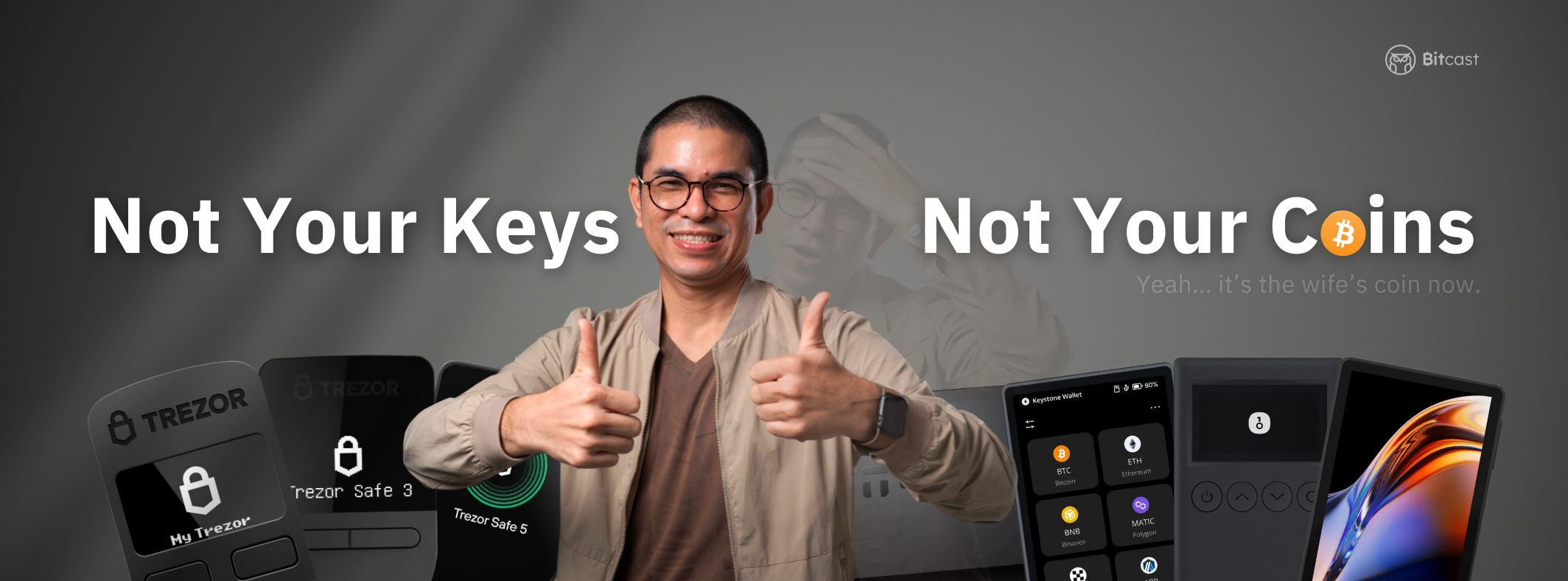
In the crypto world, there's a common saying: "Not your keys, not your coins." Simply put, if you don't hold the private key to your wallet, the coins in it might not be 100% yours. Because if the website or application where you store your funds gets hacked or shuts down, your money could disappear.
This concern led developers to create devices called Hardware Wallets to help us store our coins securely. And the first brand to pioneer this market and become globally recognized was "Trezor."
This article will explore Trezor's origins and why Bitcoin and crypto investors commonly use this device.
1. How did people store crypto before Trezor?
Back in 2011-2012, when Bitcoin was just starting to gain recognition, investing in crypto was very new. The biggest problem for people back then was "how to store coins securely?" At that time, there were only two main options, but both had very dangerous weaknesses.
Method 1: Storing on an exchange (Hot Wallet)
This method is the most convenient, as you can buy and sell immediately after opening the website. But it came with immense risk because the website held our private keys. If the website's security system wasn't strong enough, hackers could breach the system and steal everyone's money instantly. The clearest lesson was the Mt. Gox exchange hack in 2014, which caused a massive amount of customers' Bitcoin to vanish in an instant.
Method 2: Writing down the keys on paper (Paper Wallet)
When people feared website hacks, many chose to print or write down their private keys on paper and store them in a drawer. This method was 100% safe from hackers because paper isn't connected to the internet. However, the problem is that paper can tear, get wet, or the ink can fade. Even worse, whenever you wanted to transfer coins, you would have to type the keys from that paper into a computer. If that computer had a virus or malware hidden on it, your keys would be stolen instantly.
2. The beginning of the idea for a "portable safe" disconnected from the internet

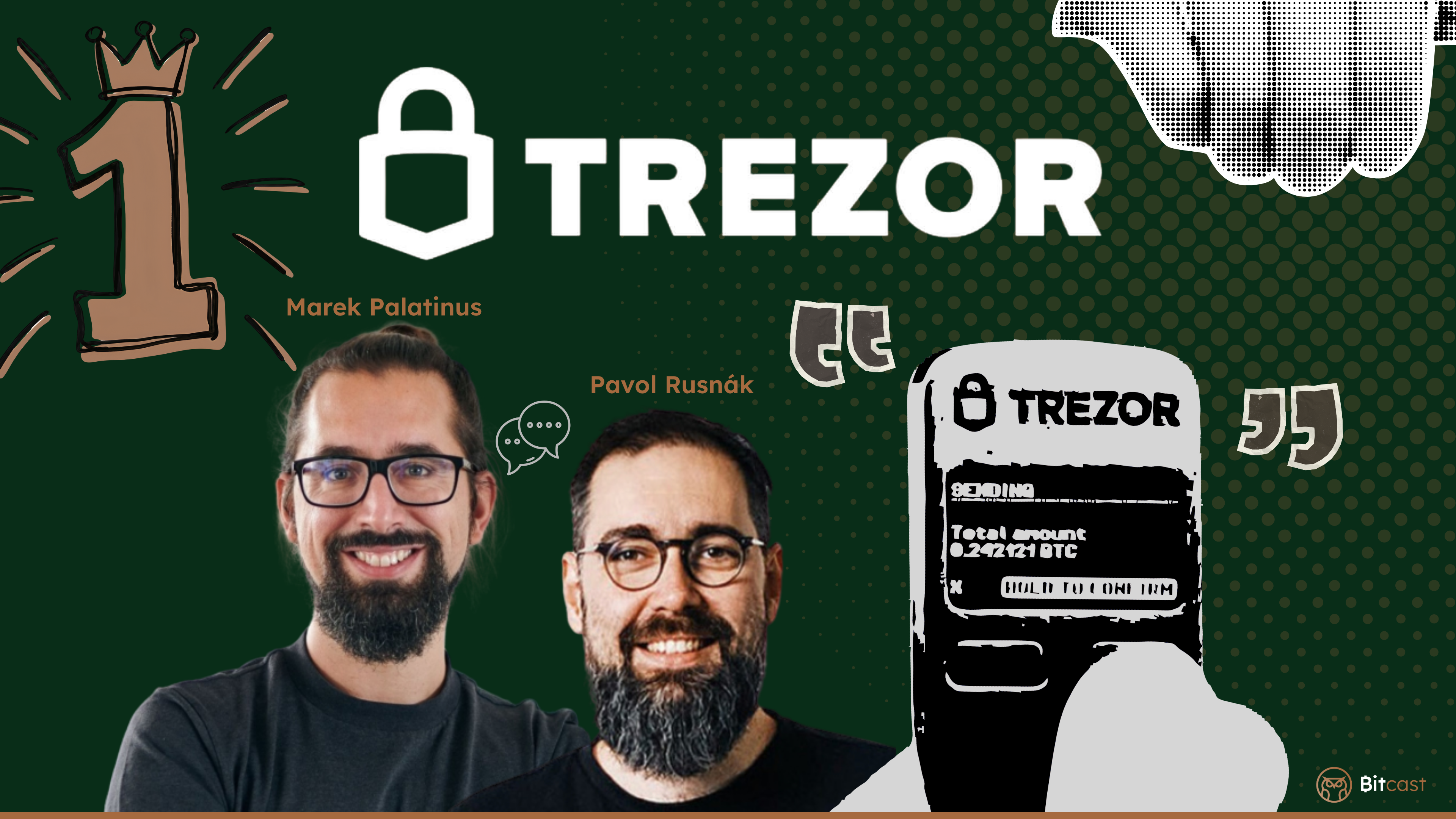
Based on the problems mentioned, two Czech programmers named Marek Palatinus and Pavol Rusnák began discussing and seeking a solution together.
Marek was no stranger to the crypto world. He invented the world's first pooled Bitcoin mining system. He had to manage large amounts of coins and knew that relying on computer antivirus programs for security was "insufficient" to deal with professional hackers.
They both concluded that the only way to solve this problem was to create a "new, dedicated hardware device." This device would securely store private keys internally, with one strict rule: "the keys must never leave this device for a computer or the internet."
With this determination, in 2013, they founded SatoshiLabs to turn this idea of a portable safe device into reality.
3. The first Trezor is released to the market

Building new hardware from scratch wasn't easy. They spent time developing and fundraising from people who believed in this idea. Finally, in 2014, SatoshiLabs successfully produced and delivered the Trezor Model One, the world's first Hardware Wallet.
The brand name "Trezor" comes from the Czech word for "safe," and this first device was cleverly designed to solve all the past problems. The device is small and portable, with a display screen and two buttons. This seemingly simple design has a hidden meaning.
When you transfer coins, the screen on the Trezor device displays the "amount" and the "destination wallet address" for you to verify with your own eyes. Even if a hacker uses a virus to change the numbers on your computer screen to a thief's address, the screen on the Trezor device will always show the truth.
Most importantly, to confirm a transfer, you must "physically press the button on the Trezor device yourself." A hacker sitting in front of a computer on the other side of the world cannot reach out and press the button on your device. This innovation perfectly combines the advantages of offline storage (like paper) and ease of use (like an exchange).
4. Reasons why most people prefer to use Trezor
Even though many new crypto wallet brands have emerged, Trezor remains highly popular. Here are the main reasons why people still choose this brand:
- Transparent and verifiable system (Open-Source)
Trezor's software is entirely open-source, meaning programmers worldwide can view its operational code. If any flaws are found, they can be reported and fixed immediately. This transparency builds user confidence and trust in the system's security.
- Must confirm on the device only, with absolute protection
Every time you want to transfer coins, you must physically press the button or touch the screen on the Trezor device yourself. Hackers cannot initiate transfers over the internet at all. Additionally, the device has very stringent security measures. For example, if someone steals your device and tries to guess the PIN, if the PIN is entered incorrectly 10 times, the device will automatically wipe its data (Reset) (***number of attempts varies by model), preventing the perpetrator from accessing your coins.
- Easy to use with Trezor Suite software
Many people think Hardware Wallets are difficult to use, but Trezor's wallet management application, Trezor Suite, is designed to be user-friendly. Its interface resembles a mobile banking app, making it easy for beginners to manage their portfolio, transfer funds, or exchange coins.
- Modern security features
Trezor constantly updates with new features, such as the Shamir Backup system, which allows users to split their seed phrase into multiple parts to mitigate the risk of losing the paper containing the phrase. Newer models also include a special Secure Element chip for added security.
5. How many Trezor models are there currently, and which one should you choose?

After seeing the importance of a "portable safe," many people are likely interested and have questions about which Trezor model to choose.
Currently, the brand offers different models suited for various usage styles and budgets, as follows:
1. Trezor Model One (Classic favorite for beginners)
This is the pioneering model that established the reputation of Hardware Wallets and remains popular to this day. Its key feature is its highly accessible price. The device is compact and controlled via two buttons on the front. It is perfect for those new to crypto investing who want to securely store their coins within a reasonable budget.
2. Trezor Safe 3 and Safe 5 (Upgraded advanced security models)
The "Safe" series is a new generation model developed for enhanced security. It features an embedded special chip called a Secure Element (SE). This chip protects against tampering if someone tries to physically open our device directly.
- Safe 3: This model still uses physical buttons but has upgraded security chips and a more modern design.
See more details here:
- Safe 5: Upgraded to a larger color touchscreen, making it much smoother and more convenient to enter passwords and check information on the screen.
See more details here:
3. Trezor Safe 7 (Latest flagship model)
What makes the Trezor Safe 7 a leap ahead of models 3 and 5 is not just its design or materials, but its ability to "solve a problem" for new investors who need ultimate flexibility.
In the past, one limitation of Hardware Wallets was that you mostly had to connect them to a computer, which was highly inconvenient when you were away from home and volatile market conditions occurred. The Trezor Safe 7 was designed to overcome this limitation by supporting seamless connectivity with mobile phones, turning your smartphone into a portfolio where you can check balances, trade, or transfer coins securely anytime, anywhere.
Naturally, since it's designed to be easily carried outside, Trezor has integrated the most absolute security systems for peace of mind, especially the PIN Protection system. If the device is lost or stolen, and the perpetrator attempts to guess the PIN incorrectly 10 times, the device will immediately perform a factory reset.
This means you can carry the Trezor Safe 7 for outdoor use and manage your crypto via your mobile phone freely, without worrying about your data falling into the hands of scammers.
See more details here:
Conclusion
Trezor is not just a piece of IT equipment; it's a tool that truly empowers us to control our digital money. Its transparent, secure, and user-friendly design is a key reason why investors worldwide continue to trust Trezor as their personal "safe" to this day.
แชร์:
4 Types of Bitcoin Addresses: Which One Should You Use? (For Beginners)
Forgot your PIN? How to reset it on a Trezor Safe hardware wallet