
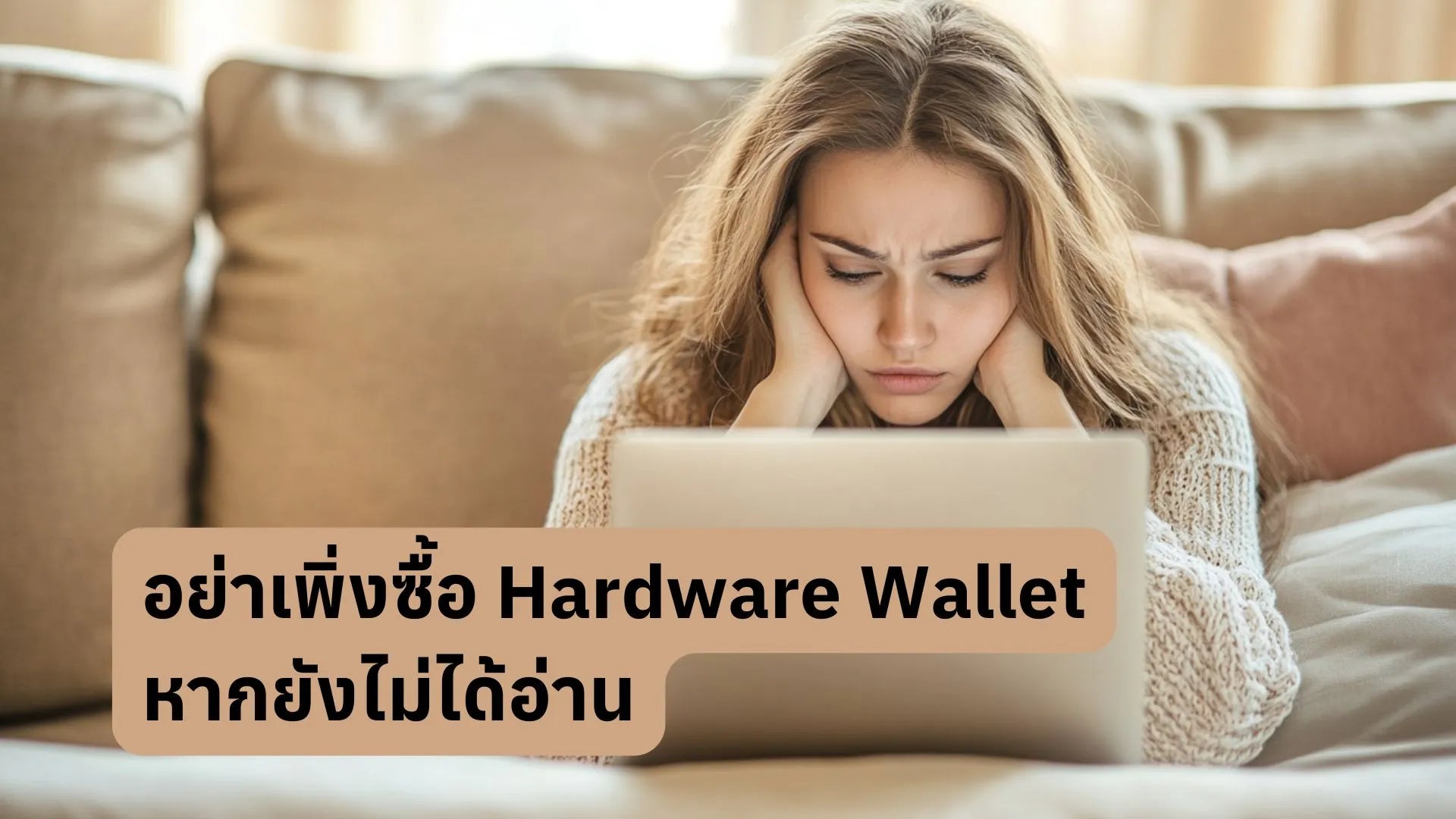
Many new users entering the crypto world look for tools to manage their Digital Assets securely. Hardware Wallets are often the first choice for many. However, if a Hardware Wallet is used without proper understanding or incorrect methods, it might not be as secure as one might think.
Therefore, before purchasing a Hardware Wallet, it's crucial to ensure you understand how to manage your Digital Assets yourself. If you're not ready to self-custody, keeping them on an Exchange might be a better option.
1. Keeping Your Seed Phrase Safe and Correctly

Many people still believe that their Digital Assets are stored inside the Hardware Wallet itself and therefore don't prioritize the security of their Seed Phrase. They think it's okay if it gets lost because they have a Hardware Wallet, so their coins won't disappear. This is incorrect. Digital Assets are not stored on the Hardware Wallet; they are stored on the Blockchain. You can access your Digital Assets using your Private Key.
If you don't fully understand how to use a Hardware Wallet, it might be better to try various Software Wallets like MetaMask or OKX wallet before buying a Hardware Wallet. This will help you test your understanding.
2. Understand the difference between storing Digital Assets "yourself" and "leaving them on an Exchange"
First, you need to ask yourself what your purpose is for buying a Hardware Wallet. Using a Hardware Wallet isn't suitable for everyone or every use case. What does a Hardware Wallet do?

Source: What is the difference between custodial and non-custodial wallets?
The difference between the two methods lies in who holds the keys. Therefore, self-custody of Digital Assets means holding your own keys, while storing Digital Assets on an Exchange means the Exchange holds the keys.
What does it mean to store Digital Assets on an Exchange?
Storing your Private Key with an Exchange means that when you want to perform transactions, such as receiving or transferring coins, you must use the Private Key and Public Key provided by the Exchange. This implies that to conduct transactions, you need to sign up and use the Private Key and various addresses generated by the Exchange. You can then perform transactions through the Exchange.
Advantages of storing Digital Assets on an Exchange
- It's convenient and easy to use; you can perform transactions with just a mobile phone.
- Transaction fees are cheaper compared to the Ethereum Network.
- Suitable for those who like to short-term trade for profit.
Disadvantages of storing Digital Assets on an Exchange
- If you don't have the knowledge to secure your Seed Phrase, you shouldn't transfer coins from the Exchange to a Hardware Wallet yet.
- You don't hold your own Key. This means the Exchange manages your Keys. If the Exchange suspends withdrawals or closes down, your Digital Assets could be lost. However, this shouldn't be overly concerning, as Exchanges licensed by the SEC in Thailand typically offer a good level of security. For instance, in the case of Zipmex's closure, all Thai customers received their money back. The ongoing issues were related to coins held in ZipUp, which were transferred to the Zipmex Global wallet for further investment.
Even though the admin sells Hardware Wallets, I don't blindly encourage those who don't understand how to protect their Seed Phrase to buy one. I want people to get the most value out of their Hardware Wallets and avoid losses due to improper use of the tools.
3. Understanding how Blockchain works

Understanding the fundamentals of Blockchain is very important. How is Blockchain related to Bitcoin and Cryptocurrency?
Many people may not pay much attention to Blockchain, perhaps because they mainly use it through Exchanges, which is similar to the banking systems we are accustomed to. Therefore, they might not have studied how Blockchain works extensively. Those who have transferred coins out of an Exchange would have some understanding of the Blockchain's operational process.
In this article, I won't delve too deeply into the intricacies of Blockchain's operation; I'll explain it in terms that the general public can easily understand.
What is Blockchain?
Before we dive into what Blockchain is, let's understand data storage. If we have various pieces of information that we want to store in a box, we can just cram them in. However, the problem is that if the box isn't sealed, it can be opened to modify the data. Blockchain solves this problem by sealing the box and keeping it sealed.

A Blockchain is a series of interconnected boxes, forming a chain that extends continuously. This design prevents retroactive data modification. As you can see from the image, a Blockchain has two main components:
- The "block" part, which stores various information in digital data form.
- The "chain" part, which links each block together. This linkage is done in a time-based manner, meaning time dictates the sequence. This is achieved using a Hash Function (a bit of a technical term here). This hash value helps us verify and prevent retroactive data modification. The hash value is derived by combining the hash of the previous block with the data in the current block, resulting in the current block's hash, as shown in the image above. This creates a strong connection between the blocks.
Simply put, if the data changes, the hash value will also change. Changing one block would necessitate changing every subsequent block, endlessly, and across many nodes or locations.
Why do we need to understand Blockchain?
Many people may not be aware that using Blockchain incurs transaction fees. This often surprises many, as the fees can be quite high on certain Blockchains, such as Ethereum. If you don't have the necessary fees for a particular Blockchain, you won't be able to perform transactions. Therefore, anyone looking to use Blockchain must understand its transaction fees.
Before purchasing a Hardware Wallet, we need to understand the importance of Seed Phrases, the difference between self-custody and storing Digital Assets on an Exchange, and the transaction fees involved. If we don't understand these aspects, we might misuse our Hardware Wallet and potentially lose access to or even lose our Digital Assets permanently.

How much do we trust ourselves to correctly and securely store our Keys? Therefore, if you don't yet fully understand how to use a Hardware Wallet, keeping your assets on an SEC-licensed Exchange (of which there are many options) is a safer alternative than using a Hardware Wallet without proper understanding.
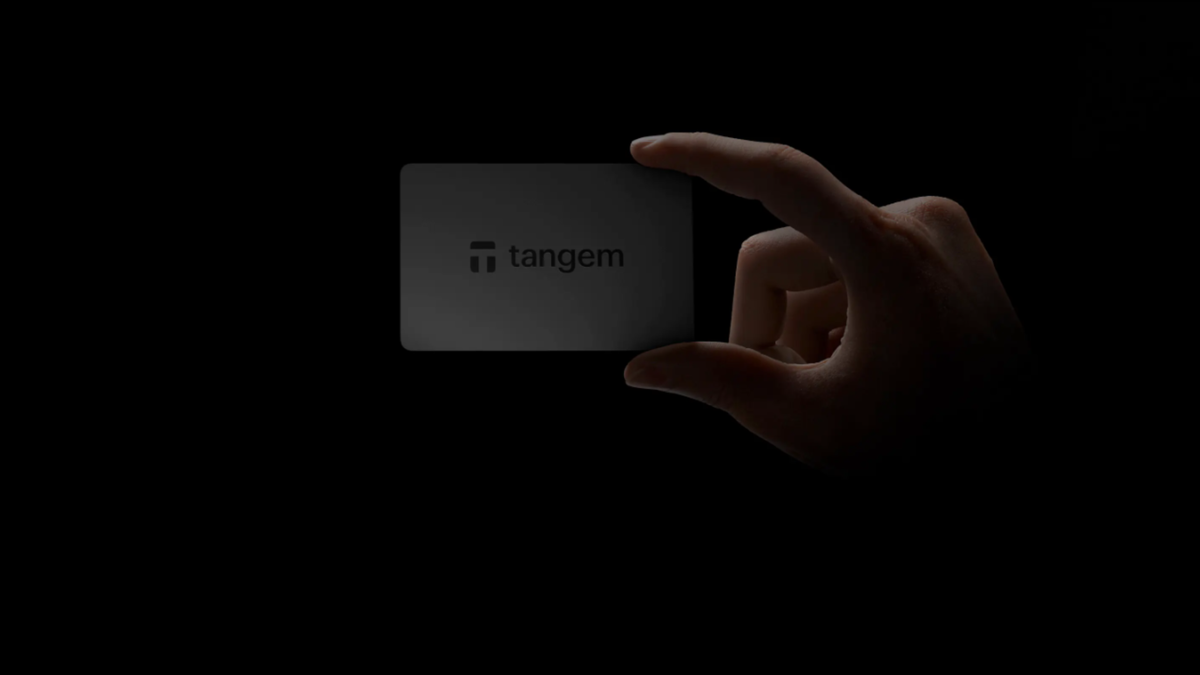
However, if you're confident in your understanding and want to choose a Hardware Wallet, you can buy one here. Or, if you're still undecided, you can read this article for assistance in making your choice.


แชร์:
What's the outlook for the Bitcoin & Crypto market in the second half of 2024?
Why should we use 2FA? Can it really protect against hackers?