


In an era where digital assets like Bitcoin and Crypto are growing, a key question everyone faces is, "Where is the safest and most suitable place to store your coins?" The main options popular among investors are 3 types: Exchange, Software Wallet, and Hardware Wallet. Each has different pros, cons, and risks. A thorough understanding of these differences will help you protect your valuable assets.

1. Exchange (Digital Asset Exchange)
When you buy coins on an Exchange, those coins are stored in your account on their platform, similar to depositing money in a traditional bank. While convenient, you must also accept the associated risks.
Examples of Exchanges
- CEX (Centralized Exchange): Binance, Bitkub, Coinbase, Orbix
Advantages
- Convenient and easy to use: Suitable for beginners. Just open an account and you can trade coins immediately.
- High liquidity: Trading is easy and fast.
- Diverse features: Includes additional services like trading, lending, or earning interest on coins.
Disadvantages and Risks
- You do not own the Private Key: The Exchange manages the Private Key, which is essential for accessing your coins. This means you don't truly control your assets.
- Risk of hacking: Exchanges are prime targets for hackers. If the platform is attacked, your money could be at risk.
- Legal risks: Closure or suspension of services by regulatory bodies might prevent you from accessing your coins temporarily or permanently.
Bitcoiner's Perspective
"Not your keys, not your coins" is a golden phrase we often use. Because whenever your Bitcoin is stored on an Exchange, it only becomes a number in that company's database. If the Exchange is hacked, shut down, or seized by the government, you might lose everything without any recourse. Therefore, Exchanges are suitable for short-term trading but not the safest place to store Bitcoin long-term.
2. Software Wallet (Digital Wallet Software)
Software Wallet is an application installed on your computer or mobile phone, where you control your Private Key yourself. However, Software Wallets come in various grades, and security depends on their type and your usage.
Examples of Software Wallets
- Desktop Wallet: Exodus, Electrum
- Mobile Wallet: Trust Wallet, Metamask, OKX Wallet
- Web-based Wallet: MetaMask, Phantom
Advantages
- You own the Private Key: You have complete control over your coins and don't need to rely on intermediaries.
- Convenient to use: Transactions are easy and fast, requiring only an internet connection.
Disadvantages and Risks
- Risk of cyberattacks: If your device is infected with viruses or malware, you could easily lose your coins, especially with Hot Wallets that are always connected to the internet.
- Phishing and fake websites: Hackers often create fake websites to trick you into entering your Seed Phrase, which is a set of words for wallet recovery.
- Risk of losing the Private Key: If you lose your Seed Phrase or expose it to others, you won't be able to recover your coins and they could be stolen instantly.
Bitcoiner's Perspective
Using a Software Wallet is an important first step towards truly owning Bitcoin because you control your own Private Key. However, the wallet operates on an internet-connected device, which still carries the risk of cyberattacks. Therefore, a Software Wallet is a convenient option for daily use but should not be used to store large amounts of Bitcoin.
3. Hardware Wallet (Digital Hardware Wallet)
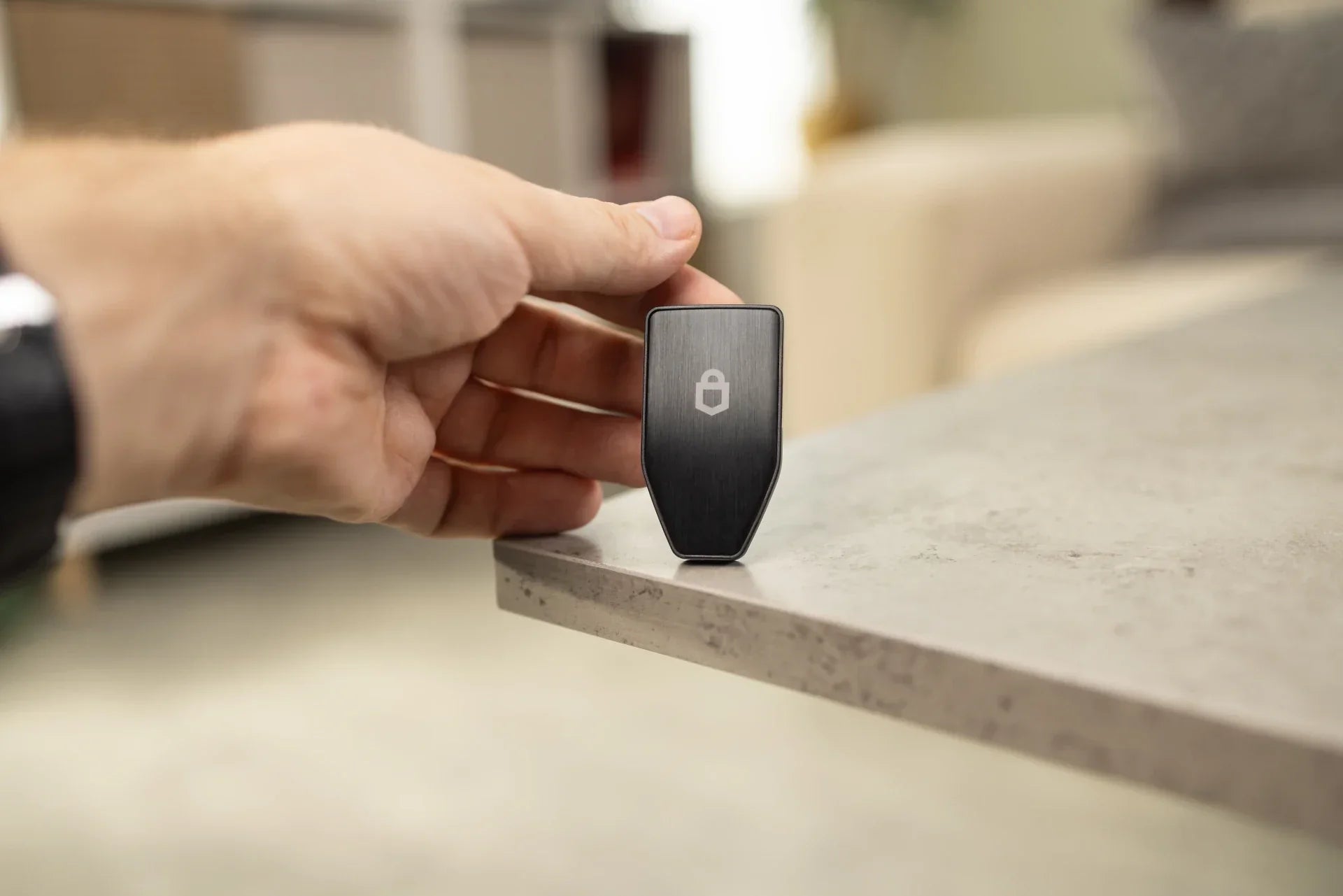
Hardware Wallet is a small, tangible electronic device designed specifically to store Private Keys offline. It operates completely separate from computers and mobile phones, ensuring maximum security.
Examples of Hardware Wallets
- Trezor
- Onekey
- Coldcard
- Blockstream
- Foundation
Advantages
- Maximum security: The Private Key is stored securely within the Hardware Wallet device or an encrypted chip, making it impossible for malware or hackers to access.
- Protection against phishing and malware: Transactions require confirmation with a physical button press on the device, ensuring you are sending coins to the correct address.
- Safe even if your computer has a virus: Even if your computer is infected with a virus, your transactions remain secure as long as no one has access to the device and your PIN Code.
Disadvantages and Risks
- Slightly less convenient: Every time you want to make a transaction, you have to plug the device into a computer and press the confirmation button.
- Cost: Hardware Wallets range in price from thousands to tens of thousands of baht.
- Risk of buying counterfeit devices: You should only buy from the official website of the manufacturer to avoid devices that may have been tampered with.
*** Note: Bitcast is an official distributor of Hardware Wallets. You can be confident that they are 100% genuine, with after-sales service throughout their use, support for all issues, and a 1-year warranty. ***
From a Bitcoiner's Perspective
Hardware Wallet is the perfect answer to Bitcoin's philosophy and something every Bitcoiner must have. Because that is true ownership of assets and financial freedom. This device acts as a "digital fortress" that protects your Private Key from the outside world, allowing you to store Bitcoin securely for many years without worry.
Summary and Recommendations / Choose based on your goals
|
Factor |
Exchange |
Software Wallet |
Hardware Wallet |
|
Security |
Low (depends on Exchange) |
Medium |
Highest |
|
Asset Control |
None |
Complete |
Complete |
|
Convenience |
Highest |
High |
Low |
|
Suitable for |
Beginners, short-term trading |
Beginners who want to control their coins themselves |
Long-term investors, storing large amounts of coins |
Key considerations for choosing each type
- Exchange
Use for "buying, selling, exchanging", like a trading arena focused on speed and liquidity. Use it only when necessary and don't keep all your funds on it.
- Software Wallet
Use for "daily transactions", like a ready-to-use wallet. But only keep funds for small transactions for convenience.
- Hardware Wallet
Use for "long-term storage", like a safe deposit box suitable for storing large sums of money securely in the long term.
The most suitable recommendation is: "Don't keep all your coins in one place."
- If you are a frequent trader, keeping some coins in an Exchange for convenience is a good option.
- If you want to control your coins yourself but still prioritize convenience, a Software Wallet is a suitable choice.
- But if you are a long-term investor who wants to store a large amount of Bitcoin or Crypto and needs maximum security, a Hardware Wallet is the safest and most suitable solution.
The choice of coin storage method depends on your goals and the risks you are willing to accept. But always remember: "Not your keys, not your coins" because owning your Private Key is true asset ownership, and this is the core principle of the crypto world that you should understand and prioritize!
For those looking for ways to use Bitcoin in daily life beyond long-term storage, we recommend studying Lightning Network, a technology that will enable fast and low-fee Bitcoin transfers, making Bitcoin spending commonplace in the future.
If you want to delve deeper or seriously study Bitcoin and Hardware Wallets, you can follow Bitcast.


แชร์:
What is an Air-gapped Wallet (QR Code)? An Easy-to-Understand Guide for Beginners
5 Signs It's Time to Upgrade Your Hardware Wallet