
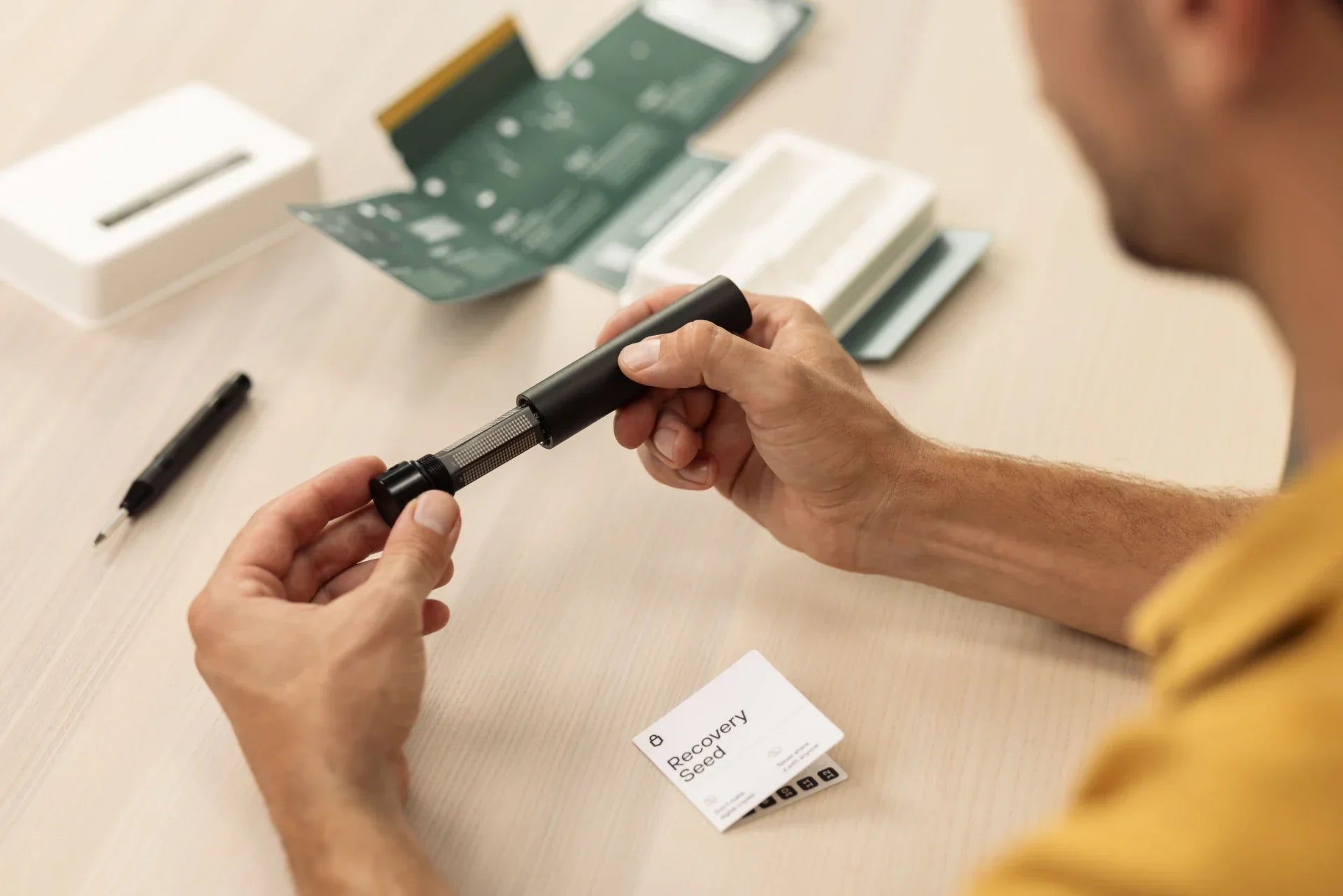
In the world of digital assets, you're likely familiar with the term "Seed Phrase," also known as a Secret Recovery Phrase, Mnemonic Phrase, or Recovery Phrase. It's a randomly generated set of 12-24 English words that acts as the master key to recover your digital wallet and all your assets. This Seed Phrase is the core of the "Self-Custody" concept, or managing your own assets, as the saying goes: "Not your keys, not your coins."
However, if you lose your Seed Phrase, you'll completely lose access to your assets. Even more critically, if someone else knows your Seed Phrase, they can immediately access and transfer all your assets.
This is why many beginners find remembering and safeguarding Seed Phrases cumbersome and complex, becoming a "barrier" hindering the widespread adoption of digital assets and Web3 technology.
Limitations of Seed Phrases
- Single Point of Failure
- If your Seed Phrase is stolen or lost, you immediately lose "rights" to access all your assets, with no possible recourse.
- Risk of Human Error
- Unsafe storage methods, such as taking a photo on your phone or storing it digitally.
- Vulnerability to scams, like phishing attacks that trick you into revealing your Seed Phrase.
- Physical risks: Even if carefully stored on paper or metal, it's still susceptible to unforeseen events like fire, flood, or theft.
- Inconvenient Usage
- When recovering a wallet, even a small typo or incorrect word order will make it unusable. This makes many new users hesitant to take responsibility for their own assets.
These limitations can make some users feel unconfident in taking full responsibility for managing their own assets.
For this reason, the crypto industry has begun developing new, safer, and easier approaches that don't rely on Seed Phrases, aiming to reduce complexity and increase user confidence. Here are some interesting concepts:
New Approaches to Replace Seed Phrases in the Future
1. Multi-Party Computation (MPC)
An encryption technique that splits a private key into multiple "key shares" and distributes them separately. When a transaction needs to be made, these separate key shares are collaboratively used to compute a signature to approve the transaction, without anyone ever seeing the full key.
Pros
- No single point of failure
- No need to remember a Seed Phrase
- Theft requires compromising multiple points simultaneously
Cons
- Complex technology, which may cause transaction delays in some cases
Examples: ZenGo and Fireblocks wallets use MPC to split keys between the user's mobile device and company servers. Companies like Coinbase and Binance have also started implementing this technology.
2. Social Recovery
This concept involves having trusted individuals or organizations help you recover your wallet if you lose your key. You can designate friends, family members, or service providers as guardians who can help recover your lost key.
Pros
- Easy to use, similar to general account recovery
- Distributed trust, not solely reliant on a Seed Phrase
Cons
- Requires trust in other individuals or organizations
Examples: Argent wallet allows adding guardians via the app, or the familiar Ledger recovery.
3. Biometric Login
This is a widely familiar method: using Face ID, fingerprints, or new standards like Passkey directly instead of a Seed Phrase.
Pros
- Convenient, fast, and users are familiar with its use
- Enterprise-level security
Cons
- If biometric data is leaked, it cannot be "changed" like a password.
- Still relies on trust in how data is stored.
Example: Coinbase Smart Wallet uses Face ID / fingerprint for transaction confirmation.
Summary
The crypto world is rapidly evolving with new approaches that address the significant pain points of Seed Phrases, transforming the unsolvable problem of losing a Seed Phrase into a solvable one. Examples include MPC, which distributes key custody so no one holds the full key; Social Recovery, which delegates trust to those around you or the community; Biometric Login, as easy to use as unlocking a phone; and there will be more new approaches to come.
In the future, crypto wallets may be as easy to use as banking apps, reducing barriers to access and adoption for a broader user base.
Ultimately, no matter which direction the system develops, accurate knowledge remains the best defense. Because even with all the help mechanisms, if we don't understand proper storage methods, it can always become a risk.
So, friends, which future do you find more interesting? Storing your Seed Phrase yourself, or relying on new technology that offers convenience? Personally, I still believe wholeheartedly in the principle of self-custody. Our assets, we must be responsible for ourselves.
If there is any incorrect information, I apologize. Friends are welcome to provide suggestions and corrections. Thank you! // Admin Tee🟠


แชร์:
Compare 4 Ways to Connect Hardware Wallets / What Beginners Should Know Before Buying!
What is an Air-gapped Wallet (QR Code)? An Easy-to-Understand Guide for Beginners