


- What is a Private Key?
- The Key to True Ownership of Funds
- Why are Software Wallets Risky?
- The Key is in the Wrong Place
- What is a Hardware Wallet?
- A Computer Built for “One Task”
- How Does a Hardware Wallet Send Bitcoin Securely?
- In-depth look at how Hardware Wallets work
- Step 1: Prepare the transaction (on the computer)
- Step 2: Send data to the Hardware Wallet
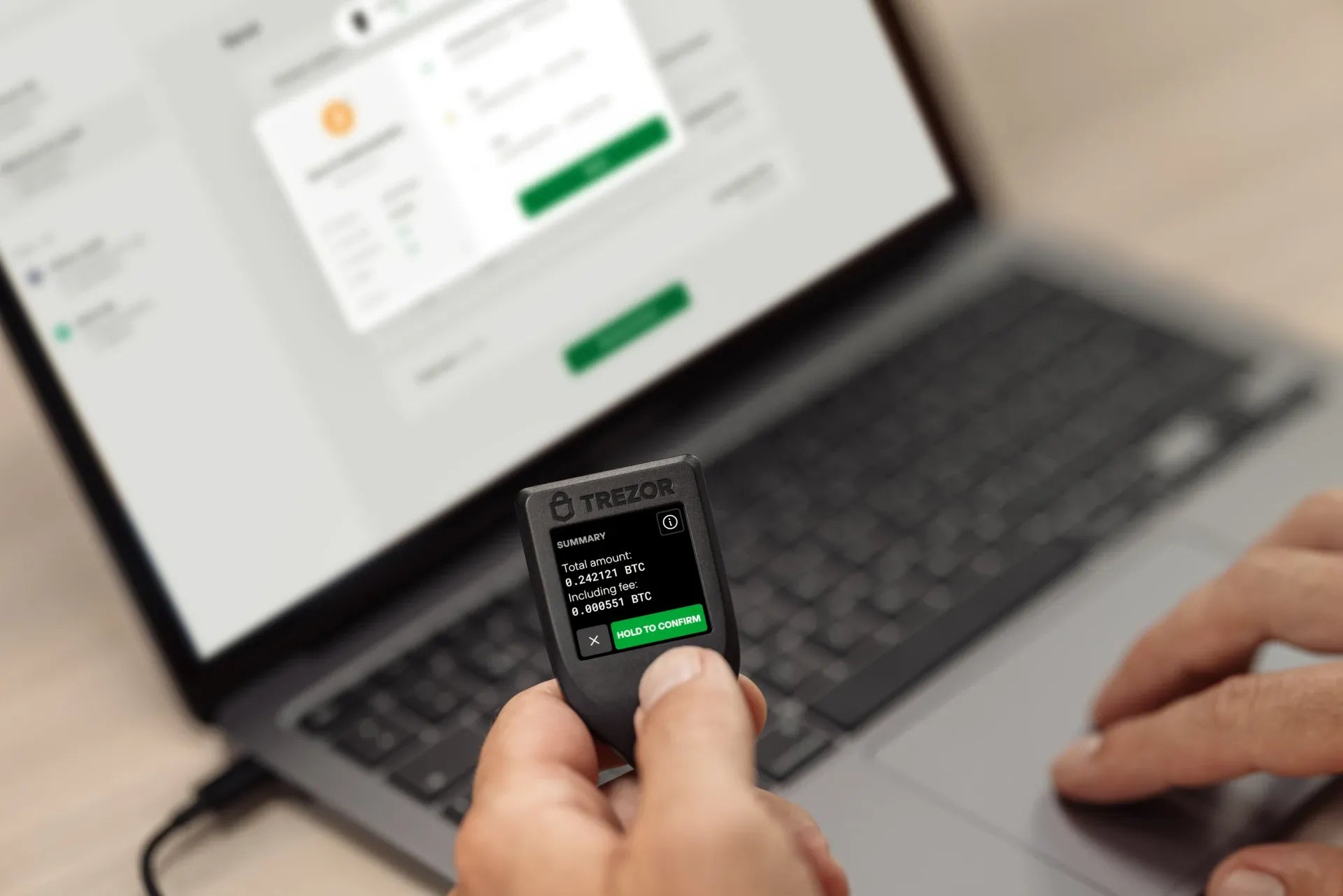
- Step 3: Data displayed on the Hardware Wallet screen (Trusted Display)
- Step 4: Sign the transaction (The Magic Moment)
- Step 5: Send to Blockchain
- Summary
Have you ever had friends or acquaintances come up to you and ask questions or express doubts like:
- "How is a Hardware Wallet different from a mobile app?"
- "Is this small device really safe?"
- "Is it true that the Private Key never leaves the device?"
If you're wondering or looking for answers to explain further, this article will delve into the mechanisms of a Hardware Wallet, from its concept to practical use, without relying on complex technical jargon, making it easy for beginners to understand in one read.
Once you finish reading, you'll immediately understand:
Why a Hardware Wallet is the true foundation of Self-Custody.
What is a Private Key?
The Key to True Ownership of Funds
Before we look at the device itself, we need to understand its core: the Private Key. In the world of Bitcoin and Blockchain, the system never knows, nor does it need to know, your name, where you live, or what you do. The only thing the blockchain needs is:
"Whoever has the correct Private Key is authorized to transfer funds."
Therefore, in practice:
Private Key = Real power to control funds.
It's not just a login password; it's what's used to "sign" to confirm transactions. Anyone who holds your Private Key can instantly transfer all your assets out, and no one can stop them.
Why are Software Wallets Risky?
The Key is in the Wrong Place
To make it clearer, let's look at Software Wallets (Hot Wallets) on mobile phones or computers. The problem isn't with the program's code, but with the device's "environment."
Computers and mobile phones are designed to:
- Be connected to the internet 24/7
- Download files, watch movies, listen to music
- Install third-party programs
All of these provide avenues for:
- Malware
- Keyloggers
- Phishing
Therefore, the risk will never be zero as long as the Private Key is on an online device.
What is a Hardware Wallet?
A Computer Built for “One Task”
The revolutionary concept of Hardware Wallets stemmed from a simple question asked by SatoshiLabs developers:
“What if… we never let the Private Key touch a computer?”
The answer was to completely isolate the Private Key from our computers or mobile phones, leading to the creation of the Hardware Wallet.
A Hardware Wallet is a miniature computer with all unrelated functions stripped away, leaving only one purpose:
- ❌ No browser
- ❌ Cannot install random apps
- ❌ No email
- ✅ Only function is to store the Private Key and sign transactions internally
The result is a massive reduction in the attack surface, making it impossible for hackers to breach it like a general-purpose computer.
How Does a Hardware Wallet Send Bitcoin Securely?
In-depth look at how Hardware Wallets work
Step 1: Prepare the transaction (on the computer)
You enter the amount and recipient address in a program, such as Trezor Suite.
- The computer creates an Unsigned Transaction (transaction draft).
- No signature yet.
- Nothing has happened on the Blockchain yet.
Step 2: Send data to the Hardware Wallet
The computer sends data via USB or Bluetooth to the Hardware Wallet.
- This is merely a "request" for the transaction to be signed.
- No Private Key is included in this data set.
Step 3: Data displayed on the Hardware Wallet screen (Trusted Display)
The Hardware Wallet displays the details on its own screen, including:
- Recipient address
- Amount
- Fee
The important reason is:
A computer can be hacked, but the information on the Hardware Wallet screen is reliable truth.
Step 4: Sign the transaction (The Magic Moment)
When you press Confirm on the device:
- The Private Key operates only within the device.
- Only the Signed Transaction is sent out.
- There is no way to reverse-calculate the Private Key.
Step 5: Send to Blockchain
The computer acts as a:
“Postman”
It distributes the signed transaction on the network.
Even if your computer is riddled with viruses, hackers cannot steal your money.
Summary
A Hardware Wallet is not just a place to store money; it is a:
“Security System”
That we can control ourselves.
A Hardware Wallet is a technology that completely isolates the Private Key from the online world. It doesn't enhance security through complexity but by:
“Restructuring power”
From software and intermediaries back to the true user.
A Hardware Wallet cannot prevent all dangers, but what it does is reduce systemic risks and force attacks to rely on the user's "ignorance" instead, which is much more difficult and costly.
This is why the Bitcast team is dedicated to providing educational articles and always emphasizes that:
Security is the sum of knowledge + correct usage, not just the device alone.
If you want to know more details about any Hardware Wallet model or have any questions, feel free to ask! 😉

แชร์:
How do a seed phrase and private key work in a hardware wallet?
How do MCUs and Secure Elements differ in a hardware wallet?