


- Chapter 1: Definition and Physical Architecture of Secure Element
- Physical Protection Structure
- Chapter 2: Secure Element Mechanism in Hardware Wallets
- 1. Key Generation and Randomness
- 2. Key Storage in Cold Storage
- 3. Isolated Transaction Signing Process
- Side-Channel Attacks
- Fault Injection Attacks
- Chapter 4: Secure Element vs. Other Security Approaches
- 1. Secure Element (SE) vs. General-Purpose Microcontroller (MCU)
- 2. Secure Element vs. Trusted Execution Environment (TEE)
- 3. Secure Element vs. TPM (Trusted Platform Module)
- Chapter 5: Security Standards and Certifications (Common Criteria & EAL)
- Chapter 6: In-depth Look at Secure Element Implementation in Various Brands
- 1. Ledger Brand (Nano S Plus, Nano X, Stax, Flex)
- 2. Trezor Brand (Safe 3, Safe 5, Safe 7)
- 3. Coldcard Brand (MK4)
- Chapter 7: Special Capabilities Secure Element Provides to Hardware Wallets
- 1. Secure Screen
- 2. FIDO2 and U2F Authentication
- 3. Anti-Klepto Protocol
- Chapter 8: What Secure Elements Cannot Do and Limitations to Be Aware Of
- 1. Phishing & Human Error
- 2. Loss of Seed Phrase Outside the Device
- 3. Blind Signing
- 4. Address Poisoning
- Chapter 9: The Future of Secure Element and Hardware Transparency
- The Emergence of Open-Source Secure Element (TROPIC01)
- Addressing Quantum Computing
- Conclusion
The evolution of digital asset storage has reached a point where security no longer depends solely on the strength of a password, but on the physical architecture of the device used to store "private keys."
In the context of cryptocurrencies, the phrase "Not your keys, not your coins" remains an eternal truth that reminds investors of the importance of self-custody of their keys. However, self-custody of private keys via software wallets on computers or smartphones comes with enormous risks from malware, phishing, and sophisticated cyberattacks.
For this reason, hardware wallets were developed to create an "isolated environment" from the internet world, and the crucial core component that acts as the last line of defense within these devices is a special processing chip called a Secure Element (SE).
1: Definition and Physical Architecture of Secure Element
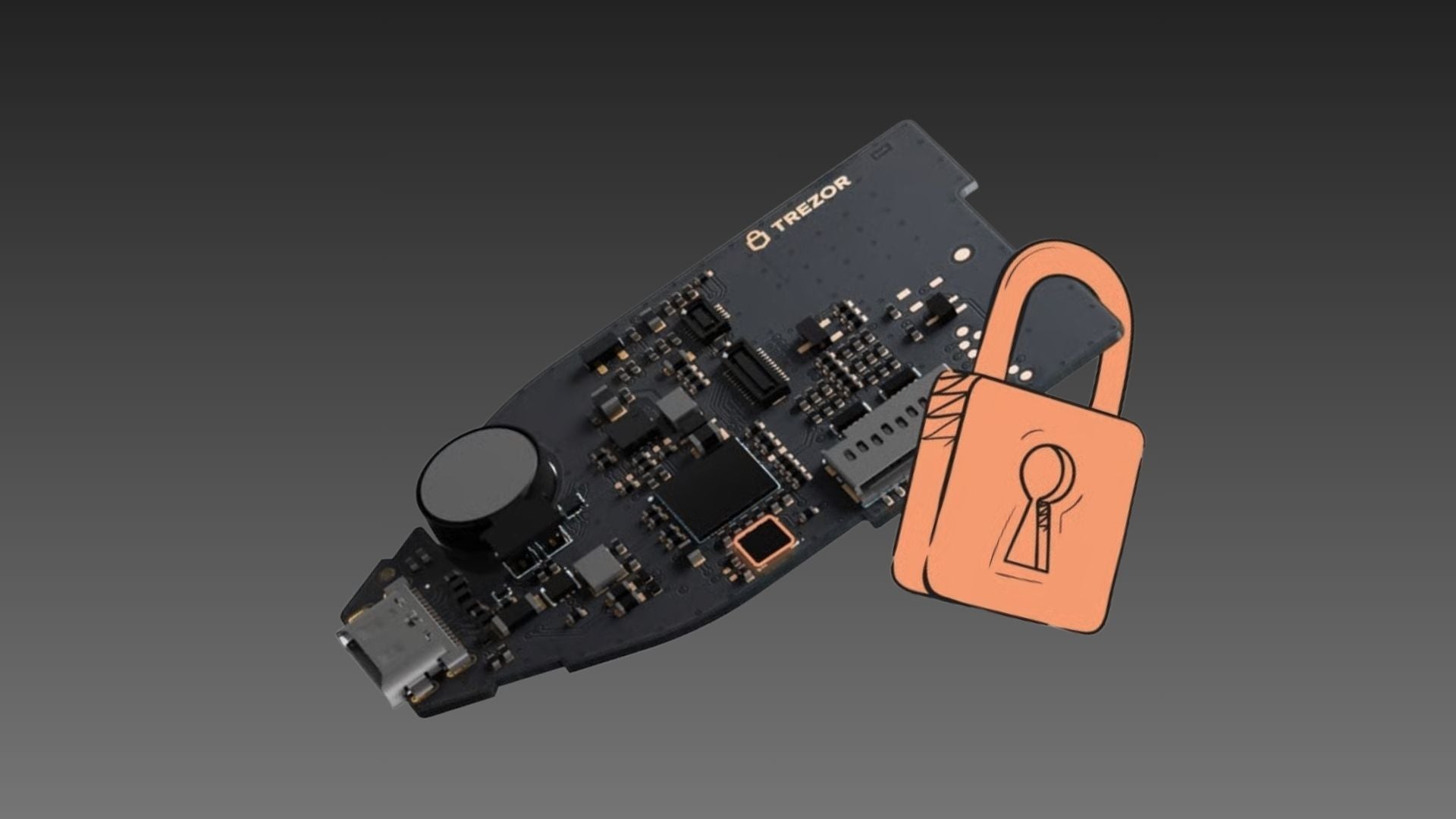
A Secure Element (SE) is not a common microchip found in appliances or personal computers. Instead, it is a specialized microprocessor designed for the sole purpose of storing and processing highly sensitive data under conditions that resist both physical and software attacks. To paint a clearer picture, if a hardware wallet is an entire safe, the Secure Element is the "safe deposit box inside the safe" with thicker walls and more complex protection systems than other components of the safe.
Technically, an SE is a physically discrete hardware chip that operates independently of the device's main processor or microcontroller (MCU). The origins of this technology are deeply rooted in the smart card industry, used in credit cards, debit cards, mobile phone SIM cards, and electronic passports (E-Passports). The distinctiveness of an SE lies in its having a miniature operating system within itself, which restricts data access and does not allow direct reading of secret data from memory.
Physical Protection Structure
What distinguishes SEs from general-purpose processing chips are the silicon-level internal protection measures. These chips are often equipped with a "protective mesh," which is a layer of electrical circuits covering the processing and memory areas. If an attempt is made to penetrate the chip's surface to use voltage measurement tools or laser beams to extract data, this mesh will break and signal the chip to instantly destroy the internal data (Self-destruction). Furthermore, SEs are designed to be resistant to reverse engineering and analysis of confidential electrical current flow.
2: Secure Element Mechanism in Hardware Wallets
The primary functions of a Secure Element within a hardware wallet can be divided into key steps that ensure private keys are never exposed to the outside world, not even for a split second:
2.1. Key Generation and Randomness
The foundation of security in the crypto world is randomness (Entropy). If a key is generated with a predictable algorithm, hackers can reverse-engineer it to find the seed phrase.
SEs solve this problem by using a True Random Number Generator (TRNG), which relies on physical phenomena within electrical circuits to generate unpredictable values. The entire private key generation process occurs within the SE and is recorded only in the chip's encrypted memory.
2.2. Key Storage in Cold Storage
Once a private key is generated, it is confined within the SE's domain forever. This key will not be extracted to the computer's RAM, or even to the main processor's RAM within the hardware wallet itself. This condition is true cold storage, as the key is completely isolated from internet-connected software.
2.3. Isolated Transaction Signing Process
When a user wants to make a transaction, the process is not to send the key out to sign on a computer, but to send "unsigned transaction details" into the SE through a restricted interface.
- Step A: The computer application generates transaction details (e.g., send 1 BTC to address X).
- Step B: This information is sent to the hardware wallet.
- Step C: The Secure Element receives the transaction data and uses the private key stored within to perform mathematical calculations to create a "Digital Signature."
- Step D: The digital signature is sent back to the computer for broadcast to the blockchain network.
Mathematically, this process uses the principles of Elliptic Curve Cryptography (ECC), specifically the ECDSA algorithm (e.g., on the Bitcoin and Ethereum networks).
Chapter 3: Physical Threats and Protection by Secure Element
The main reason most hardware wallets choose to use SEs instead of general-purpose microcontrollers (MCUs) is their ability to withstand attacks when hackers have "the hardware wallet device" in their possession (Physical Attacks).
Side-Channel Attacks
This is one of the most sophisticated attacks, where hackers don't exploit program code but observe the chip's "physical traces" while processing private keys.
- Power Analysis: Measuring mill-ampere level differences in power consumption while the chip processes different data bits. For general chips, calculating a "1" bit might use slightly more power than a "0" bit, which hackers can use to statistically gather data until they extract the key.
- Electromagnetic Leakage: All chips emit electromagnetic radiation while operating. SEs are designed with shields to eliminate these waves or generate "noise" to conceal actual data.
SEs protect data using Constant Time Execution (making all instructions take the same amount of time regardless of the data) and Power Flattening techniques (adding artificial power consumption to keep the power usage graph consistently flat). This prevents hackers from distinguishing secret data from noise.
Fault Injection Attacks
Hackers might attempt to cause "disruptions" in the chip's operation, such as Voltage Glitching, or sudden voltage reduction for only a few nanoseconds, to make the chip "skip" security checks (e.g., bypassing the PIN check). SE chips have very sensitive voltage and frequency sensors. If any slight anomaly is detected, they will immediately stop processing or reset themselves.
| Type of Attack | Attack Goal | SE Protection Mechanism |
|---|---|---|
| Simple Power Analysis (SPA) | Detect key patterns from single power consumption | Randomization of instruction sequences and power noise generation |
| Differential Power Analysis (DPA) | Use statistics from multiple power consumptions to find key values | Mathematical Masking and Blinding |
| Clock Glitching | Forcibly skip critical instructions with abnormal clock signals | Independent internal clock generator |
| Laser Fault Injection | Use lasers to induce changes in data bits in memory | Light-protective mesh and internal light detection sensors |
| Cold-Boot Attack | Freezing RAM to extract lingering data after shutdown | Encrypted memory with no data lingering in main RAM |
4: Secure Element vs. Other Security Approaches
In the hardware wallet market, there's extensive debate about the necessity of SE compared to other architectural approaches. Understanding these differences can help investors choose a device that matches their risk tolerance.
4.1. Secure Element (SE) vs. General-Purpose Microcontroller (MCU)
Microcontrollers like the STM32 (used in older Trezor models) are general-purpose chips designed for speed and performance, not physical security. While they can be programmed to be secure at a software level, if a hacker gains physical access to the device, they can use techniques like Voltage Glitching to "dump" data from the Flash Memory and extract private keys in a short amount of time.
4.2. Secure Element vs. Trusted Execution Environment (TEE)
TEE is a solution used in modern smartphones (e.g., Apple Enclave or ARM TrustZone) that creates a secure "parallel world" within the main processor chip. While TEE is better than a general-purpose MCU, because it still shares some resources (such as data buses and power supply) with the main operating system, it is more susceptible to side-channel attacks than a completely isolated SE.
4.3. Secure Element vs. TPM (Trusted Platform Module)
TPMs are commonly found in laptops for verifying system boot integrity and storing file encryption keys. However, TPMs are designed according to general computer industry standards, which may not provide the same level of resistance to physical attacks as SEs certified to EAL5+ or EAL6+ used specifically in crypto wallets.
5: Security Standards and Certifications (Common Criteria & EAL)
To evaluate the performance of a Secure Element, the industry uses an international standard called Common Criteria (ISO/IEC 15408), which defines levels known as Evaluation Assurance Level (EAL).
- EAL1 - EAL4: Suitable for systems not subjected to sophisticated physical attacks.
- EAL5+: A high-level standard used in credit cards and e-passports. Chips at this level are tested to withstand advanced attacks from experts.
- EAL6+: An even higher level of assurance, often found in newer chips like Infineon OPTIGA Trust M used in Trezor Safe 5, which have undergone more stringent verification.
The "+" symbol (e.g., EAL5+) means the chip meets additional requirements in some critical security areas, such as protection against Fault Injection, beyond what the general standard specifies.
6: In-Depth Look at Secure Element Implementation in Different Brands
Each brand has a different approach to integrating SEs into their devices, reflecting distinct security philosophies.
6.1. Ledger Brand (Nano S Plus, Nano X, Stax, Flex)
Ledger pioneered the use of SE in hardware wallets, employing ST33 series chips from STMicroelectronics.
- Chip Model: ST33J2M0 or similar, certified EAL5+ or EAL6+.
- Key Feature: Ledger uses SE as the core for running the BOLOS operating system and directly controlling the display (Secure Screen). This ensures that the information shown on the screen is not interfered with by malware.
- Limitation: Due to Non-Disclosure Agreements (NDAs) with the chip manufacturer, the source code for the SE chip cannot be fully disclosed to the public.

6.2. Trezor Brand (Safe 3, Safe 5, Safe 7)
Trezor previously adhered to a 100% open-source philosophy, so older models (Model One, Model T) did not use SEs because no chips with disclosed schematics were available. However, in the new era, Trezor has changed its architecture to address physical vulnerabilities.
- Trezor Safe 3 & 5: Use Infineon OPTIGA Trust M (V3) chips, which are EAL6+ chips without stringent NDA conditions, allowing Trezor to still disclose most operational details.
- Trezor Safe 7: Introduces TROPIC01 technology, the world's first SE chip developed under the concept of a Truly Open Integrated Circuit by Tropic Square (a SatoshiLabs subsidiary), to establish a new standard that is both SE-level secure and auditable.
6.3. Coldcard Brand (MK4)
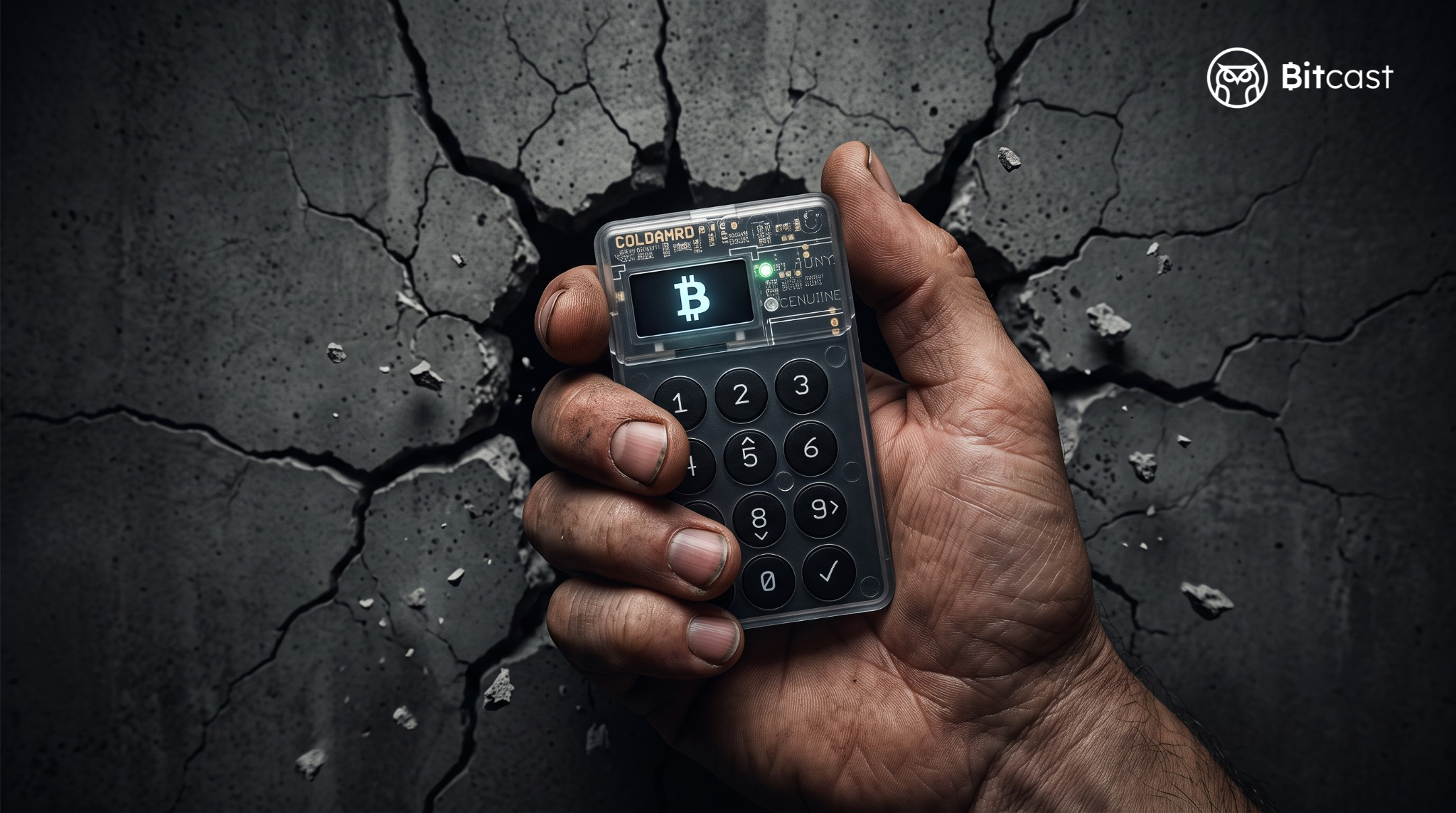
Coldcard focuses on high-level Bitcoin-only users and enhances security with a dual SE chip setup.
- Dual Chips: Uses both Microchip ATECC608B and Maxim DS28C36B.
- Philosophy: Having two SEs from two manufacturers helps mitigate supply chain risks. If there's a secret vulnerability in one chip, the other will still protect the keys. Coldcard also features a "Shoot This" function that clearly indicates the location of the SE chips, allowing users to physically destroy them with a drill in an emergency.
| Feature | Ledger Nano X | Trezor Safe 5 | Coldcard MK4 |
|---|---|---|---|
| Secure Element Model | ST33J2M0 | OPTIGA Trust M | Dual: ATECC608B + DS28C36B |
| Certification Level | CC EAL5+ | CC EAL6+ | N/A (Chip only) |
| Open-source (Software) | Partial | Fully Open | Fully Open |
| Open-source (Hardware) | No | No (except Safe 7) | No |
| Anti-Klepto Support | No | No | Yes (Partial) |
| Primary Connectivity | Bluetooth/USB-C | USB-C | Air-gapped/MicroSD |
7: Special Capabilities Provided by Secure Element to Hardware Wallets
Beyond just storing crypto keys, SEs extend their functionality to other international security standards.
7.1. Secure Screen Protection
In devices like Ledger, the screen is directly controlled by the Secure Element. This is a crucial security point, because if the screen were controlled by a general-purpose MCU, malware on a computer could send commands to trick the wallet screen into displaying a correct wallet address while actually signing a transaction to a hacker's address. SE prevents this by directly displaying data from its secure memory.
7.2. FIDO2 and U2F Authentication
SEs can transform hardware wallets into "physical security keys" for logging into Google, Facebook, or Dropbox. The FIDO2 standard uses public-key cryptography within the SE to confirm that the user has the physical device with them, preventing nearly 100% of account hacks from phishing because the hacker does not have the private key embedded in your SE chip.
7.3. Anti-Klepto Protocol
One concern is a "secret vulnerability" in wallet firmware that might covertly transmit private keys through transaction signatures (Nonce Covert Channel). Normally, transaction signatures require a Nonce, which must be secret and random.
If a hacker can control the Nonce, they could cause your private key to leak onto the blockchain without your knowledge. The Anti-Klepto protocol (also known as Sign-to-Contract) forces the SE and the computer to collaboratively generate this Nonce, ensuring that neither party can secretly embed hidden data into the signature.
If you write down your 24-word recovery phrase on paper, and someone secretly photographs that paper, a hacker can immediately restore your wallet on another device without going through the SE in your hardware wallet. SEs only protect against "data extraction from the chip" but cannot prevent "data that has already leaked in other forms."
8: What Secure Elements Cannot Do and Limitations to Be Aware Of
8.3. Blind Signing
While SE is excellent technology, it's not the answer to all security problems. There are several vulnerabilities that SE cannot prevent because they are outside the scope of its hardware functionality.
8.1. Phishing & Human Error
SE's role is to sign transactions as commanded. If an attacker creates a fake website that looks like Uniswap and tricks you into clicking "Sign" on a transaction that allows them to withdraw funds (Approve), the SE will faithfully execute that command. Once the transaction occurs on the blockchain, the SE cannot recover the funds.
8.2. Loss of Seed Phrase Outside the Device
When interacting with complex smart contracts, some wallet screens cannot convert raw data (Data Hex) into human-readable language. The device might only display "Data Present" or a long code. Clicking confirm in this situation is called Blind Signing, which is like "signing a blank check." The SE will sign the contract immediately as you click, without knowing whether that contract is to deposit funds or revoke your rights to your assets.
8.4. Address Poisoning
This is a scam where attackers send you a 0-value transaction using an address that "looks similar" to your regular address, tricking you into copying that address from your transaction history for your next transfer. The SE cannot know whether the address you copied belongs to your friend or a hacker.

9: The Future of Secure Elements and Hardware Transparency
The hardware wallet industry is facing a critical turning point in choosing between "manufacturer secrecy" and "auditable transparency."
The Rise of the Open-Source Secure Element (TROPIC01)
Tropic Square, led by Jan Pleskač, has introduced the TROPIC01 chip, which uses the RISC-V architecture and is fully open-architecture. What this means is:
- Auditability: Experts worldwide can read the chip's netlist to verify that there are no vulnerabilities or hidden functions.
- No NDA: Developers do not need to sign non-disclosure agreements, allowing vulnerabilities to be reported publicly quickly.
- Kerckhoffs's Principle: Security must rely on the "secrecy of the key," not the "secrecy of the process," which is a fundamental principle of modern cryptography.
Addressing Quantum Computing
While quantum computers cannot break ECDSA today, new generation SE chips like TROPIC01 are designed with a Quantum-ready architecture to prepare for future changes in encryption algorithms.
Conclusion
From all the in-depth analysis above, we can summarize the key points as a guide for selecting and using Hardware Wallets with Secure Elements, as follows:
The importance of SE is that for those who want to store high-value assets and require security against device theft, choosing a wallet with a Secure Element (EAL5+ or higher) is a "must-have," not just an option.
- The Balance Between Trust and Verification
If you trust large, reputable companies with a long history, brands like Ledger, which use closed chips but are highly certified, are reliable choices. However, if you adhere to the "Don't Trust, Verify" philosophy, brands that use dual or open chips like Trezor Safe 3, 5, 7, or ColdCard are the answer.
- Proper Usage
The Secure Element is just one tool. True security comes from careful usage, which includes:
- Always checking the wallet address on the wallet screen (Trusted Display) before pressing the button.
- Avoiding Blind Signing on unfamiliar projects.
- Storing the Seed Phrase offline and as securely as possible.
- Awareness of new threats.
Even with an SE, attacks like Address Poisoning or Phishing remain the number one threat today. Being aware of scammers is as important as chip technology.
Ultimately, the Secure Element is a technology that transforms a hardware wallet from a mere storage drive into a "digital fortress," allowing us to sleep soundly amidst the fierce cyber battlefield of cryptocurrency. Investing in a hardware wallet with an SE is therefore the most worthwhile investment to protect your financial freedom in the long run.
แชร์:
A Deep Dive into the Secure Element's Role in OneKey
4 Types of Bitcoin Addresses: Which One Should You Use? (For Beginners)