


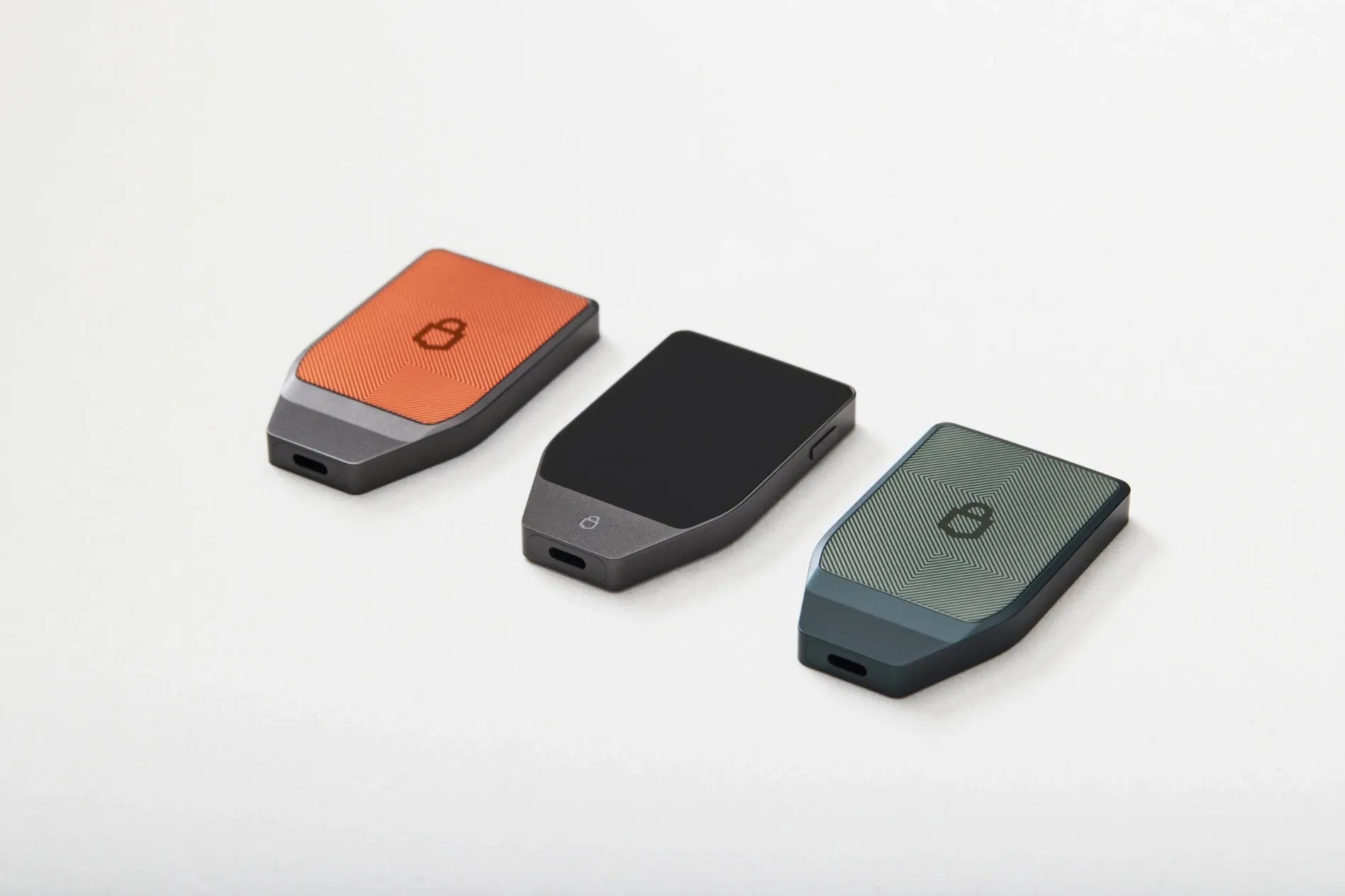
- Trezor Safe 7 Overview
- Enhanced Security with Dual Secure Element Chip
- Launch Price and Market Positioning
- Trezor Safe 7: Architecture and Security Concepts
- A New Paradigm with Dual Secure Element
- Trezor's Past Security Model vs. the New Hybrid Approach
- In-Depth Analysis of TROPIC01: Specifications, Verifiable Design, and Anti-Tampering System
- Readiness for Post-Quantum Cryptography
- The Meaning of 'Quantum-Ready' and Strengthening the Bootloader
- Is Quantum-Ready Just a Marketing Term or a Real Necessity?
- Pros, Cons, and Usability
- Pros: Usability and Hardware Upgrades
- Wireless Connectivity (Bluetooth LE) and Security Protocols
- Premium Hardware Wallet and Power Management
- Advanced Backup Features
- Comparison of Trezor Safe Line and Product Features
- Cons: Price and Web 3 User Base
- Price and Limited Native Web3 Functionality
- Comparison of Trezor Suite Functionality
- Premium Launch Price ($249 USD)
- Competitors and Marketing Strategy
- Trezor vs. Ledger: A Battle of Security Philosophies
- Ledger's Strategic Response to TROPIC01's Open-SE Model
- Comparing Hardware Wallet Features
- Trezor vs. Coldcard/Bitcoin Maxis: Redundancy and Air-Gapped
- Comparing Dual-SE Strategies
- Wireless Convenience vs. Air-Gapped Security
- Comparing Hardware Wallet Security Architectures
- Market Perception
- Community Reactions and Analyst Commentary
- Potential Impact on the Mid-Market Segment
- Strategic Conclusion and the Future of Hardware Wallets
- Trezor Safe 7 Overview and Strategic Moves
- The Future of Hardware Wallet Security Standards
Trezor Safe 7: How does it position itself in the market? How do competitors play? And how comprehensive is its internal security?
Trezor Safe 7 Overview
The launch of Trezor Safe 7 marks a significant step for SatoshiLabs, the manufacturer of the Trezor brand hardware wallets. Priced for pre-order at $249 (excluding import taxes and shipping), the initial price is quite high. Trezor Safe 7 no longer relies solely on microcontrollers, instead adopting a hybrid system with Dual Secure Elements. The goals are twofold:
- Address the inconvenience of use compared to rivals like Ledger, by offering convenient wireless operation.
- Introduce a new perspective on security by making the hardware more transparent through the world's first verifiable Secure Element, TROPIC01.
Trezor has been a leader in hardware wallets and fully open-source software, though historically criticized for the vulnerability of older Trezor models, like the Trezor Model One, to physical attacks that could extract seeds via side-channel attacks.
Trezor Safe 7 directly addresses this security flaw while leveraging its philosophical strength of emphasizing—transparency—over trust. The integration of the transparent, verifiable TROPIC01 chip with a certified EAL6+ Secure Element from another manufacturer creates a multi-layered security defense. This highly anticipated launch significantly positions Trezor as an innovation leader focused on both cutting-edge security standards (including Quantum Ready) and essential modern convenience (wireless connectivity).
Enhanced Security with Dual Secure Element Chip
A key engineering innovation of the Trezor Safe 7 is the implementation of TROPIC01, which Trezor heralds as the world's first fully transparent and verifiable Secure Element. This move challenges the industry's reliance on proprietary, closed-source Secure Elements and traditional EAL certification methods used by competitors.
The hardware design of TROPIC01 is open for public inspection, allowing global experts to review and confirm its security implementation, thereby eliminating concerns about undiscovered vulnerabilities or deliberate backdoors inserted by manufacturers.
This aligns with Kerckhoffs's Principle, which emphasizes verifiability over trusting the organization. Trezor and its system should be transparent, with only the private key remaining undisclosed.
However, security in the hardware market often faces concerns about the supply chain before reaching the user. The hybrid architecture combines practical implementation with an additional layer of protection provided by a certified EAL6+ chip during the initial phase of TROPIC01. Trezor is not the first to use this Dual Secure Element technique; ColdCard, a hardware wallet that stores only Bitcoin, has been using this technique for a long time.
Launch Price and Market Positioning
With a pre-order price of $249 USD, the Trezor Safe 7 is clearly positioned in the premium segment of the hardware wallet market, higher than the Trezor Safe 5's $169 and the Trezor Safe 3's starting price of $79.
This premium pricing is due to advanced engineering and specialized customization required for its coated aluminum unibody, complex Dual-SE system (including TROPIC01 development costs), large 2.5-inch Gorilla Glass touchscreen, LiFePO₄ battery, and integrated Qi2 wireless charging.
However, this high price invites comparison of Trezor's software functionality with its main market competitors. Historically, Trezor has faced challenges with functionality related to altcoins and DApps, particularly the lack of native staking capabilities and NFT management. These features still require external software connections, which is limited compared to competitors like Ledger's ecosystem.
The market may pressure Trezor to enhance these functionalities to justify its premium price and value for general users who require access to Web3 and DeFi. From an initial assessment, I believe it aims to capture customers from Ledger rather than CoinKite's ColdCard.
Trezor Safe 7: Architecture and Security Concepts
A New Paradigm with Dual Secure Element
Trezor's Past Security Model vs. the New Hybrid Approach
Early Trezor hardware wallets (Trezor Model One) utilized a security model centered on transparency (open source), relying on a microcontroller (MCU) to manage overall operation and private keys. It used an open-source bootloader to load firmware, ensuring verifiability and security. Simple physical access via button presses served as a control mechanism alongside the private key, effectively addressing the philosophical principle of "Don't trust, verify."
However, this method had a weakness: it could be attacked if physical access to the device was gained. For instance, a side-channel attack using equipment capable of detecting potential differences could be enough for a guessing attack.
In contrast, Ledger uses a closed-source, EAL-certified Secure Element (SE) for key storage, structuring it to provide superior physical protection compared to Trezor.
Pressured by this, Trezor began using an EAL6+ certified Secure Element in the Trezor Safe 3 and Trezor Safe 5 to directly address this physical attack vulnerability.
Trezor Safe 7 elevates this protection through a Dual Secure Element system, which is not a new idea; Coinkite Cold Card offered this architecture previously. However, Trezor's difference lies in its deep strategic move to push for open-source hardware standards, fully equipped with features resistant to physical tampering, voltage glitches, lasers, and automatic self-destruct functions.
The use of Dual-SE, pairing the open-architecture TROPIC01 chip—which I believe will revolutionize the chip industry in the future—with an industry-standard EAL6+ certified Secure Element, balances the principles of open source and certification. This design allows both groups to use it without significant philosophical conflict.
In-Depth Analysis of TROPIC01: Specifications, Verifiable Design, and Anti-Tampering System
TROPIC01, developed by Tropic Square, is a critical core component of the Trezor Safe 7's security system. This component, known as a Secure Element, is distinct because it's the first time Trezor has used an Open Source concept, enabling full transparency and verifiability (Fully Open Source) in the world.
Trezor leverages the strategy of promoting transparent security over "vague certified security" through traditional chip production control processes solely for certification.
Technically, the TROPIC01 Secure Element is a complex hardware component. Its core architecture is built upon a RISC-V IBEX Controller Core, which supports secure firmware updates and demonstrates Trezor's commitment to open operating standards, even at the most challenging hardware level.
The chip includes dedicated cryptographic blocks for essential functions such as Elliptic Curve Cryptography (including Ed25519 EdDSA Signing and P-256 ECDSA Signing), Diffie-Hellman X25519 Key Exchange, SHA256 and SHA512 Hashing, and AES256-GCM Encryption.
Crucially, TROPIC01 integrates advanced physical anti-tampering mechanisms, such as Glitch voltage detectors, temperature detectors, electromagnetic pulse detectors, and laser detectors, all protected by an Active Shield.
Furthermore, at the heart of seed phrase generation, TROPIC01 utilizes both Physically Unclonable Function (PUF) and True Random Number Generator (TRNG) in internal memory (Flash and OTP), as well as internal security features like memory address scrambling, on-the-fly encryption, and Error Correction Code (ECC) protection to ensure comprehensive protection against probe attacks.
The entire design is open and accessible, allowing everyone to investigate, expose, and propose quick fixes for potential vulnerabilities. This assures the community that the security of the solution will evolve alongside emerging threats. More importantly, it makes the community feel that the product is a part of them.
Readiness for Post-Quantum Cryptography
The Meaning of 'Quantum-Ready' and Strengthening the Bootloader
Trezor Safe 7 is clearly marketed as having "advanced, future-proof crypto security" with the term "Quantum-Ready." Current crypto assets, such as Bitcoin, are not yet secure enough against quantum threats. Therefore, Trezor Safe 7 is engineered with readiness to defend against this threat in mind.
It remains to be proven whether the Post-Quantum Cryptographic (PQC) concept used to protect the (Signed) Bootloader can be truly implemented. Theoretically, this algorithm is resilient against large quantum computers, allowing Trezor Safe 7 to securely update its firmware and key generation processes. Trezor's CTO emphasizes that this capability is a long-term investment because the threat from quantum computing is inevitable, stating, "It's not a question of if, but when." This ensures protection from this threat when the time comes.
Is Quantum-Ready Just a Marketing Term or a Real Necessity?
To me, the term "Quantum-Ready" is a powerful marketing phrase. While technically, the Post-Quantum encryption of the Bootloader is important, and I support its inclusion, I believe it has more marketing implications than immediate security benefits, which are yet to materialize. However, the marketing effect is instant. The mere mention of this term has already led people to ask me how it works, because everyone knows that the formidable enemy of Blockchain is Quantum Computing, with its immense power to randomly guess solutions. It could potentially break the Elliptic Curve Cryptography (ECC) used in cryptocurrencies, though it's still unknown if this will truly happen, as it remains a theoretical concept, likely many years in the future. Moreover, most current quantum attack vectors primarily threaten public keys that are reused. Currently, hardware wallet developers, including Trezor, have already evolved to use a new address every time.
Therefore, when Trezor uses the term "Quantum-Ready," I believe it is partly driven by marketing expectations. However, this is understandable given Trezor's intention to cater to HODLers by ensuring the longevity of this hardware wallet. This is evident in their choice of materials and long-lasting battery. I believe the inclusion of "Quantum-Ready" will make this hardware a definitive, long-term solution that can last for decades without concern. My Trezor Model One, which I've been using since 2017, is still working perfectly. Trezor thus positions the Safe 7 for long-term holders (HODLers), who are the primary group needing cold storage devices designed for confidently preserving wealth across generations, and it also addresses potential technological obsolescence that could affect hardware wallets.
Pros, Cons, and Usability
The Trezor Safe 7 is characterized by modern hardware improvements aimed at enhancing usability, coupled with future-proof update capabilities.
Pros: Usability and Hardware Upgrades
Wireless Connectivity (Bluetooth LE) and Security Protocols
A notable evolution in the Safe 7 is the introduction of full wireless connectivity, utilizing Bluetooth Low Energy (BLE) to securely pair with mobile and desktop devices (many models cannot be used with computers, only with mobile) without the need for cables. This addresses a major criticism from the community regarding older Trezor models, which historically lagged behind Ledger in terms of mobile convenience. This new feature provides a comfortable user experience and allows users to connect and sign transactions without relying on wired connections.
The security for this wireless connection is addressed through the Trezor Host Protocol, which Trezor developed for secure Bluetooth pairing via encryption. The decision to use Bluetooth instead of Airgapped was made to target a general customer base rather than hardcore Bitcoiners, who often prioritize convenient mobile access. Simply put, Trezor aims to compete with Ledger's market share more than niche markets like Coldcard, which typically rejects Bluetooth due to the inherent increase in attack surface (Over-the-air Exploits). Trezor's choice represents a significant strategic shift, opting to develop the Trezor Host Protocol to mitigate security concerns.
By balancing device compatibility with a familiar user experience, they chose Bluetooth for convenience and compatibility, and then addressed security by enhancing the new Host Protocol.
Premium Hardware Wallet and Power Management
The physical build quality has been significantly upgraded. The Trezor Safe 7 now features a unibody design (like an iPhone) using premium coated aluminum, offering exceptional durability compared to the plastic casings of previous models. The device boasts a large 2.5-inch color touchscreen protected by Gorilla Glass 3. This display is 62% larger than its predecessor, significantly improving the user interface for transaction confirmation and direct PIN or passphrase entry on the device.
Furthermore, the inclusion of haptic feedback (which I really like) provides a superior tactile experience for transaction confirmation. The UX/UI is intuitive and focuses on a more complete tactile user experience.
Power management features include a new LiFePO₄ battery at 3.2V and 330mAh, which offers four times longer charging cycles than conventional batteries and boasts extremely low (almost 0%) self-discharge before needing a recharge. The Trezor Safe 7 also supports Qi2 certified wireless charging, truly enhancing the wireless experience without relying on cables. However, those who prefer cables can still use them.
Advanced Backup Features
The Trezor Safe 7 continues to support Trezor's unique Advanced Multi-share Backup (Shamir Backup) recovery method (also available on Trezor Model T, Safe 3, and Safe 5), which differs from standard wallets that rely on a single 12 or 24-word seed phrase.
Shamir Backup allows users to create and distribute up to 16 shares. We can set recovery rules, for example, having a total of 5 shares, but requiring only three out of five to recover the seed. This method reduces the risk of losing seed phrases.
The device supports 12, 20, and 24-word seed phrase backup standards, as well as modern Shamir Backup, which Trezor calls Multi Share Backup.
The differences across the Trezor Safe Line help us understand Trezor's pricing strategy, which positions the Trezor Safe 7 as a premium product:
Trezor Safe Line Comparison and Product Features
| Feature/Model | Trezor Safe 3 | Trezor Safe 5 | Trezor Safe 7 |
|---|---|---|---|
| Price (USD) | $79 | $169 | $249 (Pre-order) |
| Primary Body Material | Sturdy PMMA Plastic | Extra-durable PC-ABS Plastic | Premium Aluminum Unibody |
| Secure Element | Single Certified EAL6+ SE | Single Certified EAL6+ SE | Dual SE (TROPIC01 Auditable + EAL6+) |
| Screen Type | Two-button Pad | Color Touchscreen | 2.5-inch Color Touchscreen 62% larger |
| Connectivity | USB-C (Cabled) | USB-C (Cabled) | USB-C & Bluetooth LE Wireless |
| Battery | No | No | LiFePO₄, 3.2V, 330mAh |
| Wireless Charging | No | No | Qi2-Compatible |
| Quantum Readiness | Standard | Standard | Quantum-Ready Bootloader Authenticity Check |
Cons: Price and Web 3 Customer Base
Price and Limited Native Web3 Functionality
The launch price of the Trezor Safe 7 is undeniably expensive. While it reflects the use of advanced materials and technology, it's undeniable that few people will have the opportunity to use it. Many people's crypto portfolios may not even be worth the price of a Trezor Safe 7, so I wish you luck in accumulating enough to buy one.
While the Trezor Safe 7 boasts significant hardware and technological advancements, its core functionality still focuses on Bitcoin and Bitcoin HODLers. This leads to limitations in some advanced Web3 functions, supporting only basic features. Compared to competitors like Ledger, which commands a large Web3 customer base with features like native staking or native NFT management, I believe these functions are essential if Trezor wants to attract this segment of the market.
While it's true that external software wallets like MetaMask or Exodus can be used to manage staking and NFTs, many users still prefer the confidence of using Trezor Suite directly. If Trezor positioned itself as Bitcoin-only, this wouldn't be an issue. However, by also aiming to attract Web3 users, it still lags behind competitors in functionality. Trezor chose to release a Trezor Safe 7 Bitcoin Only Edition for those who solely wish to store Bitcoin, avoiding this issue for Bitcoiners. However, Altcoin users navigating the Web3 world might find this frustrating.
Trezor Suite Functionality Comparison
Trezor's software ecosystem, now simply called Trezor Suite (the "Lite" has been removed), has been updated. It offers compatibility across desktop operating systems (Android, Mac, Windows, Linux) and allows users to connect to thousands of crypto-native apps. However, the mobile application still falls short compared to competitors.
The current Trezor mobile application for iOS allows users to monitor crypto balances but does not enable native sending or receiving of crypto assets. This is a significant difference from Ledger Live, which provides full mobile management capabilities. While the addition of Bluetooth connectivity in the Trezor Safe 7 suggests that upcoming updates to Trezor Suite will fully support mobile usage, this remains a current limitation.
Premium Launch Price (USD 249)
The premium pre-order price of $249 sets high expectations for functional excellence and challenges competitors in wireless capabilities. While manufacturing costs aren't solely about materials, they also include the research and development of the auditable TROPIC01 SE and the unibody aluminum casing.
Given the enhanced security architecture (Dual-SE, Quantum-Ready) and wireless convenience, this high price point raises questions about whether the security offered by the Trezor Safe 7 is truly worth it for Bitcoiners, as there are other attractive and cheaper options like Blockstream Jade Plus, Foundation Passport, or Coldcard. Meanwhile, Web3 users don't perceive it as capable as Ledger or as supportive of new coins as Ledger. Therefore, Trezor still needs to accelerate software improvements to ensure the Trezor Safe's functionality aligns with its luxurious pricing strategy.
Competitors and Marketing Strategy
The launch of the Trezor Safe 7 has significantly intensified competition in the hardware wallet space by shifting the playing field towards its own game: transparent, auditable Secure Element chips, rather than relying on third-party security certifications.
Trezor vs. Ledger: A Battle of Security Philosophies
Ledger's Strategic Response to the Open-SE Model of TROPIC01
Ledger, which historically relied on closed-source, EAL 5+/6+ certified Secure Elements, has been rattled by the open-source security philosophy directly challenged by Trezor's TROPIC01 Secure Element, the first of its kind to advocate for an open and auditable design, challenging the notion of security through obscurity and reliance on third-party certification.
This strategy forces Ledger to decide whether to continue with its security-through-obscurity model and third-party certifications, or perhaps consider adopting some level of transparency in its own hardware components in future iterations.
Ledger's stance is clearly to criticize the use of SEs in Trezor devices, even though Ledger previously acknowledged that the Trezor Safe Line addressed a major vulnerability in older models like the Trezor Model One by incorporating SEs into the Trezor Safe 3 and Trezor Safe 5.
However, Ledger analysts continue to criticize the architecture of Trezor Safe 3 and Trezor Safe 5, pointing out that "critical encryption is still performed on the microcontroller." The implication is that despite the Dual-SE system, the device remains vulnerable to advanced physical or side-channel attacks targeting the MCU, rather than the more stringently protected Secure Element.
This argument seems to divert the debate from the transparency of Secure Element hardware (where Ledger is at a disadvantage) back to the debate on third-party security assurance through threat modeling. Therefore, Trezor Safe 7's integration of an EAL6+ Secure Element chip with TROPIC01 reduces this criticism, demonstrating that Safe 7 emphasizes transparency while also considering risk reduction by using devices that are not fully open source and employing traditional practices to mitigate risks in the event of severe problems with TROPIC01 and reliance on the microcontroller.
Comparison of Hardware Wallet Features
Despite the hardware advancements and differing philosophical approaches of Trezor and Ledger, which clearly lead in different directions, Ledger remains a leader in terms of integrated Web3 Ecosystem functionality. Ledger Live seamlessly supports native staking, NFT management, and easy compatibility with various Dapps. Ledger thus maintains an advantage in market segments that prioritize ease of use, all-in-one functionality, and Web3 compatibility. I believe that if Trezor continues with this approach in the long run, Trezor will be more of a leader for the Open Source philosophy.
Trezor vs. Coldcard/Bitcoin Maxis: Redundancy and Air-Gapped
Comparison of Dual-SE Strategies
The concept of using a Dual Secure Element is not exclusive to Trezor. Coldcard, a highly popular wallet among Bitcoiners, also employs a Dual Secure Element system from two different manufacturers (Microchip's ATECC608C and Maxim's DS28C36B) to store the critical Master Secret. This approach mitigates risks associated with potential vulnerabilities in a single vendor's chip technology.
Trezor's Dual-SE approach (TROPIC01 Open + EAL6+ Certified) attempts to transcend Coldcard's model by moving from two manufacturers to fully open-source components for complete auditability. This conceptual difference creates a new vector for competition in the high-end market.
Wireless Convenience vs. Air-Gapped Security
The addition of Bluetooth and wireless functionality in Safe 7 marks a clear departure from the air-gapped security principles that devices like Coldcard continue to adhere to. Coldcard maintains maximum security by using an air-gapped transaction signing model (often using microSD cards or QR codes, with USB only for power). This design minimizes the chances of remote attacks or supply chain attacks.
Trezor's choice for wireless convenience is a pragmatic decision aimed at broadening its target market beyond the niche segment that prioritizes maximum security. The strategic implications of this decision are market segmentation:
- Trezor - focuses on competing with Ledger in the mainstream market that demands convenience.
- Coldcard - dominates the niche market requiring air-gapped security and catering to "Bitcoin maximalists."
The addition of Bluetooth aims to meet the needs of a market that finds wired connections cumbersome. However, this convenience comes at the cost of introducing potential, albeit small, attack vectors. Trezor attempts to close Bluetooth vulnerabilities by using the Trezor Host Protocol for encryption instead of opting for an air-gapped approach.
Comparison of Hardware Wallet Security Architectures
| Model | Core Security Philosophy | Secure Element Implementation | Open-Source Status | Key Innovation/Differentiation |
|---|---|---|---|---|
| Trezor Safe 7 | Hybrid Openness & Redundancy | Dual-SE (TROPIC01 Auditable + EAL6+ Certified) | Fully Open Source | World's first auditable SE; Wireless Connectivity |
| Ledger Stax/Flex | Certified Closed-Source Assurance | Single SE (EAL 5+/6+ Certified) | Closed-Source Hardware & Firmware | Integrated Ledger Live Ecosystem; Native Staking/NFTs |
| Coldcard Q/Mk4 | Maximum Air-Gapped Bitcoin Security | Dual-SE (Multi-Vendor Microchip & Maxim) | Fully Open Source | Air-gapped Transaction Signing; Bitcoin-Only Focus |
Market Perception
Community Reactions and Analyst Commentary
Initial reactions from the crypto community indicate a mixed but generally positive response to the technical advancements, with clear excitement about the new wireless features and the boldness of TROPIC01's technological decisions. The community recognizes that the adoption of an open Secure Element is a significant step towards achieving true hardware transparency.
However, the significant price jump to $249 immediately drew criticism, questioning whether the added benefits of the new features justify the increased cost compared to the Trezor Safe 5, priced at $169. Furthermore, analysis also points out that in-depth reports from analysts and detailed assessments of market reactions were largely absent in the initial period after the launch, with early media reports focusing more on the company's press release content highlighting "quantum-ready" features and the auditable Secure Element.
Potential Impact on the Mid-Range Market
The premium pricing of the Trezor Safe 7 creates a multi-tiered structure within Trezor's product line. The higher price point is likely to limit the Safe 7 to enterprise clients, high-net-worth individuals, and technically savvy users who prioritize specialized security features like TROPIC01 and Quantum Ready.
This strategic pricing might inadvertently benefit the Trezor Safe 5, as the Safe 5 offers many premium features, including a color touchscreen and Shamir Backup, at a much lower price. Trezor may need to carefully manage its product communication to differentiate the Trezor Safe 7 with its unique architectural achievements (Dual-SE, Wireless, Quantum-Ready) instead of cannibalizing sales from the Trezor Safe 5, which has become a mid-range hardware wallet after the launch of the Trezor Safe 7 and already meets the needs of most advanced users without the luxury price tag.
Strategic Conclusion and the Future of Hardware Wallets
Overview of Trezor Safe 7 and Strategic Moves
The Trezor Safe 7 is a pivotal product launch, representing a highly strategic and visionary move. If successful, this device will address two key weaknesses of Trezor:
- Addressed Weaknesses:
- The need for physical tamper protection for seed protection → Addressed by the Dual-SE system.
- Usability disadvantage compared to Ledger → Addressed by wireless connectivity and superior screen hardware.
- Redefining Standards: By adopting TROPIC01, Trezor is not just competing within existing frameworks but attempting to redefine industry standards for hardware security trustworthiness. If TROPIC01's public audit continues to succeed as designed, it will fundamentally shift the industry paradigm from "closed-source and certified" to "auditable and open."
- Strategic Advantage: This architectural move is a well-designed plan that allows Trezor to challenge Ledger's market dominance based on verifiable trustworthiness, while simultaneously using a second EAL6+ chip as a shield against immediate criticism regarding certified security.
The Future of Hardware Wallet Security Standards
The market introduction of TROPIC01 is expected to bring about a permanent shift in the hardware security landscape. The traditional dichotomy between purely open-source MCU security and closed SE security has been replaced by the emergence of Auditable Hardware.
If TROPIC01 successfully passes intense and continuous public audits by community entities, it will establish a new standard for verifiable trustworthiness. This success will place significant pressure on competitors, especially Ledger, to increase the transparency of their security chips, otherwise risking the loss of a crucial trust metric to Trezor. Conversely, if TROPIC01's approach is Trezor's first experiment with this model, users concerned about unproven results might wait for TROPIC02 in the next version, which could be more than 5 years away.
The innovation in Trezor Safe 7 indicates that future high-end hardware wallets will be judged not just by certification levels, but also by the openness and auditable nature of their cryptographic components, forcing the entire industry towards greater transparency.


แชร์:
Trezor Safe 7 hardware wallet: The first wireless Trezor for mobile!
Foundation Passport Core (Batch 2): In-depth exploration of interesting architecture