

- Forget the traditional banking model: why the crypto world doesn't have a "forgot password" button
- Seed Phrase is a "key mold", not just a password
- If my phone is lost, broken, or I accidentally delete the app, will my money be gone?
- 4. Comparison Table: General Password vs. Seed Phrase
- 5. 3 Golden Rules for Newbies to Safely Store Seed Phrases
- Rule #1: Do not take photos, screenshots, or type them onto internet-connected devices.
- Rule #2: No employee, admin, or system in the world will ever ask for your Seed Phrase.
- Rule #3: Write it down by hand on physical paper or a metal plate and store it in a safe place.
- 6. Conclusion: The first step to truly owning your own money
- Frequently Asked Questions (FAQ)
- 1. Why must Seed Phrases be in English, and are there Thai versions?
- 2. If a word is misspelled or the order of words is swapped, can the wallet still be recovered?
- 3. What should I do immediately if I accidentally screenshot or send my Seed Phrase in a chat?
- 4. Is there a chance someone could guess the 12 or 24 words correctly for our wallet?
- 5. How does a Hardware Wallet relate to a Seed Phrase, and do beginners need to use one right away?
For anyone new to the world of Bitcoin and cryptocurrencies, who is trying to set up a digital wallet (Crypto Wallet) for the first time, one thing everyone will inevitably encounter is a screen displaying a series of 12 or 24 English words in a row.
At the same time, the application will show a bold, dark red warning message:
Write down these words on paper. Do not lose them, and do not let anyone see them.
The first question that pops into almost every beginner's mind is: What is a Seed Phrase? Why does this seemingly new digital money system force us to find paper and a pen to write down English words like this? And why is there no "Forgot Password" button, like with typical applications?
In this article, I will help you understand the most crucial aspect of self-custody for cryptocurrencies in the simplest way possible, without needing any prior computer or math knowledge.
Forget the traditional banking model: why the crypto world doesn't have a "forgot password" button
When we open a bank account, use mobile banking apps, or access social media, we have always been accustomed to setting a username and password throughout our lives.
If we ever forget our password, all we do is click the "Forgot Password" button and wait to receive an OTP via SMS or email to reset a new password. Or, at worst, we just need to bring our ID card to the bank branch, and a staff member can immediately unlock and restore access to our account.
The reason this is possible is because the bank is an intermediary that holds our money and data. In the banking system, the monetary figures in our account are not with us but are recorded on the bank's central servers. The bank has full authority to control, verify, freeze, or change data at any time. The password we use is merely a "gate pass" to identify who we are to the bank.
However, the world of cryptocurrencies, especially Bitcoin, was created with a completely opposite philosophy: decentralization, meaning no company, no headquarters, and no staff to manage the system.
Bitcoin is not stored on a mobile phone, nor in a wallet app, and no one keeps our password data. All assets are recorded on the blockchain network, which acts like a transparent public ledger. Everyone in the world can see the money going in and out, but only one person can move that money: the one who holds the correct password key. Without an intermediary to oversee it, no one has the authority to create a "Forgot Password" button for us. If the key is lost, no employee in the world can help us recover our money.
Seed Phrase is a "key mold", not just a password
To help you visualize this more clearly, I'd like to invite you to consider the following analogy:
Imagine there are transparent glass safes lined up on the blockchain, and our money is inside, visible to everyone who passes by, showing how many Bitcoins are in that safe. This is like our Public Address. But this safe is securely locked with a digital padlock.
The key used to open the safe and transfer money out is called a Private Key. Technically, this key is a very long string of numbers and English characters, randomly generated, making it almost impossible for an ordinary human to remember or type without making mistakes.
To solve this problem, developers invented a standard called "BIP-39," which converts that complex numeric code into 12 or 24 common English words that are easy to read, write, and recognize, such as apple, book, cloud, river, sun.
These sets of words are what we call a "Seed Phrase," or sometimes a Recovery Phrase. What beginners need to understand correctly is that a Seed Phrase is not just an ordinary key, but rather a "Master Key Mold."
From this single mold, an unlimited number of keys can be cast and stamped out:
- To stamp out keys for opening Bitcoin safes.
- To stamp out keys for opening Ethereum safes.
- To stamp out keys for opening wallets of all other existing coins in the system, and so on.
As long as we possess this mold, we can always recreate every key to open our safes. Conversely, if someone secretly photographs or copies the pattern on this mold, they can cast the same set of keys and secretly open our safe to steal all our money.
You can learn more about additional precautions in the article 10 things beginners should understand about Seed Phrases.
If my phone is lost, broken, or I accidentally delete the app, will my money be gone?
This is the number one concern for many beginners who drop their phone in water, lose their mobile device, or have their computer break, and then panic, thinking that the crypto they painstakingly accumulated is lost with the device.
The answer that will immediately reassure everyone is: "Not a single coin is lost."
As I explained earlier, our money is not stored on the mobile phone itself. The phone and the wallet application are only temporary tools to help unlock the key. It's like dropping an old key chain into a river. When the phone breaks, all you need to do is:
- Buy a new phone to use.
- Download the same crypto wallet application, or a new one that meets international standards.
- Select the "Import Existing Wallet" or "Restore Wallet" menu.
- Enter the 12 or 24 Seed Phrase words you saved, in the correct original order.
As soon as you finish typing, the system will instantly recast the same set of keys from those words and connect to your original safe on the blockchain. All your balance, transaction history, and every single coin will reappear 100%.
But another frightening truth that you must keep in mind is:
- If your phone is lost, you can buy a new one, but your money won't be lost.
- However, if your phone is lost and your Seed Phrase is also lost, your money will be gone forever.
In the crypto world, there is no assistance from staff, no identity verification with an ID card. If you don't have this key mold, that safe will remain locked on the blockchain forever, and no one in the world will be able to open it again.
Comparison Table: General Password vs. Seed Phrase
To help you clearly see the difference between traditional security systems and crypto systems, I've summarized a comparison table below:
| Comparison Category | General Password (Password / PIN) | Recovery Phrase (Seed Phrase 12–24 words) |
|---|---|---|
| Main Function | To verify identity for system or app access | Master mold for creating and recovering all keys to access funds |
| Who stores the data? | Service provider company / Bank server | Only yourself (not recorded on any server) |
| If we forget the data | Click "Forgot password" to reset via SMS or email | No one can help. Assets will be lost forever. |
| If others know the data | They might change the password immediately or contact the bank to freeze the account. | They can immediately steal and transfer coins, and transactions cannot be reversed. |
| Connection to device | Often linked to user account or phone number | Independent of device, can be restored on any device or brand. |
5. 3 Golden Rules for Newbies to Safely Store Seed Phrases
Now that we know that a Seed Phrase holds the ultimate power over all our assets, safeguarding these words is the most crucial aspect of investing in digital assets. Here are three golden rules that I want you to remember and follow strictly.
Rule #1: Do not take photos, screenshots, or type them onto internet-connected devices.
A common mistake for beginners is convenience. Many choose to screenshot and save it in their phone's photo album, take a picture and send it to themselves via LINE, type it into a Note app, or email it. Always remember that anything connected to the internet has the potential to be hacked. Viruses, malware, or even suspicious apps that we accidentally download might secretly scan images on our device to find these 12–24 words. If the information leaks to the cloud, our money will no longer be safe.
Rule #2: No employee, admin, or system in the world will ever ask for your Seed Phrase.
Memorize this: "Anyone who asks for your Seed Phrase is 100% a scammer." Regardless of whether that person claims to be an app's customer service, a technical expert, a group admin, or a system notification stating that these words are necessary to "upgrade your wallet system" or "verify security," do not fall for it. No official system needs these words from you. A Seed Phrase should only be entered in one specific scenario: when you personally initiate the wallet recovery process on a secure device.
Rule #3: Write it down by hand on physical paper or a metal plate and store it in a safe place.
The best, safest, and globally accepted method is offline storage (Cold Storage), completely disconnected from the internet. Use a pen to carefully write down all 12 or 24 words on paper, checking the spelling and numerical order for accuracy. Then, store the paper in a safe place, such as a home safe, a lockable drawer, or a secure document box.
For those accumulating a larger amount of coins, paper may be at risk of damage from water, fire, or moisture. Upgrading to a metal seed storage device (Metal Seed Storage) made of stainless steel will permanently protect against these natural hazards. You can learn more about storage methods in the article Memorizing Seed Phrase vs. Writing Down: Is it really safe?
Summary
In the traditional financial world, we are accustomed to entrusting responsibility to others. We trust banks to hold our money and accept the terms of regulation, inspection, or transaction limits. But the act of self-custody of crypto coins through a Seed Phrase is the heart of what is called Financial Sovereignty, or the classic phrase Bitcoiners often say:
"Not your keys, not your coins"
Holding your own Seed Phrase means you are truly the sole owner of your money in the world. No government, no bank, and no one can push a button to suspend your account, freeze your money, or prohibit you from transacting. As long as you keep this master key safe, great power comes with great responsibility. Without an intermediary to solve problems for us, we must take 100% responsibility for our own security. Start correctly, be careful, don't rush, and always write these words down offline. Then you will be able to enter the new financial world with confidence and the utmost security.
Are any of you creating your first crypto wallet and have encountered problems or have questions about writing down your Seed Phrase? Feel free to comment and share your thoughts here.
If you are looking for the highest security key storage devices or want to learn how to use a hardware wallet, you can read more at What is a Hardware Wallet and Why is it Important and How to Choose a Hardware Wallet for Beginners. Or browse genuine products from an authorized dealer at Bitcast Product Collection. If you have any questions or need advice on how to set up your wallet correctly, feel free to consult the Bitcast team anytime at LINE Official Account: @bitcast.
Frequently Asked Questions (FAQ)
1. Why must a Seed Phrase be in English? Are there any in Thai?
The words in a Seed Phrase are defined according to the international standard called BIP-39, which consists of a carefully selected set of 2,048 English words. These words are designed to avoid similar spellings that could cause confusion, and by simply typing the first 4 letters of each word, the system immediately knows which word it is. Although the BIP-39 standard includes other languages like Spanish, Japanese, or Chinese, in international practice and almost all wallets in the world support and recommend English as the primary standard to ensure seamless recovery across different wallet brands. Therefore, Thai words are not currently used.
2. If I misspell a word by one letter or swap the order of words, can I still recover my wallet?
No, you cannot. The order of words is crucial. 12 words arranged in a different order will create completely different safe and key sets. Additionally, the last word in the set (the 12th or 24th word) acts as a mathematical checksum. If you misspell even one letter or swap the order, the wallet system will immediately alert you that it is an "Invalid Seed Phrase" or that the word set is incorrect, and you will not be able to open the wallet until the order and spelling are corrected to the original.
3. If I accidentally screenshot or send a picture of my Seed Phrase in a chat, what should I do immediately?
If your Seed Phrase has accidentally been exposed to the internet, consider that wallet "no longer secure." The most urgent actions to take are:
- Immediately create a new wallet and write down the new Seed Phrase on paper offline.
- Transfer all your coins from the old wallet to the new wallet as quickly as possible.
- Discard or stop using the old wallet completely. Don't regret it and don't think no one will see it, because scammers have automated bots constantly scanning for this information.
4. Is there a chance someone could guess my 12 or 24 words correctly?
In theory, it's possible, but in practice, it's "almost zero or equivalent to zero." The number of possible combinations for 12 words according to the BIP-39 standard is approximately 2^128, which is the number 3 followed by 38 zeros. For 24 words, the possibilities reach 2^256, a number vastly larger than the number of grains of sand on Earth or the number of atoms in a galaxy. Even if the fastest supercomputers in the world worked together to guess, it would take billions of years to accidentally find a match. Therefore, you can be confident in the security of this cryptographic system.
5. How does a Hardware Wallet relate to a Seed Phrase? Is it necessary for beginners?
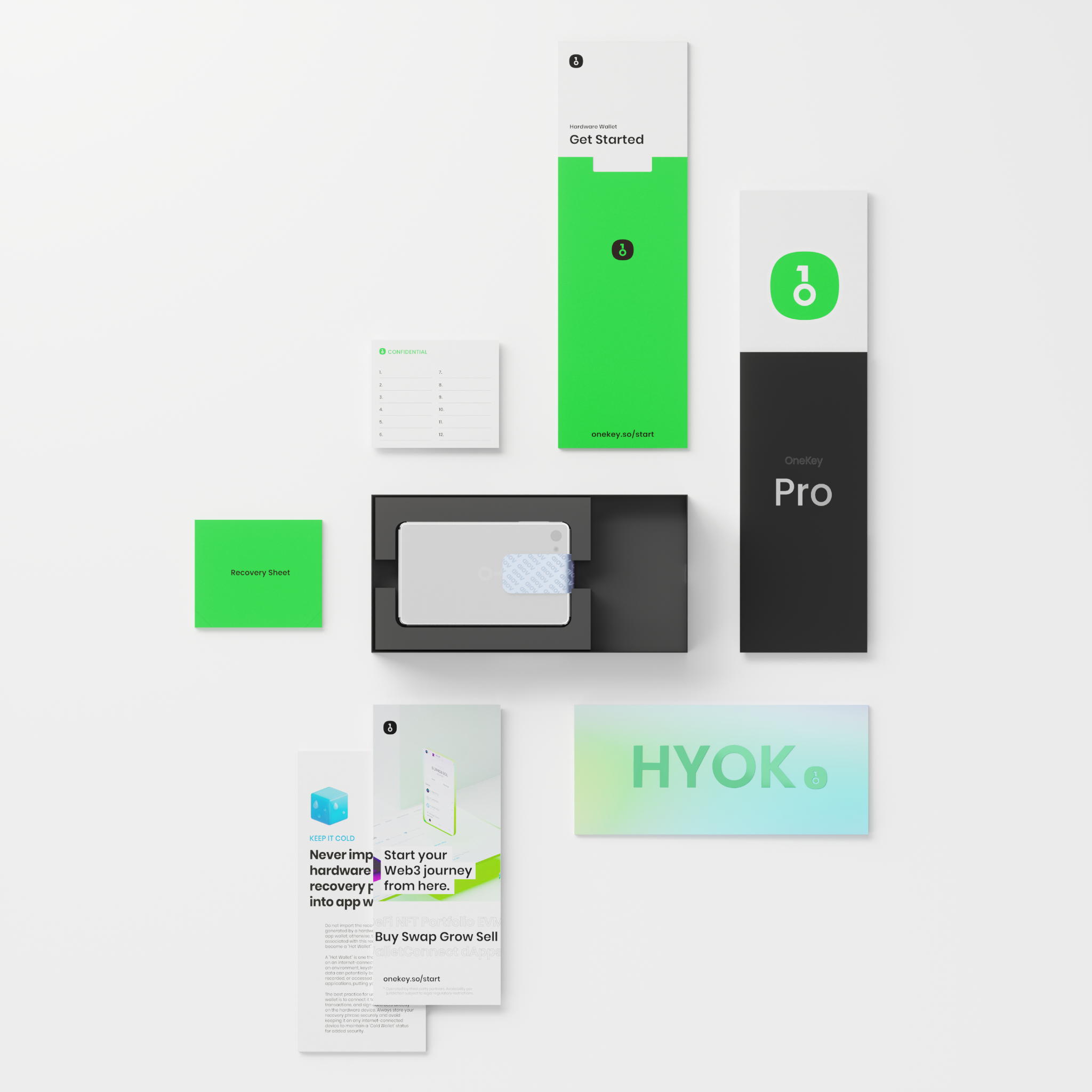
A Hardware Wallet is a small computer device designed specifically to store a Seed Phrase and generate private keys offline. The secure chip inside the device acts as an iron curtain, preventing these words from leaking onto the internet or a computer even for a split second. For beginners starting with a small amount of money, it's fine to begin by using mobile applications. However, whenever your investment portfolio starts to have high value or represents a significant sum you don't want to lose, upgrading to a Hardware Wallet is the most worthwhile investment to close the loophole of being hacked.

แชร์:
How to tell a genuine OneKey from a fake: What to look for before actual use
When should we sell Bitcoin? The most difficult question for coin holders to answer.