
In early 2024, the crypto market began to rebound after a long hibernation. Due to various events, such as exchanges closing down and preventing coin withdrawals, both new and experienced users have started to prioritize securing their digital assets using non-custodial wallets. These include software wallets like MetaMask or OKX Wallet, or for an even higher level of security, hardware wallets, which come in a variety of brands to suit individual needs.
Many who haven't used a hardware wallet before might be unsure which one to buy. Today, I've selected 5 hardware wallets that I believe are suitable for beginners—easy to use, affordable, and require minimal learning. Here are my top picks.
The criteria used to select easy-to-use hardware wallets are:
1. Open source code firmware
Source Code Firmware refers to whether the development of the Hardware Wallet is openly accessible to the public.
This demonstrates transparency, allowing everyone to jointly inspect the Hardware Wallet's Source Code. All the devices I've selected are open source.
2. Has an application for use
Having a dedicated application makes a big difference for beginners. If you want to check your portfolio, send or receive coins, you can do it directly within the app without having to go through a software wallet like MetaMask or OKX wallet, which can be complicated for new users.
3. Price under 4,000 Baht
Personally, if you're looking to buy a hardware wallet for basic functionality, I believe the starting price should not exceed 10% of your digital assets. A price under 4,000 Baht is considered reasonable for holding your private keys yourself, rather than keeping them on an exchange long-term. All selected models are priced under 4,000 Baht. However, if ordering directly from an official website, remember to consider import taxes. The prices listed are based on the USD web price.
There might be better options out there, so feel free to share your recommendations. Let's start with the first one.
1. SafePal X1 Hardware wallet priced at $69.99 USD

SafePal X1
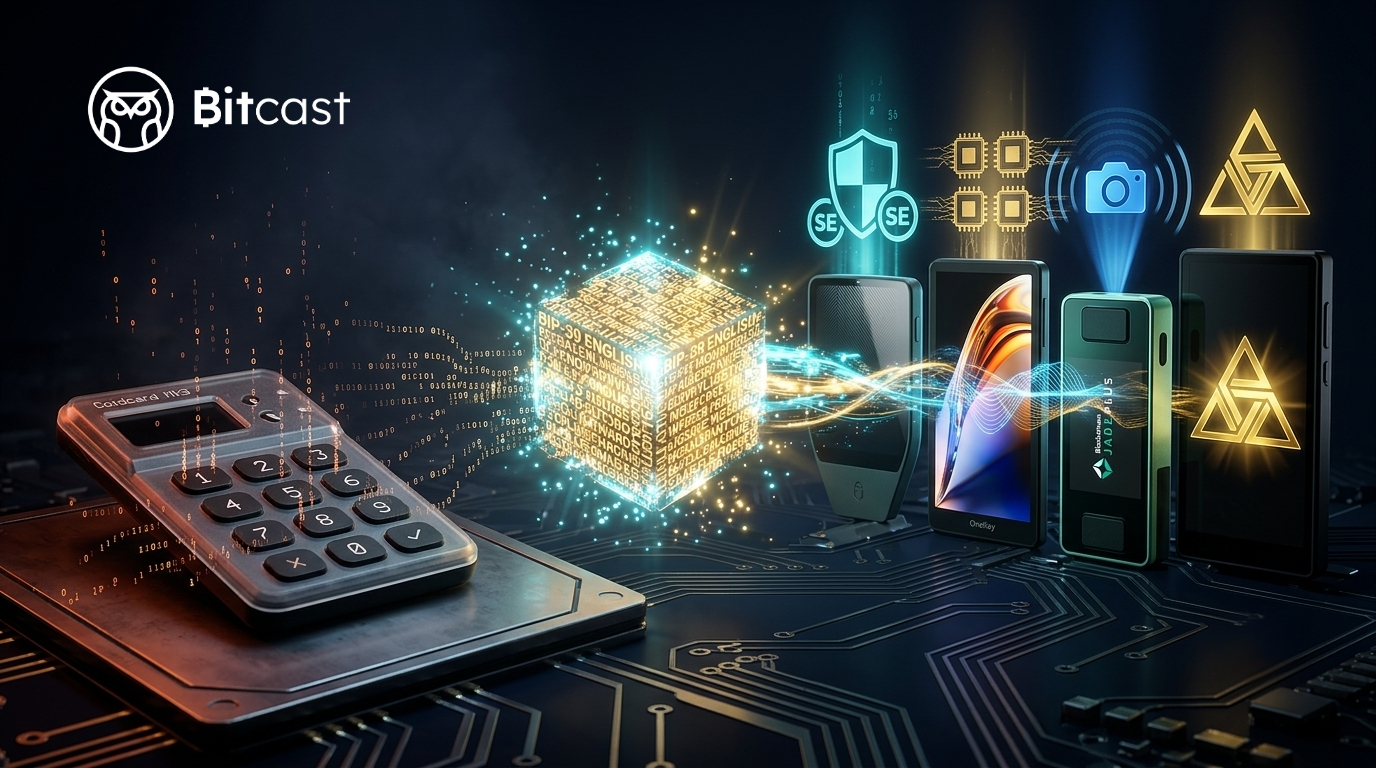
The first impression of the SafePal X1's appearance reminds me of another hardware wallet, COLDCARD, which is popular among Bitcoin geeks. Honestly, I think it looks a lot like a calculator. The screen is monochrome, smaller than the SafePal S1, and not color like the SafePal S1. The Secure Element Chip still meets the CC EAL5+ standard, whereas Trezor Safe 3 or OneKey Classic use CC EAL6+. It connects to mobile devices via Bluetooth 5. The case is made of ABS plastic. From what I can see, there's nothing particularly new about it except for changing the connection method from Air-Gap to Bluetooth.
Who is it suitable for?
SafePal X1 remains attractive for farming and DeFi users, not because of SafePal X1 itself, but because SafePal's mobile software has been continuously developed to work with DApps. It might not be ideal for Bitcoin hodlers. What I find interesting, however, is the pressure for open source development that led SafePal to transition from being closed source to open source.
Details about SafePal X1 hardware wallet
Application: Can be used via Desktop and Mobile with the SafePal App
Size: 8.6cm x 5.4cm x 0.6cm
Screen size: 1.8-inch monochrome screen
Price: $69.99 (approximately 2,400 Baht)
2. OneKey mini hardware wallet priced at 2,400 Baht

OneKey mini hardware wallet
The compact little brother from OneKey, a new brand that uses Trezor's source code to develop its hardware wallets, offering comparable security to Trezor. It has no battery, so it cannot be used with mobile phones and can only be connected to a computer via a USB cable. It can be used on a desktop, and if you want to view your portfolio, you'll need to download a portfolio tracking app. The OneKey App is designed to be user-friendly. Before buying the hardware wallet, you can try out the OneKey App first.

Who is it suitable for?
Suitable for those new to hardware wallets, on a budget, focused on long-term holding, and not frequent users. I recommend the OneKey Mini. You can buy it here.
Details about OneKey mini hardware wallet
Application: Use via Desktop with the OneKey App
Size: 71 × 34 × 6.8 mm
Screen size: 1.3-inch Monochrome OLED
Price: 2,400 Baht
3. Trezor Model One hardware wallet priced at $59 USD

Trezor Model One
The Trezor One, which is Trezor's entry-level model, is still widely used by many, including myself. It was the first hardware wallet I bought 3 years ago! It still works perfectly fine today; only the USB cable broke because I pulled on it too hard. This model doesn't have a battery, so it cannot be used with mobile phones (except for Android phones, which can be used with Trezor Model One; thanks to those who pointed this out). It operates by connecting a USB cable to a computer and Android phones. However, you can view your portfolio on a mobile phone via the Trezor Suite Lite app.
Who is it suitable for?
Suitable for those new to hardware wallets, on a budget, primarily using a computer, and able to view their portfolio on mobile. You can buy it here.


Details about Trezor Model One hardware wallet
Application: Can be used via Desktop, and portfolio viewing is available via Trezor Suite Lite (Except for Android phones, which can be used with Trezor Safe 3; thanks to those who pointed this out).
Size: 60x30x6 mm
Screen size: 0.96-inch Monochromatic OLED screen
Price: $59.99 (approximately 2,300 Baht)
4. OneKey Classic 1S hardware wallet priced at 3,990 Baht

OneKey Classic 1S
The OneKey Classic 1S is another best-selling model. Although it's a newer device, its app is very user-friendly and appealing, and it supports Thai. This model can be used with mobile phones, connecting via Bluetooth. You can view your portfolio, send/receive coins, and use DApps all from the mobile app. It can also be used with a computer via a USB cable, but it cannot connect to a computer via Bluetooth yet.
However, it still has limitations with MetaMask Mobile. If you need to use MetaMask Mobile, you might need to increase your budget slightly and consider the Keystone 3 Pro. If you're interested in the Keystone 3 Pro, you can read more here.
Who is it suitable for?
Suitable for those new to hardware wallets who also want to use them with mobile devices for sending, receiving, and occasionally swapping coins, but aren't heavily reliant on mobile wallet functions. I recommend the OnKey Classic 1S. Buy it here.
Details about OneKey mini hardware wallet
Application: Can be used via Desktop with the OneKey App
Size: 86 × 52 × 5.2 mm
Screen size: 1.5-inch OLED
Price: 3,990 Baht
5. Trezor Safe 3 hardware wallet priced at $79 USD

Trezor Safe 3
The Trezor Safe 3 is Trezor's new hardware wallet. This model features a Secure Element Chip, which is used to store critical information like the Master Private Key (Seed phrase).
The Trezor Safe 3 is a hardware wallet that combines the upgraded Trezor One with some internal features of the Trezor Model T. Simply put, the Trezor Safe 3 is a Trezor One with a Secure Element Chip and the Shamir Backup function found in the Trezor Model T. It supports more coins than the Trezor One, with support comparable to the Trezor Model T.
The Trezor Safe 3 does not have a battery and cannot be used with mobile phones ( except for Android phones, which can be used with Trezor Safe 3; thanks to those who pointed this out). It operates by connecting a USB cable to a computer. You can view your portfolio on mobile phones via the Trezor Suite Lite app.
Who is it suitable for?
If you're a long-term holder and don't often interact with your assets, I highly recommend buying this. It's worth it. Trezor has released a mobile application called Trezor Suite Lite, which allows you to track your entire portfolio using XPUB. You can buy it here.
Details about Trezor Model One hardware wallet
Application: Can be used via Desktop and portfolio viewing is available via Trezor Suite Lite Android phones can be used with Trezor Safe 3; thanks to those who pointed this out.
Size: 59x32x7.4 mm
Screen size: 0.96-inch Monochromatic OLED screen
Price: $79.99 (approximately 3,000 Baht)
Summary for choosing a hardware wallet for beginners (briefly):
Consider your own usage needs first.
If you primarily use a computer, I recommend 3 models:
- OneKey mini hardware wallet
- Trezor Model One hardware wallet ( except for Android phones, which can be used)
- Trezor Safe 3 hardware wallet (except for Android phones, which can be used with Trezor Safe 3; thanks to those who pointed this out)
If you primarily use a mobile phone, I recommend 4 models:
- SafePal X1 hardware wallet
- OneKey Classic 1S hardware wallet
So, have you found the Hardware wallet that suits your needs? If you want to choose more models, you can find them in this article.
แชร์:
Is the Keystone 3 Pro Hardware Wallet worth buying in 2024?
How do I store stablecoins in a hardware wallet?