



- Getting Started with Hardware Wallets + Seed Phrases
- What if You Only Have One Seed Phrase?
- Add an Extra Layer of Security with a Passphrase
- If You Don't Want to Rely on a Single Backup, Try Shamir Backup
- Are Shamir and Multisig the Same?
- What Are MPC and Social Recovery?
- Which One Should You Choose?
- FAQ: Frequently Asked Questions
When discussing crypto or Bitcoin storage, a common question is, “What’s the best way to manage a seed phrase?”
There’s no single right answer, as each method has different advantages and drawbacks, including convenience, risk, and the level of responsibility users must assume.
Before exploring the different ways to manage a seed phrase, it’s important to understand the two main types of asset management: custodial and non-custodial, also known as self-custody.
Custodial means leaving your coins with an exchange, which is convenient and makes asset management easier. This is suitable for beginners because the service provider manages the private key, but it also means you don’t directly control the key. Security and responsibility rest entirely with the service provider.
Self-custody, on the other hand, means you control the private key and can authorize transactions yourself.
This article will explore different self-custody methods, from hardware wallets, passphrases, and Shamir backup to multisig, MPC, and social recovery, and explain how each method differs.
But one important thing to remember is that more complex methods aren’t necessarily safer. Instead, each method addresses a different aspect of seed phrase management.
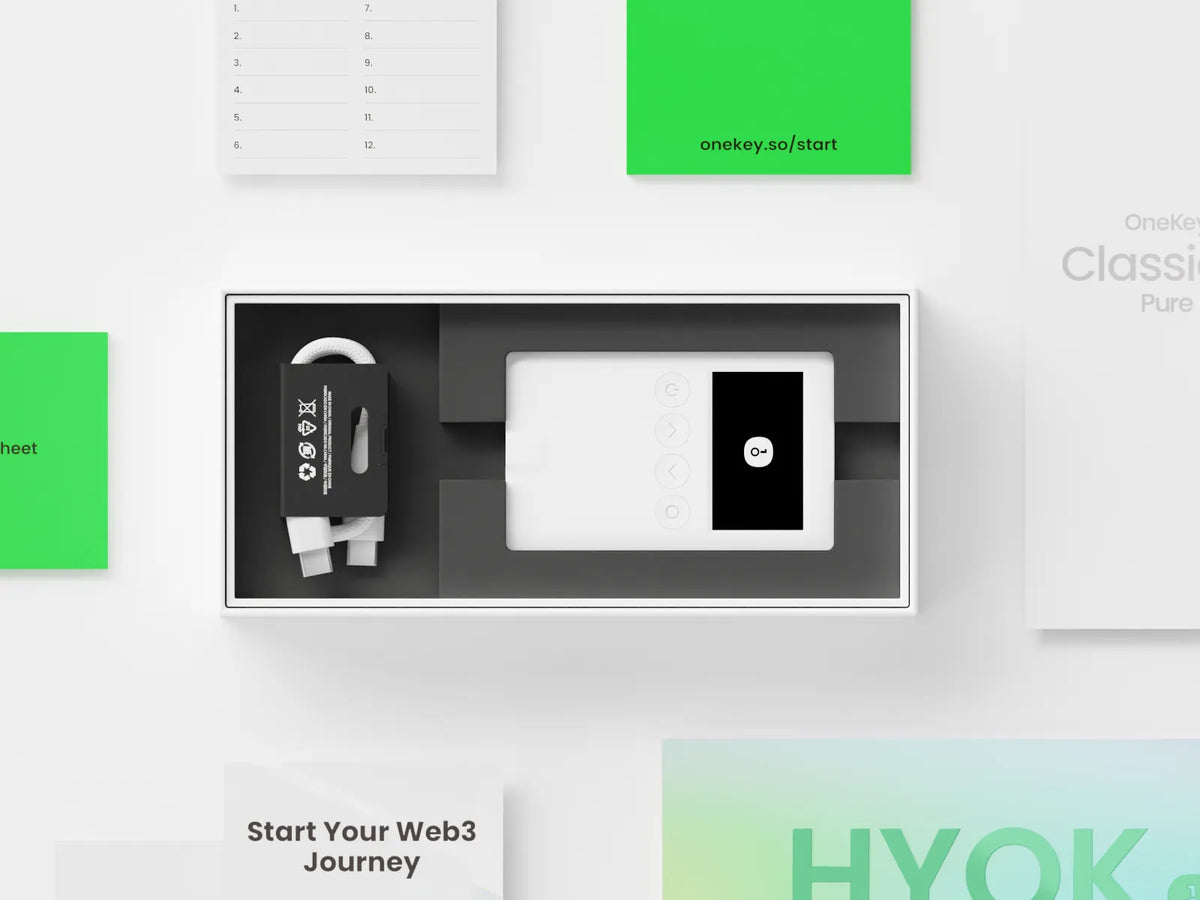
Getting Started with Hardware Wallets + Seed Phrases
For those getting started with self-custody, using a hardware wallet is one way to keep your private key separate from computers or phones that are constantly connected to the internet.
A common misconception is that hardware wallets store coins. Coins remain on the blockchain, but the device helps protect the private key used to create the signature that authorizes transactions.
When you create a wallet, you get a seed phrase or wallet backup that can be used to restore it. Therefore, taking good care of your seed phrase is more important than the hardware wallet itself.
You should not take a photo of it on your phone, type it into a computer or website, or share it with anyone, as this increases the risk of your seed phrase being compromised.

What if You Only Have One Seed Phrase?
The problem is that if your seed phrase is lost due to an unexpected event such as a fire, flood, or misplacement, you will not be able to restore your wallet, even though your coins remain on the blockchain.
Making multiple copies of your seed phrase can reduce the risk of losing it, but it also increases the number of places where it could be stolen.
Therefore, backup is about finding a balance between preventing loss and preventing unauthorized access. Making multiple copies of your seed phrase reduces the risk of losing it, but also increases the number of copies you need to manage.
This is why other techniques are used to address the different backup challenges associated with managing seed phrases.
Add an Extra Layer of Security with a Passphrase
If a seed phrase is the key to restoring your wallet, can you add another layer of security to protect it?
Yes, you can by adding a passphrase
Many people simply refer to a passphrase as the “25th word” in a 24-word seed phrase. However, a passphrase is not actually the 25th word. The basic principle is that if you use the same seed phrase with a passphrase, it will create a completely different, unrelated wallet.
Therefore, if someone obtains your seed phrase but does not know the passphrase used with your wallet, they still cannot access it.
However, using a passphrase also means taking on more responsibility, as you create it yourself. There are no set requirements for its format; it can include numbers, letters, or other symbols. If you forget it or write it down incorrectly, you will no longer be able to access your original wallet.
Importantly, if you enter the wrong passphrase, it may not display an “incorrect password” message. Instead, it may open another wallet that appears to be functional but does not contain your coins.
A passphrase adds an extra layer of security, but it also means taking on more responsibility and having another item to back up.

If You Don't Want to Rely on a Single Backup, Try Shamir Backup
This brings us to another problem: if you don’t want to rely on a single backup, all your risk depends on that one backup. If you lose it, everything is lost. So what can you do?

Another approach is Shamir Backup. The principle is to create multiple sets of Recovery Shares and define how many sets are needed to recover the wallet.
For example, 3-of-5 means there are 5 sets in total, and any 3 sets of shares can be used for recovery.
If 1–2 sets are lost, you can still recover; however, if someone finds only 1–2 shares, they will not meet the required threshold to perform a recovery.
A common misconception is that Shamir involves cutting a 24-word seed phrase into pieces to store in different places, whereas it actually creates recovery shares based on the Shamir's Secret Sharing system.
For Trezor, the system used is SLIP39, which uses recovery shares in 20-word formats. If using a 3-of-5 setup, it means there are 5 recovery shares in total, each consisting of 20 words.
The advantage of Shamir is reducing the risk of having a single point of failure for backups, but the trade-off is increased management complexity.
You must decide for yourself where each share will be stored, how many are needed for recovery, and whether you can truly gather the necessary shares to perform a recovery in an emergency.
Shamir helps manage backup risks but does not inherently make the wallet more secure.

Are Shamir and Multisig the same?
This is a point of confusion for many because both systems share the concept of "multiple parts," but their functions are clearly distinct. Shamir focuses on backup and recovery, while Multisig focuses on transaction authorization.
Consider a 2-of-3 Multisig Bitcoin wallet; there are 3 independent keys in total, but each transaction requires at least 2 signatures.
Therefore, if one key is lost or attacked, the attacker still cannot move funds as they lack the minimum number of keys required. Furthermore, Multisig does not mean splitting a private key into multiple parts; each authorized party holds their own key, and the wallet determines how many keys are required to authorize a transaction.
In practice, Multisig often uses multiple hardware wallets to isolate each key, although the Multisig system itself does not mandate that every key must reside on a hardware wallet.
For Bitcoin, there are software wallets such as Sparrow Wallet that support Multisig and can work with various types of hardware wallets.
The trade-off is increased complexity, including setup, backups, tracking each individual key, and recovery.
Shamir asks, “How many backup sets are needed to recover?” while Multisig asks, “How many keys are needed to authorize a transaction?”

What are MPC and Social Recovery?
Beyond systems using seed phrases and Multisig, there are other approaches attempting to solve key management and recovery challenges.
One of them is MPC, or Multi-Party Computation.
MPC is a cryptographic technique that allows multiple parties or devices to collectively generate signatures or authorize transactions without needing to aggregate the entire private key in one place.
A point to note is that each MPC product has a different architecture, and MPC can be either custodial or self-custody depending on the setup.
You should examine who controls which part of the system, who is authorized to approve transactions, and whether you can still access your assets if the service provider ceases operations.
Another approach is Social Recovery, found in some Smart Contract Wallets.
The concept is that instead of relying solely on a seed phrase, users can designate guardians, such as other devices or trusted individuals, to help recover the wallet.
For example, you could set 5 guardians and specify that 3 must jointly approve the recovery.
This method reduces dependence on a single key, but it also makes the guardians a component of the security model.
So, which one should you choose?
When viewed collectively, it is evident that these methods are not arranged from “simple → advanced → most secure.”
Instead, each method addresses different challenges.
| Method | Problem Solved | Trade-offs / Precautions | Target User Group |
|---|---|---|---|
| Hardware Wallet | Protects keys from malware and connected computers | Requires full responsibility for managing seed phrases | All self-custody beginners |
| Passphrase | Hides important wallets / protects against seed phrase exposure | Forgetting, misspelling, or spacing errors leads to immediate fund loss | Those skilled in backup management |
| Shamir Backup | Reduces risk of backup loss or theft | Requires planning and managing multiple shares | Those who do not want to rely on a single seed set |
| Multisig | Decentralized signing authority / Prevents a single key from being hacked | Highly complex setup, configuration, and recovery | Funds, organizations, or very high-value asset holders |
| MPC | Reduces the burden of storing a seed phrase / Easy UX | Requires reliance on and trust in the provider's architecture | Users who want Web2-like convenience |
| Social Recovery | Wallet can be recovered via Guardians if the key is lost | Runs on a smart contract wallet and requires reliance on Guardians | EVM chain users who do not want to hold a seed phrase |
Do not deposit a large sum of money into a wallet you have never tested recovery for. Complex systems may look good on paper, but if something actually happens and you cannot recover it, that complexity could itself become a risk.
Self-custody is not a competition to see who uses the most complex system.
Rather, it is about designing an asset holding method that suits the value held, the risks you are concerned about, your ability to manage it, and your own recovery plan.
FAQ Frequently Asked Questions
- Is a hardware wallet safer than an exchange?
These two are different models of asset control.
Exchanges are custodial systems where the provider controls the Private Key, while a Hardware Wallet is Self-Custody where the user controls the key and performs their own backup.
Therefore, the key issue is not just “which is safer,” but who controls the key and who is responsible for recovery.
- If you already have a seed phrase, do you need a passphrase?
It is not necessary. Passphrase is an additional option for those who want an extra layer of security for their wallet.
However, when using a passphrase, the user is also responsible for backing up and recovering the passphrase, because if it is forgotten or recorded incorrectly, they may not be able to access the original wallet.
- How does Shamir differ from having multiple seed phrases?
With multiple seed phrases, each one can be used to recover the wallet by itself.
In contrast, Shamir 3-of-5 requires at least 3 out of 5 shares to recover.
Therefore, Shamir can reduce the risk of losing a single backup without requiring every share to be able to recover the Wallet by itself.
- Are Shamir and Multisig the same?
No, they are not.
Shamir = Backup & Recovery
Multisig = Transaction Authorization
Shamir determines how many backup shares are required for recovery, while Multisig determines how many keys are required to authorize a transaction.
- Is Multisig necessary if you have a large amount of money?
It is not necessary for everyone.
Multisig can help distribute the risk of relying on a single key, but it also increases the complexity of Setup, Backup, and Recovery
More important than choosing a complex system is truly understanding it, having a Recovery plan, and testing recovery before actually depositing a large sum of money.

แชร์:
House flooded, stuff ruined—you can buy it all again. But if your hardware wallet gets wet, will your Bitcoin be lost? (A beginner-friendly guide)
How to check if your Trezor is genuine or fake: What to look for before actually using it